Now, it’s time to download these apps that to help you travel Japan easy-breezy. All these apps are free and very easy to use. Starting from which train to take to choosing a local restaurant for dinner.
Here are our personal recommendations as someone who has lived in Japan for over 5 years. Apps that we can’t live without while living in Japan!
You need internet to survive traveling in Japan as a tourist. We wrote an article about the best pocket WiFi in Japan. If you haven’t reserved your pocket WiFi, DO IT NOW.
Google Maps is for travelers who don’t have any particular type of Japan train pass.
We love this app! It’s simple and very easy to use — and it gives the shortest and fastest route as possible when riding Japanese trains and when driving.
I’m a long-time user of this app and it has been very useful for me ever since I moved here and started a job. It also has real-time updates like train delays.
So if you are traveling to Japan without a plan on buying any type of pass and just want to get to your destination fast, then this app is perfect. The interface is also very simple and user-friendly. Google Maps also shows fares.
I love Google Translate especially when I’m shopping. It helps me translate Japanese to English by using the ‘instant camera translation’ feature.
It is the most helpful app in cases of travel emergencies when you need to ask for directions or explain something to the police.
Although not 100% accurate, you still get the main point. But, when translating from English to Japanese, it’s a different game. You have to type in “simple English.” That way, it would give you a close-to-accurate translation.
For me, Google Translate is the best translation app as it doesn’t have any intrusive ads.
Tokyo Subway Navigation app is very helpful if you have a Tokyo Metro 24-Hour Ticket. The app would only suggest train routes covered by that ticket which are all Tokyo Metro lines.
The Tokyo Metro Pass is a great option for tourists who only travel to the Tokyo area. It’s only 600 yen and it gives you unlimited rides to all Tokyo Metro Lines which stops at most major Tokyo sightseeing spots.
Navitime is one of the most downloaded Japanese apps. It gives you general information about traveling to Japan. From how to get out of the airport, where to withdraw money, to free use of Wi-Fi, exchange yens.
Navitime can be a little buggy if your phone has low memory, however. The built-in train app is also very difficult and confusing so I would skip that and use the Google Maps instead. I have this app on my phone because it is packed with information about Japanese culture.
After over 5 years of living in Japan, I found that TripAdvisor isn’t the best app for finding restaurants in Japan. My reason is that TripAdvisor receives more reviews from tourists than from locals.
Gurunavi recommends local-favorite restaurants near you that are not on TripAdvisor. It’s also very easy to use. Just state your preferred cuisine, location, and price range and it will give you a list of restaurants with the highest ratings first.
Airbnb is now very popular in Japan. And its app is helpful if all the cheap accommodations on popular booking sites are all booked. Our first Airbnb experience was in Ikebukuro. We had pleasant communication with the owner. Although we weren’t able to meet him in person, everything went well when we got to his place.
Bonus Airbnb Credit!
If you are not registered on Airbnb yet, you should sign-up using my link to get US$53 credit.
When I first visited Japan, this was the first language app I used to learn simple Japanese phrases. You can even adjust the audio speed to practice your Japanese pronunciation skills.
After you have learned the basics and want to continue learning, you have to buy the premium version to access another batch of Japanese phrases. This app continues to improve a lot and I would recommend this for first-time travelers in Japan.
8. Ms. Green
Download links: Android device | not available on the iOS device
Ms. Green is a Japanese guide app developed by JTB Corp., the largest travel agency in Japan. The goal of this app is to introduce Japan in the form of manga with Ms. Green as the main character.
According to the story, Ms. Green is a new recruit of a travel agency and travels to many destinations in Japan. She encounters troubled tourists and teaches the best way (e.g. how to use Japanese toilets, train etiquettes, and many more).
You can reserve tours and accommodations while reading through the manga which redirects to JTB’s booking site called JAPANiCAN. The app also holds giveaways of gift certificates to users.
Japan Travel Guide With Me app is the highest-rated travel app in AppStore and Google Play since it was released in 2014. It’s an all-in-one Japan Travel Guide which you can use without the use of the internet. This is what sets them apart from its giant competitor’s TripAdvisor City Guide App.
Special Considerations
Although not an app, the HyperDia website is excellent to navigate the trains in Japan if you have a Japan Rail Pass. The route search allows you only to ride the trains that are covered by your Japan Rail Pass.
A day trip is when you to visit a place and explore more and then return home on the same day. So if you are taking day trips from Tokyo, make sure to choose the most time-efficient destination.
You’d think that the only thing outside of it is Mt. Fuji. But as big as Tokyo may be, there’s far more to see and do just beyond its towering buildings and winding streets.
So we’ve laid out easy day trips that you can either do-it-yourself or join a day trip tour.
Here are the best day trips from Tokyo that are less than 2 two hours:
1. Nikko, Tochigi Prefecture.
Oh, how we love Nikko! Had our daughter not having a bad time we could have explored more of its hidden gems and mouth-watering cuisine.
Now, Nikko can be both done through a guided bus tour or DIY. If you’re going to do Nikko DIY, then take a look at our DIY section further down in this guide.
Just know that 1-day is simply not enough, as you will be spending most of your time on a bus that goes around the areas of Nikko which runs very infrequently. This is why we recommend joining a group tour to Nikko, especially if you have kids.
This tour will take you to the Nikko Toshogu Shrines and Temples, which is part of the UNESCO World Heritage Site. When you go there, you can easily see why it got this honor. Nikko’s shrines and temples are absolutely incredible.
The tour includes more than just beautiful shrines and temples, you’ll also visit the quaint town of Lake Chuzenji and visit the majestic Kegon Falls.
If you choose to visit Kamakura and Enoshima, then we highly recommend setting aside a full day for each city. But if you don’t have the time to set aside two days, then we recommend joining this tour.
Here, you’ll discover the “Little Kyoto” of Kanagawa. You’ll visit either the Hokoku-ji Temple or the bamboo garden; which is much like the Arashiyama Bamboo Forest of Kyoto but cleaner and more peaceful.
After that, you’ll visit the symbol of Kamakura — the Great Buddha.
This tour will also take you along the beautiful coastline of Enoshima and on a walk through the narrow shopping street Benzaiten Nakamise-dori which leads to the island’s largest red torii gate.
If you’re looking to visit something unique and something you haven’t heard of before in any guide books or blogs about Japan. Something off-the-beaten-path but not too far from Tokyo, then you’ll enjoy this day trip tour to Chiba and Ibaraki Prefectures.
Fear not, just because it’s unheard of doesn’t mean it’s not worth the trip. We’ve found that, in Japan, traveling to the unknown areas, the ‘roads less traveled’ so to speak, ha led to many of our most memorable experiences.
Joining this tour, you’ll get to visit a former Samurai Residence, one which dates back to the 1600s. Another temple to see is Naritasan. Built in 940, it is a very important temple to kabuki actors.
After that, you’ll visit the small town of Sawara and travel along its canal. Lastly, you’ll see the tallest Buddha Statue in Japan — Ushiku Daibutsu.
This tour, however, is privately chartered with a 2-person minimum and can accommodate up to 9 persons for a flat fee. More than 9, and you’ll have to pay more.
4. Mt. Fuji and Kawaguchiko, Yamanashi Prefecture.
Lavender fields in Oishi Park in Kawaguchiko with the view of Mt. Fuji.
We love Mt. Fuji! And Lake Kawaguchi or Kawaguchiko is the closest town to Mt. Fuji.
When we can finally start setting down roots, it’s definitely going to be somewhere near it so we can wake up to a view of it each day. I truly can’t put into words the feeling I get from looking at it, but it’s one of the things that you’ll never get tired of seeing.
And it’s not just Mt. Fuji itself, but the warmth of people living and working around it. It’s like the aura of Fujisan makes people happier.
Because many people love it and it’s Japan’s most iconic symbol, there are COUNTLESS of day trip tours to Mt. Fuji to choose from.
Kawagoe is the easiest day trip to visit from Tokyo. Located in Saitama Prefecture, Kawagoe is only 30 minutes from Central Tokyo (Ikebukuro Station). This gem of a place is lined with quaint little warehouses called kura from the Edo period.
The tour will take you to the stone-paved streets with stunning glasses, which will make you feel as if you are transported back to the “Old Edo” (Old Tokyo).
Must see are old storehouse district or Kurazukuri no Machinami and the Toki-no-Kane or Time Bell Tower. You’ll also visit sake breweries that have been around for more than 100 years.
Only an hour and a half from Tokyo, Hakone boasts Lake Ashi, which has a great view of Mt. Fuji, making this a very popular stop.
Hakone is best explored for at least 2 days as there are many attractions here. However, since you are only visiting for a day trip, we recommend that you book this top-selling1-Day Guided Hakone Tour from Tokyo by a deluxe motor coach bus.
The tour will take you first to Mt. Fuji 5th Station, then you’ll board on a sightseeing pirate ship and cruise on Lake Ashi. Your trip will end after you visit Mt. Komagatake through a ropeway.
Located near Saiko (Lake Sai), and is more infamously known as the “Suicide Forest” (Japanese tourism association is now trying to replace that with “Sea of Trees” for obvious reasons).
If you’re fond of adventure and spelunking, this is where you should go because a trip to Aokigahara is always paired with a visit to its famous Ice and Wind Caves.
8. Yokohama, Kanagawa Prefecture.
Yamate Western Style Houses The Bluff District of Yokohama
Yokohama, being a large and diverse city like Tokyo, it is best to allocate at least 2 days for exploration. It’s a city that’s not quite as bustling as Tokyo. Think of it like Tokyo’s more laid-back little brother.
Here are our the recommended things to do in Yokohama: Chinatown, Yamate Western Houses, Yamashita Park, Cup Noodle Museum, Queens Square and Landmark Tower, and Shin-Yokohama Ramen Museum.
9. Jogashima, Kanagawa Prefecture.
Jogashima is three times bigger than Enoshima and is connected to the mainland by a bridge. Unlike Enoshima, Jogashima is flat, so there’s no need to climb a bunch of stairs. You can practically explore the entire island by walking for 1-2 hours from west to east. Just be sure to wear a pair of comfortable walking shoes.
Some destination highlights are Misaki Port, Jogashima Lighthouse, and Awazaki Lighthouse. The recommended train pass to explore Jogashima is the KEIO 1-Day Ticket Unlimited for 900 yen. Bus from Misakiguchi to Jogashima island is not covered, however.
10. Odawara Castle, Kanagawa Prefecture.
Odawara Castle Park is the most visited attraction in Odawara. It is famous for plum blossoms in early spring. If you are into role-playing, you can even rent some samurai clothes or kimono at the Honmaru Hiroba square next to the castle. There aren’t many places to see in Odawara except for the castle itself, which is most beautiful during autumn and spring. This is why the trip here is usually combined with Hakone.
11. Kawasaki, Kanagawa Prefecture.
Kawasaki Fertility Festival with my friends. Photo by Mary Antoinette (friend)
Kawasaki is known for its Kanamara Festival — also known as the Fertility or Penis Festival. This festival takes place at Kawasaki Daishi every year on the first Sunday of April.
If visiting outside of the very limited timeframe of the festival, don’t worry, as there is a lot more to see in Kawasaki other than giant wooden phalluses!
The World’s Shortest Escalator, according to Guinness Book of World Records, is also in Kawasaki City, inside the More (pronounced as mo-re) Department Store. For Doraemon fans like myself, you can visit the Fujiko F. Fujio Museum. Fujiko Fujio is the pen name of the two manga artists who created Doraemon, a popular Japanese manga and anime series for children.
12. Izu Peninsula, Kanagawa Prefecture.
The Izu Peninsula is famous for its Kawazu Cherry Festival where you can see the earliest cherry blossoms in bloom from early February to early March. It is also a great day trip for people who are fond of coastlines, nature, hiking spots, and onsens.
Heads up about the train costs, it’s ¥5,100 one-way, or ¥4,900 one-way using the local train. Consider getting the JR TOKYO Wide Pass for ¥10,180 unlimited ride that is valid for three days. Driving is the best option here though.
13. Tokyo Disneyland and DisneySea, Chiba Prefecture.
Although technically located in Chiba Prefecture, Tokyo Disney Resorts make a great day trip from Tokyo. I prefer DisneySea though as it is more visually appealing and offers a lot of fun rides for adults and kids.
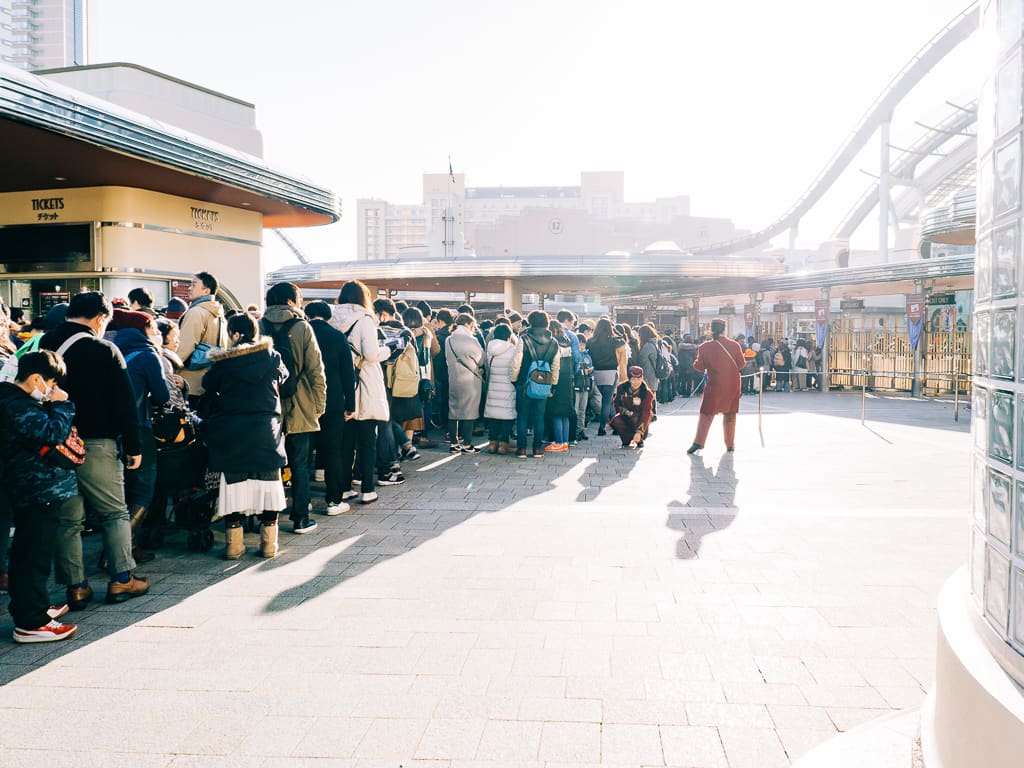
Ever since it opened, it’s attracted many tourists from around the world, so expect the park to be jam-packed, especially during weekends and holidays. Having said that, buying tickets in advance is highly recommended, as the amusement park ticketing booth at the entrance gates is always packed with long lines.
14. Mt. Oyama, Kanagawa Prefecture.
Seven Wonders of Onna-zaka
One of the most popular hiking spots in Kanagawa, Mt. Oyama offers a great day trip adventure with wonderful views.
For hiking newbies, it is recommended that they take the Onna-zaka (women’s slope), which is easier and gives you interesting glimpses on the Seven Wonders of Onna-zaka and Oyama-dera Temple.
If you are in for a challenge, take Otoko-zaka (men’s slope), which is much harder because it has very steep stone steps. Both have their advantages and disadvantages, but during autumn, you should take definitely take the women’s slope.
15. Hachijojima Island, Tokyo Prefecture.
Hachijojima is the most accessible of the Tokyo Islands. It is the quickest and easiest subtropical retreat from Tokyo, a string of volcanic islands stretching out to the south and east from the capital.
Visit for the swimming, snorkeling, diving, and surfing in the clear tropical waters, as well as mountain- and jungle-trekking, onsens (hot spring baths), and island culture experiences.
The best Mt. Fuji tour depends on what sights you want to see and what mode of transport you prefer.
If you’re tight on time and budget, join a Mt. Fuji bus tour.
If you want to explore on your own, it’s best to self-drive, hire a private van/taxi charter, bike, or stay overnight.
Visiting Mt. Fuji can be one of the most unforgettable experiences in your life, as long as the weather cooperates at least. Because of this, and the sheer amount of things to see and do around the mountain, we always recommend staying 1-2 nights to get the most out of your visit.
Mt. Fuji is more than just the most famous landmark in Japan, but is a large community of small towns to explore, natural wonders to see, fantastic cuisines to try, and friendly locals to meet. And 1 day won’t even allow you to scratch the surface of this extraordinary region. We’ve put this guide together so you can be as informed about the area as possible. If you’re still having some trouble deciding what you want, we’ve created a Quiz at the end to help you choose a tour!
Which is better: Join a bus tour or on your own?
Definitely join an escorted bus tour if you’re tight on time. It’s cheaper and very well-organized. Details and difficulties are also taken out of your hands. The only disadvantage is that it is structured and you can’t visit some sights you wish to see.
If you want to do it on your own, consider renting a car or hiring a private charter with a driver. Another option is to stay overnight and buy the 2-day Unlimited Bus Pass. Staying for a night also gives you a higher chance of seeing Mt. Fuji in its full majesty.
Read these resources if you plan on staying overnight:
We’ve used many tour/experience websites such as Viator, GetYourGuide, Klook, etc., but when it comes to booking Japanese bus tours and activities only Viator and Klook give us peace of mind.
They only partner with tour operators that are licensed in Japan, so you don’t need to worry about being scammed. Only deal with legitimate and licensed travel companies based in Japan when joining tours. Truth be told, Klook Tours is very reliable.
Area orientation: Mt. Fuji and the surrounding attractions
Our goal here is to help you join the most suitable Mt. Fuji day tour for you. So this section is meant to inform you about all the highlight attractions surrounding Mt. Fuji. That way, you can better focus your trip around specific activities, rather than trying to cram everything into one day, an impossible task to be sure.
1. Mt. Fuji 5th Station.
Visiting a 5th station makes your experience more authentic because you visited Mt. Fuji itself, even if you can’t make the actual ascent.
Mt. Fuji actually has four different “5th Stations” and the one that you’ll likely be visiting is the Fuji Subaru Line 5th Station as its the closest to Kawaguchiko. The Fuji Subaru Line 5th Station is the starting point for the popular Yoshida Trail to climb Fuji-san (as the Japanese call it). Here you’ll see a small shrine, some short hiking trails, and souvenir shops. It also allows you to fully take in the actual immense size of Mt. Fuji.
Fuji Five Lakes has formed hundred years ago from Mt. Fuji’s lava flows during multiple eruptions. The Fuji Five Lakes are comprised of: Lake Kawaguchi (Kawaguchiko), Lake Sai (Saiko), Lake Shoji (Shojiko), Lake Motosu (Motosuko), and Lake Yamanaka (Yamanakako). ‘-ko‘ means lake in Japanese. And Lake Kawaguchi is the most popular because it’s the most well-developed area and the most accessible (it has a train station) from Tokyo.
Of all the lakes, we recommend Lake Kawaguchi for first-time visitors. And we find it most beautiful during the spring and autumn months. There are so many things to do in and around Lake Kawaguchi alone. Eating the delicious hotou noodles (a local dish), riding the Mt. Fuji Panoramic ropeway (previously known as Kachi Kachi Ropeway), visiting the Itchiku Kubota Art Museum (our favorite museum), sightseeing in the many beautiful parks surrounding the lake, and an incredible number of hiking trails! This is why we highly recommend experiencing an overnight stay in Kawaguchiko, to fully enjoy its sights, activities, and flavors.
For the fashion-savvy shoppers among you, you’ll find Gotemba Premium Outlets to be heaven on Earth. With over 200 big-name stores, Gotemba Premium Outlet is one of Japan’s most popular shopping centers and the flagship outlet of Mitsubishi Estate and Simon Property Group.
Located southeast of Fuji in Gotemba City, it’s a bit out of the way but is well worth the trip if you’re looking to purchase some high-end clothing. And if you’re looking for a combination of luxury and local fashion brands, you’ll find it here at significantly discounted prices, especially during New Year. To sweeten the deal, most of the stores here are tax-free for tourists. So don’t forget to SHOW your tourist passport. While enjoying your shopping, this mall also boasts a beautiful view of Mt. Fuji.
Renowned for its natural hot springs and resorts, Hakone is a small hot springs town nestled in the mountains near Gotemba. What it lacks in accessibility, it makes up for in a natural beauty lost in the large cities of Japan. If you’re into hiking, kayaking, fishing, and just being outdoors, then this is the place for you. The area is a bit spread apart though. Because of this, we recommend making Hakone an overnight trip of its own and renting a car.
Attractions in Hakone
1. Lake Ashi.
Lake Ashi sightseeing cruise in Hakone
This is the highlight of Hakone. Visit Kuzuryu Shrine Hongu for the spectacular view of its Torii Gate standing in the lake, as well as a beautiful walk through the forest to reach the shrine proper. For a better view, take a ride on the local pirate ship!
2. Owakudani Valley.
Here you can view the “Valley of Hell” while riding the ropeway and enjoy some “black eggs” boiled in sulphuric water. We recommend this tour if you want to visit Owakudani Valley and try its black eggs which are rumored to prolong life.
3. Mt. Komagatake.
Mt. Komagatake is the highest peak of the Hakone mountain range and where the original Hakone Shrine is located. Going to Mt. Komagatake is slightly off-the-beaten-path. We recommend this tour, to take you there by ropeway.
6. Odawara Castle.
A recreated castle from the 15th century, it contains a plethora of historical items from that time within it as it doubles as a museum. The grounds surrounding the castle often hosts large festivals where you can try various foods and local craft beers. The castle is best seen during the cherry blossom season, as the grounds are surrounded on all sides by sakura trees.
Our daughter was scared here and just want to sit on here dada’s shoulders.
At 400m, this is the LONGEST suspension bridge in Japan and gives you a breathtaking view of Mt. Fuji. Featuring a Skygarden, athletic park, and ziplining, Mishima Skywalk makes a perfect day trip to escape the hustle and bustle of Tokyo.
This is another interesting city near Mt. Fuji, and it offers some of the best views of Fuji-san. A town with ancient roots, Fujinomiya started as a market town which developed slowly around the Sengen Shrine, it’s become a popular starting point for those looking to climb Mt. Fuji.
Attractions in Fujinomiya City
1. Fujisan Hongu Sengen Shrine.
Undoubtedly the most significant cultural location for Fujinomiya outside of Fuji itself. The shrine is where many of those looking to climb Fuji come to wish for safe passage. The shrine also holds over 159 festivals each year, so there’s a good chance there will be one going on during your trip.
2. Tanuki Lake.
If you’re looking for a quiet overnight camping trip, but want to keep access to amenities like showers, sinks, and bathrooms, then this small artificial lake is for you. Don’t let the ‘artificial lake’ thing fool you, this is still a beautiful area which boasts a view of “Double-Diamond Fuji” around April 20th and August 20th.
3. Shiraito Falls.
Ranked as one of the most beautiful falls in Japan, Shiraito is a 150m wide waterfall that’s not too difficult to reach, making it a popular spot for families to visit.
Fed by Mt. Fuji’s spring water, the falls gets its name from the thin white strands of water, giving it an almost silky look.
By this time, I hope that you’re now familiar with all the attractions around Mt. Fuji and the tours that exists.
November to February offers the BEST time to visit and see Mt. Fuji. In fact, February is the sweet spot of the year as the skies are always clear making Mt. Fuji clearly visible.
Meanwhile, visiting Mt. Fuji from May to September can be tricky. And although June to August is the climbing season, it is also the worst time of the year to visit due to the high probability of rain and typhoon seasons.
So if you’re visiting during typhoon season, always check the live camera of Mt. Fuji. Ideally, you should plan your trip when Mt. Fuji is unobstructed.
What are places with the best view of Mt. Fuji?
Fuji Five Lakes area, Fujinomiya City, and Gotemba City are the best places to view Mt. Fuji. These places are closer to Mt. Fuji, and you’ll have a better chance of seeing a clear and unobstructed Mt. Fuji than you would in Hakone.
Conclusion
Mt. Fuji is the iconic landmark of Japan, so these tours are popular and in high demand. Make sure to book your tour well in advance. Tour hours are just guidelines and may change anytime depending on the traffic and road closures. Itineraries may change without any prior notice. Mt. Fuji’s visibility is not guaranteed as it greatly depends on the weather.
These Mt. Fuji bus tours, although well-organized, are a bit rushed. So think carefully about which tour has the attractions that you absolutely want to visit. It may be better to choose a tour with fewer destinations if it means you don’t need to rush to reach the next one.
Lastly, bus tours might not be your ideal mode of travel. If you don’t think you could stand a 2-hr bus ride both to and from Fuji from Tokyo, consider booking a Mt. Fuji tour with the option to return via the Shinkansen (bullet train) — which is only a 35-minute ride back to Tokyo.
Visiting Japan alone is expensive. And combined with a theme park visit to Universal Studios Japan (USJ), it is going to be even more expensive.
Fortunately, I’ve picked up some tips and tricks that can save you hundreds of dollars when visiting USJ in Osaka. Whether it’s your first time or not, you’ll love my USJ crazy frugal tips.
Tickets to Universal Studios Japan have tiered pricing. Meaning, prices can skyrocket from ¥7,800 to ¥9,200 during peak seasons and National holiday. During which, lines to the top attractions are EXTREMELY looooooong!
If you can’t avoid visiting during peak season, I definitely recommend getting an Express Pass. Express Pass will give you the luxury of skipping the loooooong lines to attraction rides.
2. Take advantage of cheap tickets from authorized tickets sellers such as Klook or Voyagin.
Each month, Voyagin releases a set of coupon codes that you can use to get discounted tickets for Universal Studios Japan. Note that these coupons are only valid for new sign-ups.
Voyagin coupon codes are very helpful when buying several Studio Pass tickets or Express Pass tickets for your family or group.
Klook on the other hand offer cheaper Universal Studios Japan tickets because they have better exchange rates. But you’ll need to navigate their website to see the right ticket type for you.
Explore some of Klook’s Universal Studios Japan tickets below:
The Twilight Pass is a late-entry ticket and it is ¥5,800 JPY per adult (compared to ¥7,800 regular Studio Pass ticket). Twilight Pass is a great option if you are visiting during the off-season or less congested months. Twilight Pass is only available at the entrance gate.
4. Buy your tickets online in advance.
Buying your USJ tickets online saves you time as it’s the best way to avoid the looooong lines at the park’s ticket booths. Doing so will also give you the chance of getting discount coupons (as I mentioned above).
Tap water in Japan is safe to drink. And water fountains are scattered inside the park. You’ll save a lot when you have a water bottle!
7. Pack some snacks too (but know the policy).
This is the best way to save money. Visit a convenience store before arriving at the park. Grab some delicious Japanese snacks such as onigiri (rice ball), sandwich, and small bentos.
These are very easy to tucked at the very bottom of your bag. The staff doesn’t normally check bags if there’s an extremely long line at the entrance.
8. Skip the food that looks cute.
WARNING: If the food looks cute or “Instagrammable”, it tastes terrible, especially those character buns. Trust me.
I was fooled many times. So stop wasting your money on these “kawaii” (cute) food.
9. Get a big meal, and share it.
If you choose to eat inside the Universal Studios Japan park, try Finnegans Bar & Grill, Park Side Grill, and Louise NY Pizza Parlor which are all in the New York area. They usually have big servings.
10. Eat dinner outside the park.
Restaurants outside the park are also plenty, which is located in Universal CityWalk. The cheapest one is the family restaurant called Saizeriya.
11. Buy healthier treats.
Instead of sugary snacks that are usually expensive, try a healthier alternative food cart indulgence such as the turkey legs for about ¥600 or Italian oden (one-pot dish) for about ¥700. They don’t cost much but both are very tasty.
12. Skip that Butterbeer.
Left by visitors on the trash inside The Wizarding World.
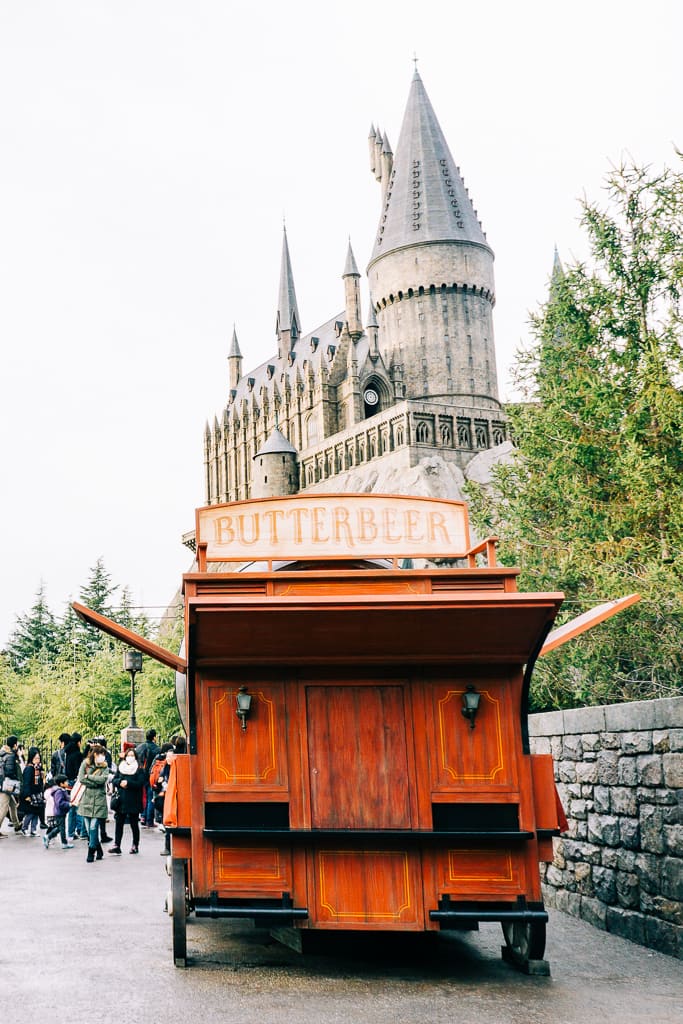
¥1,250 for a non-alcoholic drink? Hmm. No thank you. And yes, it tastes terrible. Just take a look at these butter beers left by visitors on the trash inside The Wizarding World.
If you still want to flaunt that Butterbeer on your social media, just get one 1 butterbeer for the entire group.
13. Buy your character outfit ahead of time.
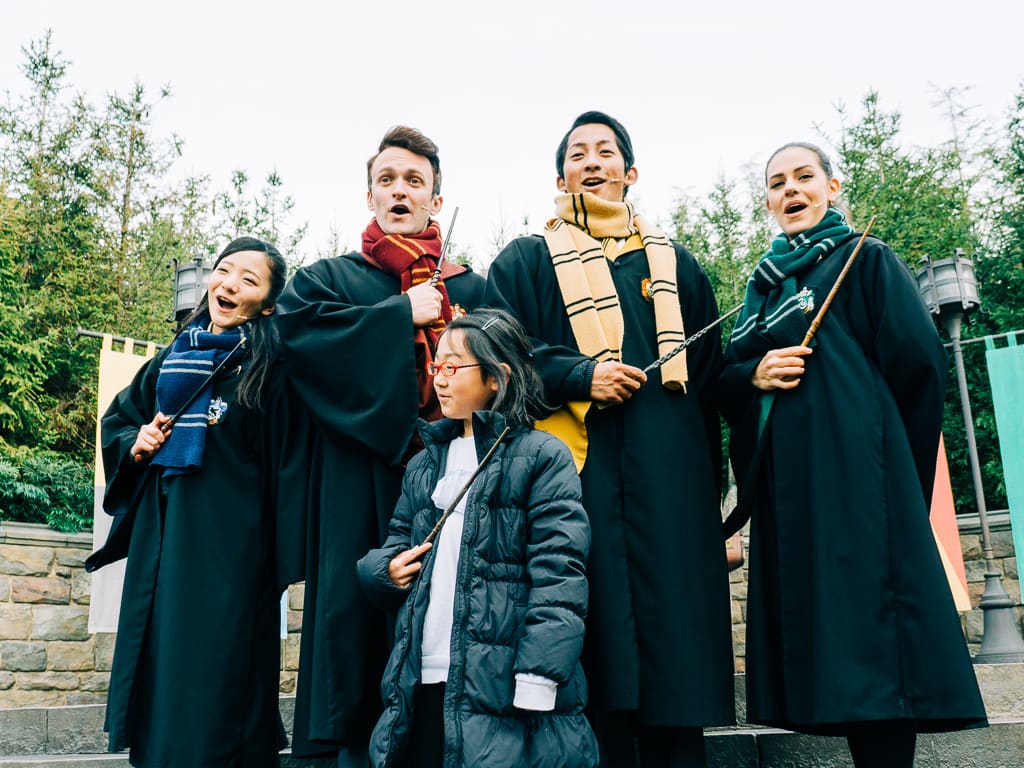
If you feel like dressing up, check out Amazon for a cheap Harry Potter costume (click this one for adults and click this one for kids). They are at a premium price when bought inside the Wizarding World merchandise shops.
14. Bring or borrow that “fun” hat or T-shirt from Disney.
If you’ve been to a Disney Resort and bought a souvenir like Disney hats or character T-shirts, wear it on your USJ visit. That’s just how to avoid the temptation of buying a new one. Or borrow from a friend if you don’t have one.
15. Get those souvenirs outside the park.
For some, they think their USJ trip won’t be complete without buying a souvenir. Get them in Universal CityWalk just outside the park. Souvenir stores there are a little bit cheaper there. Do you really need that souvenir?
Hold the souvenir that you’ve been wanting to buy. Close your eyes. And think of your wallet. Now ask yourself: Does this spark joy? Remember, it’s the experience you remember later, not the souvenirs that end up shoved in your drawer.
16. Buy raincoats from 100 yen store.
If you’re going to splash zones, buy your raincoat before your visit at a 100 yen store. Raincoats in USJ are inside the vending machines and they cost 400 yen each.
17. Pack extra clothes.
If raincoats are not your thing and you really want to get wet, pack extra clothes to avoid buying unintended clothes inside the park.
18. Stay at budget hotels in Nishikujo Station.
If staying overnight in Osaka, Nishikujo Station is just one stop from Universal CityWalk by train. Stay around that area to save money from transportation.
19. Read blogger experiences to be inspired.
You can read my guide for more tips when visiting USJ.
UPDATE: The Robot Restaurant is currently closed until further notice.
Get up to 51% OFF discount when you buy your Robot Restaurant Shinjuku tickets online. That’s over ¥4,000 cheaper than the original price! And for your safety, we’ve only listed legitimate travel agencies in Japan.
Let’s jump right in!
How much does the Robot Restaurant ticket cost?
The price at the door for the Robot Restaurant show is ¥8,000 per person, but you could get up to 51% discount when you buy online. Then add food and drinks for an additional ¥1,000-¥1,500.
Is it worth going to Robot Restaurant Tokyo?
If you can manage to get the tickets at a discounted price, then YES–it’s absolutely worth it! The show is a strange combination of all of the kinky and crazy sides of Japan–downright bizarre and wacko, but in a good way.
There’s really no way of finding out if it’s really worth seeing it or not unless you do. For me, all the crazy acts and performances I saw were out of this world–it was insane, beautiful, and downright weird!
Only in the Robot Restaurant, you can discover that avant-garde fashion is a good mix with futuristic neon costumes. It’s a show that I will definitely watch again, but I personally wouldn’t pay the full price. That said, make sure to book online.
Do you have to eat at Robot Restaurant?
No. You don’t have to eat inside. Robot Restaurant isn’t really a restaurant nor a place where robots serve you food. You don’t need to buy a drink either but it certainly adds to the experience!
What is the Robot Restaurant
Robot Restaurant was created by Nami Osawa. It’s a world of Wi-Fi robots, dance, lights, and sounds that overloads the senses and entertains in ways you’ll not find in other dinner shows.
A place to be whisked away to a world where the futuristic meets traditional as robots dance along with a colorful cast of talented performers playing taiko drums and acting out increasingly wild scenes. Here, you’ll encounter dinosaurs, pole dancers, samurai, aliens, carnival dancers, and of course, robots!
How to get to the Robot Restaurant
The Robot Restaurant is located at 1-chōme-7-7 Kabukichō, Shinjuku City, Tokyo. Take the train to Shinjuku Station and look for the East Exit. From there, the Robot restaurant is about a 10-minute walk.
Directions from nearby train stations:
A 3-minute walk from Seibu-Shinjuku Station.
A 9-minute walk from Shinjuku-Sanchome Station.
A 7-minute walk from Shinjuku-Nishiguchi Station.
NOTE: Kabukicho is Tokyo’s most notorious red-light district. It is always extremely crowded here especially at night and it’s easy to get lost. To easily navigate, click here to use our Google Maps pin.
4 Ways to Get Discounted Robot Restaurant Shinjuku Tickets
Voyagin is a direct-seller and an official partner of the Robot Restaurant Management. So booking through them is the easiest and most convenient way to get discount tickets.
Voyagin is the only travel agency that offers exclusive VIP front row seat upgrades to the show. Tickets for day time shows are 38% OFF while tickets for the evening shows are 23% OFF.
Klook might be the cheapest travel agency to get your tickets, but their reputation as a travel agency is quite questionable online. Additionally, if you research a bit about booking Robot Restaurant tickets with them, you might even see a review advising against booking your Robot Restaurant tickets with them.
UPDATE: It seemed that Klook made an effort to remove that review on TripAdvisor. I wish I had a screenshot.
We’ve used Klook in the past, but not for Robot Restaurant tickets. That’s because we find their booking policy a bit off-putting. They’re a legit travel agency, after all. It’s just that, their booking policy and customer service need room for improvement (email support only).
UPDATE: We removed Viator on our list and replaced it with Veltra. After a bit of research and comparison, we simply found it safer to book with Veltra rather than Viator.
Aside from being an official partner of the Robot Restaurant management and Japan National Tourism Organization (JNTO), Veltra is a reputable website and a publicly listed company on the Tokyo Stock Exchange.
Veltra’s ticket prices to the Robot Restaurant show is simple and straight to the point. In fact, it’s the most user-friendly website to book your tickets from.
You can always find a Robot Restaurant coupon inside the Metropolis magazine. Depending on the issue, you can get either a ¥1,000 or a ¥2,000 discount. Cut it out, call them to reserve, and show it to the ticket reception when you arrive.
Metropolis magazine is FREE and you can find them at the airport or your hotel. This link will show you where to find free Metropolis magazines. The DOWNSIDE is that you must call the Robot Restaurant by yourself to make reservations and inform them you are using Metropolis coupon. So be prepared for some language barrier.
NOTE: One discount coupon is limited to one person. If there are 2 or more of you watching the show, you’d better grab more than one magazine.
How long is the show?
The show lasts 90 minutes with a 5-10 minute break between each performance. During breaks, you can buy refreshments or use the restroom quickly. You cannot use the restroom during each performance, the staff will not let you return to your seat.
Robot Restaurant showtimes
The Robot Restaurant has 4 different showtimes. The exact showtimes are as follows:
2:30 pm entry, main show at 3:30–5:00 pm (photo-op with the robots)
4:00 pm entry, main show at 5:30–7:00 pm (special live show in the lounge area)
6:30 pm entry, main show at 7:30–9:00 pm
8:30 pm entry, main show at 9:30–11:00 pm
The 5:30 pm show sells out FAST because it’s only the time slot with special live performance while you wait in the “Robot Cafe and Bar” lounge area.
Arrival time recommendation
You must follow the time entry suggestion. That’s because you need to consider the following:
You need to check-in your e-tickets and exchange it for the official ones.
The show is actually in a separate building than where you actually present your reserved tickets.
Robot restaurant management is very strict. Absolutely NO latecomers and refunds will not be provided.
So yeah, don’t be late.
What to expect before the show?
Once the time comes to start the show, you’ll be escorted to the main theater. There is food available in the main theater (you can buy it along with your ticket). I would suggest eating before the show, as the menu is very limited.
On the night we went, they were serving sushi in a bento box, but I’m not sure if they rotate the menu with other foods. Inside there is popcorn for 300 JPY, along with beer, and other alcoholic and non-alcoholic beverages starting at 500 JPY. But these can only be purchased during intermissions.
NOTE: Empty your bladder. You can’t use the bathroom during an act. And if you’re in the bathroom once an act starts, you can’t return to your seat.
Overview of Tokyo’s famed Robot Restaurant
First Act: A Mix of Old and New
The show started with a highly entertaining traditional Taiko drum performance, mixed with some modern twists, such as neon lights, a rock drum set, and mixed traditional/futuristic costumes. Next, they brought out a long stage to allow dancers to join in on the music.
In all, the first routine was very fun and entertaining, and honestly, it might have been my favorite act, but it did feel slightly out of place in a venue known as the “Robot Restaurant.”
Second Act: Robot Wars
After an intermission, the second act was undoubtedly the weirdest thing I’ve seen during my 9 years in Japan! This act was supposed to tell a story of sorts, which turned out to be ridiculously corny. It included some things which would probably present legal issues if it were performed in America.
To start, the voice acting in the entire show is in English, even if the performers themselves don’t speak it. It’s all dubbed over the speakers. This leads to some unintentionally entertaining scenes of performers over-exaggerating their mouth and body movements, to pretend they are speaking in English.
As for the act itself, it’s a story of a distant peaceful planet, unaffected by the war, where all the people and animals live in harmony when it’s suddenly attacked by bad guys from the evil Robots world who want to rule it for themselves. During the explanation, there is a video on the giant screens, which are located on either side of the room, presenting the story.
The issue is that the music they play during the shows are straight out of quite high-profile movies, and the characters used to depict the bad guys are almost all from the popular Blizzard game series, Warcraft. This is not an issue against the show itself, but it does make you wonder if the operators of the show know they are stealing trademarked properties.
As for the music, the second act ends with the triumphant music of Indiana Jones. Throughout the show, I heard music from Star Wars, ET, and Jurassic Park. So hopefully they obtained permission from the correct people to use said music (I guarantee they didn’t).
Third act: Giant Robots, Brazilian Carnival, Pole Dancing, etc.
The third and final act was the most entertaining, as well as perhaps the loudest part of the show, and is the act by which the Robot Restaurant gets its name. It started with an introduction to all the cast members in the show, followed by an impressively coordinated routine by Japanese dancers dressed up in Brazilian carnival costumes. And involving around 10 to 12 different Wi-Fi controlled giant robots as the performers danced and sang to music a band was playing on a moving stage.
I say, all these were impressive, because it was amazing to me that they could pull off the show at all within the very narrow stage. It was narrow enough that, had one of the drivers of the robots (moving stages) made a mistake, it would have forced the whole show to stop while they repositioned. The stages were literally inches from one another and the audience.
In fact, I have doubts that such a show would be allowed in countries like the US without there being some kind of barrier between the stage and the platforms. Couple this with the fact that many of these same people controlling these machines are also dancing while driving, and it’s very impressive.
Robot Restaurant Tokyo FAQs
1. What kind of food is available?
The glittery Robot Cafe and Bar lounge waiting area has several drink options such as beer, cocktails, Chuhai (a Japanese carbonated shochu) and a selection of wines. However, expect it to be pricey.
While during the show, the food menu is limited to popcorn and chips, drinks, and bento box meals. Their bento box comes in 3 options: Grilled Beef (¥1,500), Japanese Style (¥1,200), and Sushi (¥1,000), all of which come with mineral water.
These prices are ridiculous in my opinion, and you can get the exact same bento from a convenience store for ¥350 – ¥600. Really, no one goes to the Robot Restaurant for food, despite the name.
Having said all the things above, I highly advise that you eat before seeing the show, and, if you want to drink, do it before arriving (a reasonable amount, NOT drunk). I did say, alcohol adds to the show after all!
2. Is there a dress code?
No sunglasses, no very drunk customers, attention-grabbing outfits, or large wigs.
3. Why should I watch the Robot Restaurant show?
Aside from being a highly acclaimed attraction show in Tokyo for tourists and local businessmen, and being featured in Anthony Bourdain’s Parts Unknown, Robot Restaurant is just pure fun.
It’s weird, it’s crazy, but it’s completely entertaining! That is, if you’re into Wi-Fi controlled robots, half-naked dancers in Brazilian costumes, Japanese taiko drums, futuristic effects, dinosaurs out of nowhere, and laser light shows.
Honestly, the Robot Restaurant was one of the most memorable shows I’ve seen; even though what I saw was insane and didn’t make a lick of sense!
4. Can I bring my kids?
The Robot Restaurant show is not rated. Technically suitable for all ages. But whether you can bring your small children or not depends on how well they behave. The show is designed to be a sensation overload for adults! Loud sounds, music, and bright flashing lights could all prove too much for most children.
Couple that with the fact that you are actually in a red-light district, and it may not be the best place for you and your kids. Ultimately, however, it’s up to you. Just don’t forget to be a responsible parent. When your kid starts crying you better prepare your exit and accept the fact that you just lost your money.
Things to do around Kabukicho
Aside from wandering around the area getting distracted by many dirty Asian massage parlors and sordid nightclubs, there is a lot much more to do in Shinjuku and Kabukicho at night that you might want to do after watching the Robot Restaurant show.
Find the Giant Godzilla peeking behind the Hotel Gracery and TOHO IMAX Cinema.
Explore each floor of the Kabukicho Don Quijote store! You’ll be surprised by what you’ll see inside.
Have you ever wondered why the Studio Ghibli Museum is always a must-see spot in Tokyo? Are you familiar with Spirited Away? How about Princess Mononoke?
Those two and four other Studio Ghibli films are among the top 15 highest-grossing anime films in Japan. With Spirited Away is the second-best animated film with a worldwide gross of $331 million. It even surpassed Titanic as the highest-grossing film in Japan.
The person behind these films is Hayao Miyazaki who also designed the museum himself.
How much is a Ghibli Museum ticket?
The ticket price for the Ghibli Museum is only ¥1,000 (or about US$9) each and must be purchased in advance.
When do Ghibli Museum tickets go on sale?
Tickets for the Ghibli Museum go on sale every 10th of the month at 10 a.m. Japan time.
How quickly do Ghibli Museum tickets sell out?
Ghibli museum tickets tend to sell out quickly within 30 minutes to an hour after tickets go on sale.
While this is the original and the CHEAPEST way to get tickets to the Ghibli Museum for ¥1,000. However, it’s also the most TROUBLESOME due to the website being unreliably SLOW on the sale date.
Entry tickets for next month go on sale at 10 a.m. (Japan time) on the 10th of the current month. In other words, if you want tickets for January, you need to buy them on December 10th. You must be on your computer at EXACTLY 10 a.m. and quickly book those tickets. This is a challenge if you live in a different time zone.
What you need during the booking process:
Credit card – They only accept credit cards as a payment method.
Intended address in Japan – This could be your hotel address.
4-character password – You MUST write this down (to avoid forgetting) to log in to print your tickets.
Passport number.
Phone number and email.
The website says you can buy up to 6 tickets in one booking occasion but I’ve NEVER seen this work because the website is VERY slow and always having issues.
The website had gone crazy! When I booked tickets for me and my husband, we ended up getting two different time slots! My ticket was for 2pm admission and my husband’s ticket was for 4pm admission. The 12pm and 2pm admission tickets sell out VERY quickly. By noon that day, tickets on the website were all sold out!
~ Yours Truly
And this is a warning for visitors traveling with their families…
I will not rely on the website if you’re a big family. I was only able to get 1 adult ticket on the website! I have one more adult, two teenagers (13 and 15), and one 7 years old.
~ A Sightsee & Sushi reader email
If you’ve booked successfully, a confirmation will be sent to your email. Inside that email is the link to log in to Lawson’s website.
Enter the email address, the exact phone number, and the 4-character password you entered during the booking process. Upon logging in, you will be redirected to a screen with your ticket that has a barcode.
You must print or save this ticket to yoursmartphone. The staff will scan it at the museum entrance and your ticket will be EXCHANGED for an “official ticket”.
The official ticket has a real 35mm film print framers from Studio Ghibli films that were used in theaters.
2. Lawson Loppi Machine.
If you’re already in Japan (i.e. living in Japan or staying long-term), this is another recommended option. Lawson is a convenience store you can find on nearly every corner of Japan.
There are some Lawson stores that don’t have Loppi Machines. Usually, these are special Lawson stores like Natural Lawson (maroon exterior) and Lawson 100 (green exterior). So you need to find a regular Lawson store, which has a blue exterior.
You can buy tickets from Loppi Machine anytime but the earliest dates that will be available to you are for the month after (i.e. tickets for May will be available on Loppi Machines in April).
3. Ghibli Museum with Inokashira Walking Tour
The tour combines a visit to the Ghibli Museum with tickets and a walking tour to Inokashira Park with an English-speaking tour guide. You can check the availability here.
4. Ask your Hotel Concierge to book you the tickets.
If you’re staying at a premium hotel, contact your hotel concierge and ask if they can buy your tickets in advance and they will usually buy them for you. Many hotels in Japan have done this favor for their customers while they have not arrived in Japan yet. They get the tickets from a Lawson Loppi Machine. But they’ll probably charge a 10-30% fee for the service.
5. Ask a friend who lives in Japan.
If you have a friend who lives in Japan, ask that friend to buy the Studio Ghibli ticket for you from Loppi Machine. The ticket price is only 1,000 yen, which is the original price of the Studio Ghibli Museum ticket.
I have done this as a favor for a friend who was visiting Japan. I bought the ticket a month before his visit. All I needed was his full name and his desired date and time of visit.
Best Alternatives if You’re a Studio Ghibli Fan
Overnight in Nagoya with Ghibli Park Package. Just like the Ghibli Museum, Ghibli Park requires an advanced reservation in order to get tickets, so this overnight package is a good way to get tickets. A round-trip bullet train ticket from Tokyo to Nagoya is included with the hotel stay.
Visit a Donguri Kyowakoku store. Donguri is Studio Ghibli’s official online store. It’s where you can buy Studio Ghibli merchandise and souvenirs.
Between Klook and Voyagin, Klook offer cheaper Universal Studios Japan tickets because they have better exchange rates. But you’ll need to navigate their website to see the right ticket type for you.
Explore some of the Universal Studios Japan tickets below that Klook offers:
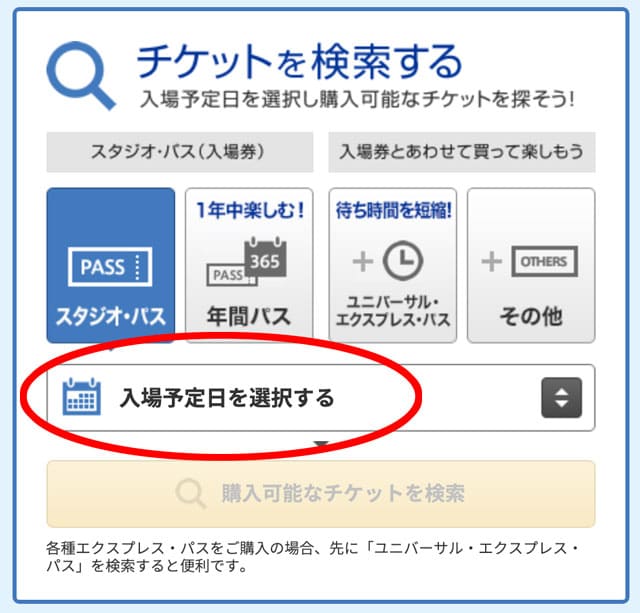
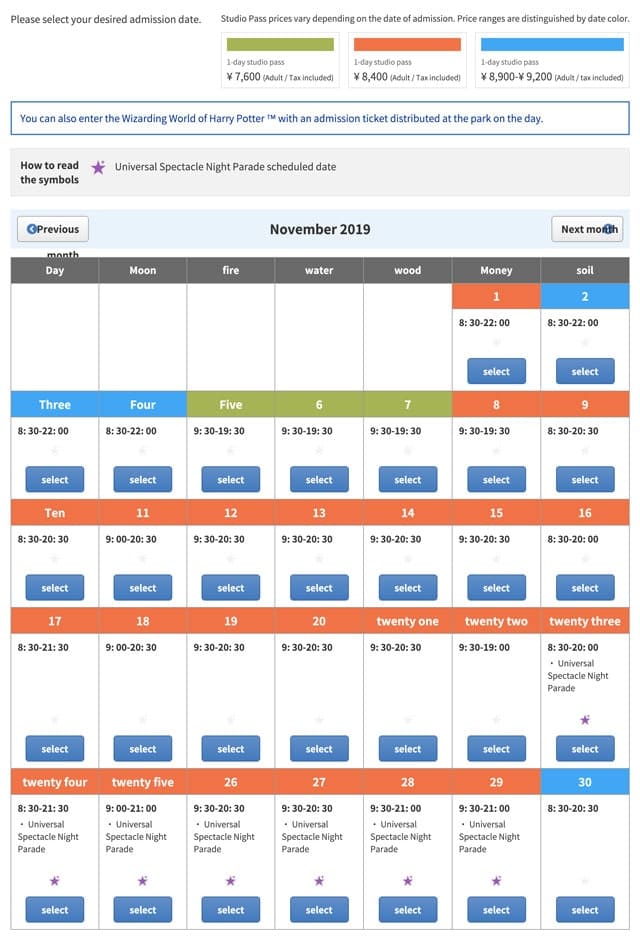
Step 3: Click the Calendar and choose your admission date.
The color-coding on the top denotes peak season prices. Ideally, you’ll want to book the cheapest price at ¥7,800. However, it’s only available for certain weekdays.
Select your chosen admission date and click “confirm the date” on the Calendar button.
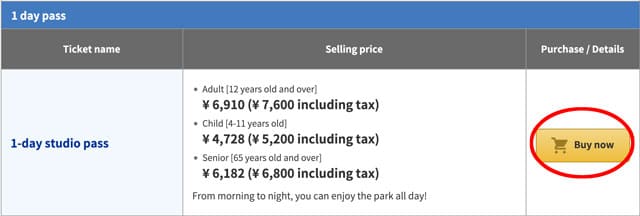
Step 4: Choose the Studio Pass you’d like to get.
Normally, first-time visitors get the 1-Day Studio Pass. If you’d like to visit USJ again the next day, scroll down and you’ll see the options for 1.5-Day Studio Pass and 2-Day Studio Pass.
It’s up to you to decide! Then click the “Buy Now” button.
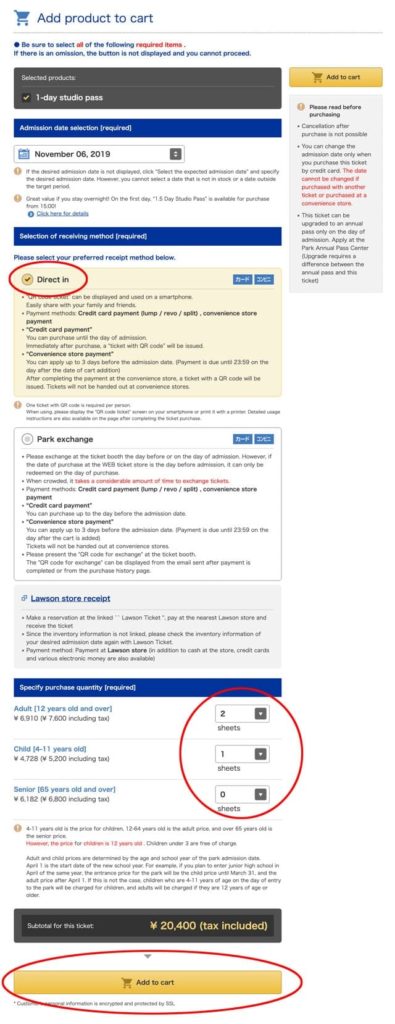
Step 5: Choose the Delivery method and fill in the number of tickets.
The following steps should be easy and just require common sense…
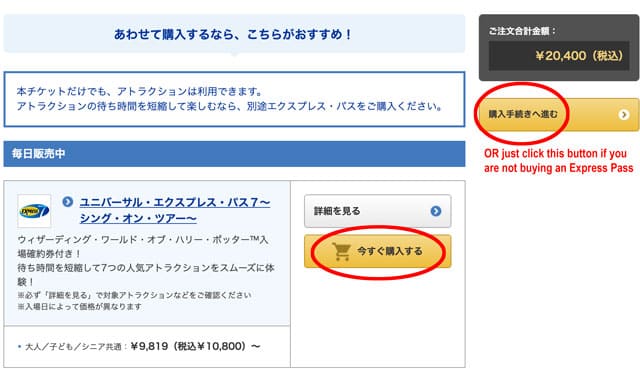
Step 6: Choose an Add-on (or you can skip it).
This page lets you buy add-on tickets such as Universal Express Pass or Universal VIP tour experience.
NOTE: The Universal VIP tour experience is only conducted in Japan. Unless you can speak and understand Japanese, you may skip it.
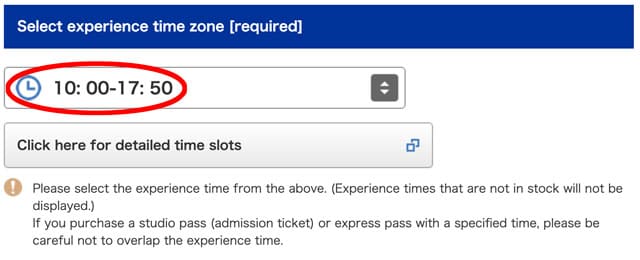
Just click the “Buy Now” button and follow the same prompt — “Direct in” and the number of tickets, and your desired Timed-Entry to the Wizarding World of Harry Potter and other attractions.
I recommend that you choose the earliest time available as possible.
Step 7: Proceed on the Purchase button.
Whew.
We’re almost there! Are you still breathing? It’s time-consuming, right? This is why I like to get my USJ tickets from an authorized travel agency. I’d rather SAVE time and sanity!
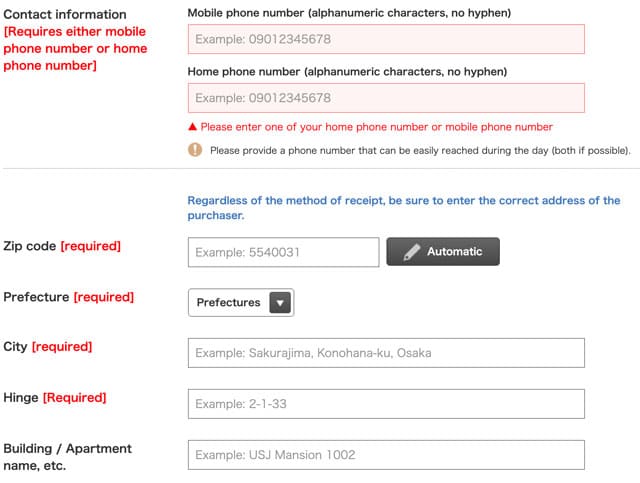
On this page, all you have to do is enter your hotel’s address and phone number.
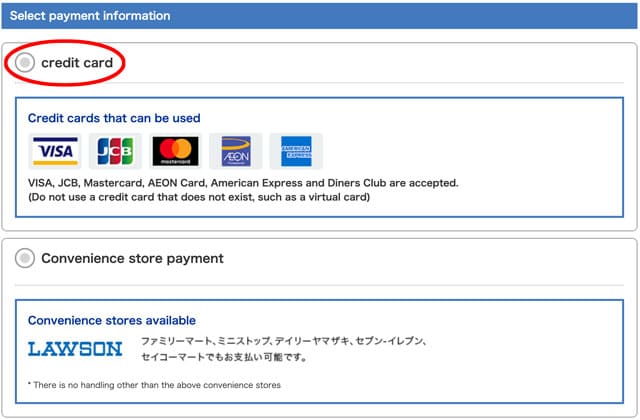
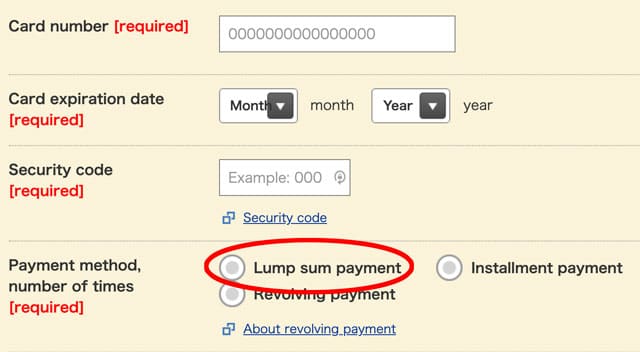
Step 9: Select payment information.
Then click the “Proceed to Order Confirmation” button.
That’s it!
Check your email inbox to get your QR Code. Scan it at the entrance gate of the park and enjoy it!
Why do I recommend Voyagin?
Voyagin was the very FIRST travel agency to offer Universal Studios Japan tickets online. They are an official seller and recognized by Universal Studios Japan.
Key Takeaways:
You can buy ALL types of Universal Studios Japan tickets from their one-stop shop page, such as Studio Pass, Express Pass, Royal Pass, Seasonal Express Passes, and the Early Entry Special Ticket.
Klook is based in Hong Kong and is very popular among Asian countries. But we tend to rely more on companies that are locally-based in Japan. Klook is an authorized USJ ticket seller after all.
Are there any Universal Studios Japan Tour Packages?
Yes!
Universal Studios Japan package is perhaps the BEST deal for families who are coming from Tokyo. We highly recommend getting your Universal Studios Japan Tour Package from JTB. Their Universal Studios Japan Package includes:
If you are already in Japan, you can get your tickets from the LOPPI machines at any Lawson Convenience store, which are nearly as plentiful as 7-Elevens in Japan. The LOPPI machine has an English option, but halfway through you might find some complications like the L-code.
Here’s the website that will show you how to do it. If you are still confused, you can always ask help from a Lawson staff.
Why you shouldn’t buy tickets at the gates?
Don’t waste your time. Getting your tickets at the park is the worst option. No matter what time of the day, the line to the ticket booths is always JAM-PACKED and Express Pass tickets get sold out quickly.
The park opens between 8:30 – 9:00 a.m. and a pool of people will usually be in line AS EARLY AS 7 a.m. just to buy the tickets. I was surprised that in a country where everyone is perpetually connected to the internet, so many still rely on ticket booths.
Bottom Line
There are two ways to get your tickets online:
Universal Studios Japan official website.
From an authorized online travel agency such as Klook and Voyagin.
The official website is fine for those who can read Japanese but offers no real advantage aside from the exchange rate. If you just want an easy-peasy way of booking, definitely go with Klook or Voyagin.
You may have noticed it’s a bit more expensive when prices are converted into dollars. That’s because you’re paying for the convenience of booking through them. Heck, it’s only $2-3 more per ticket! Personally, I’d rather spend extra money to save time and limit hassle!
They also have an extremely helpful coupon code which takes an extra $40 OFF for your family. Personally, I obtained my tickets from Voyagin, and I will again when I return. It’s also much better to book through Voyagin if you’re deciding which Express Pass is best for you as they have a one-stop booking page.
Going to Universal Studios Japan (USJ) in Osaka is much like visiting any popular theme park — it’s expensive! This is why you should consider your visit a major purchase, especially if you’re going with your family. And to get the most out of your money for your USJ trip, our guide is here to help.
When is the best time to visit Universal Studios Japan?
The least congested months to visit Universal Studios Japan are January and February. Just be sure to bundle up because the weather can get very cold at night.
The best months, in terms of pleasant weather, are from October to December but can also be heavily congested.
Another strategy is to consider visiting the park on Tuesdays, Wednesdays, and Thursdays. To help avoid some of the crowds even during the busy months.
What are the dates to avoid?
Avoid peak tourism seasons, such as cherry blossom and fall foliage, Golden Week (late April to early May), and Obon (mid-August). Avoid National holidays as well.
It is also worth mentioning the park’s scheduled refurbishments, where a rotating list of attractions are down for repairs and maintenance.
You can find the refurbishment schedule here. I suggest moving your date if your favorite attraction is closed for maintenance.
Is there a crowd calendar for Universal Studios Japan?
Yes. Although not affiliated with Universal Studios, the crowd prediction calendar updates the congestion forecast of the park for the current month. Note that, the USJ crowd calendar is only an approximation. Click here to view the USJ crowd prediction calendar.
What are the Universal Studios Japan tickets I should get?
Universal Studios in Japan has several types of tickets and this can be confusing if this is your first time.
Let’s dive in!
REMINDER: Universal Studios Japan tickets are nonrefundable no matter where you buy them. USJ does not issue re-entry tickets or stamps. There’s no going back once you leave the park.
1. Universal Studio Pass
This is the park admission ticket. There are four types of Studios Passes and price varies depending on the date of entry.
1-Day Studio Pass – Regular admission pass.
1.5-Day Studio Pass – Enter the park after 3 p.m. and use it on the following day all day.
2-Day Studio Pass – Only valid for consecutive days.
2. Universal Express Pass
The Universal Express Pass is a separate park ticket that allows you to skip long lines to ride the popular attractions inside the USJ Park.
You can choose from three types of Express Passes:
Express Pass 7 – Good for 7 rides
Express Pass 4 – Good for 4 rides
Express Pass 3 – Good for 3 rides
If you are uncertain about which one to get, click to read our “Express Pass FAQs” article to help you decide which way to buy. I personally got myself an Express Pass as I want to buy time rather than wait in line for 3 hours just to experience a 5-min ride!
3. 15-Minute Early Entry Pass (Fast Track Entry)
USJ Park opens between 8:30 and 9:00 A.M. However if you have this pass, it will give you the privilege of entering the park 15 minutes before it opens. It also allows you to enter The Wizarding World of Harry Potter without a Timed-Entry ticket since the entrances are not manned with staff this early.
4. Timed-Entry Ticket (FREE)
The Wizarding World of Harry Potter is the most popular attraction at Universal Studios Japan. And because it gets very crowded, they came up with a procedure to control the crowd by making the entry of visitors time-designated.
This means that visitors need Timed-Entry tickets to enter the Wizarding World attraction. Timed-Entry Tickets are FREE, and without one, you cannot enter the Wizarding World. There is no limit on how long you can stay inside The Wizarding World. You can stay inside for as long as you want! However, once you leave, you need to get another Timed-Entry Ticket.
There are two ways to get Timed-Entry Tickets:
From The Wizarding World of Harry Potter Timed-Entry Booth (located at Central Park). To get a Timed-Entry ticket, simply scan the barcode of your admission ticket on the machine. Then select your entry time to The Wizarding World of Harry Potter.
By Buying an Express Pass Ticket. When you purchase an Express Pass, a Timed-Entry to The Wizarding World of Harry Potter is included on your ticket.
I absolutely recommend booking through Voyagin as they remove the confusion for ticket buyers.
Don’t forget to use these Coupon Codes when booking with Voyagin:
Klook on the other hand offers cheaper Universal Studios Japan tickets because they have better exchange rates. But you’ll need to navigate their website to see the right ticket type for you.
Explore some of Klook’s Universal Studios Japan tickets below:
The Simple Strategy to Riding the Universal Studios Japan Attractions
The park is large and there is a lot to see and do. Getting the most out of your time means coming up with a plan of action for what to see and do things.
This is especially important because, if you arrive at the park at the opening time, everyone literally sprints to their favorite rides in order to beat the long lines. And this can throw your plans into chaos and you into a panic.
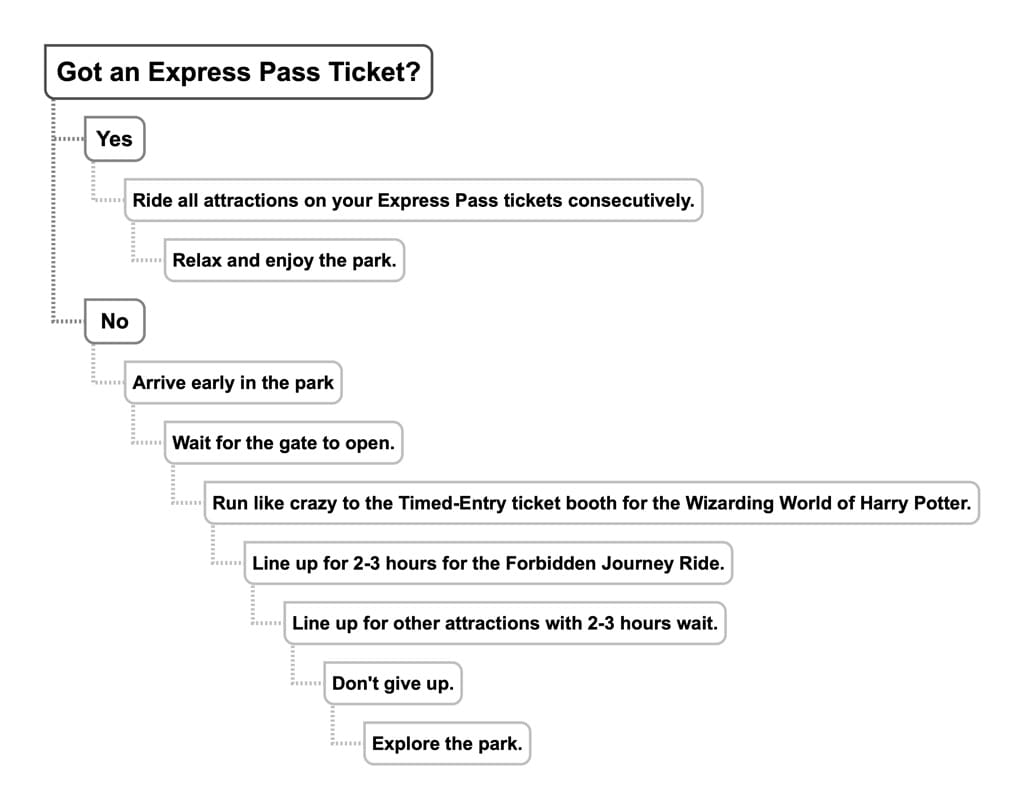
If you have an Express Pass
Touring around Universal Studios Japan with an Express Pass gives you the luxury to ride all your top attractions included on your pass. I suggest riding them all consecutively as soon as you enter the gate.
Skipping the long lines with your Express Pass will give you a whole lot of time. And after, you can explore the park at your own pace. Take this time to see all the sights and attractions, and ride any remaining attractions which tickle your fancy.
If you don’t have an Express Pass
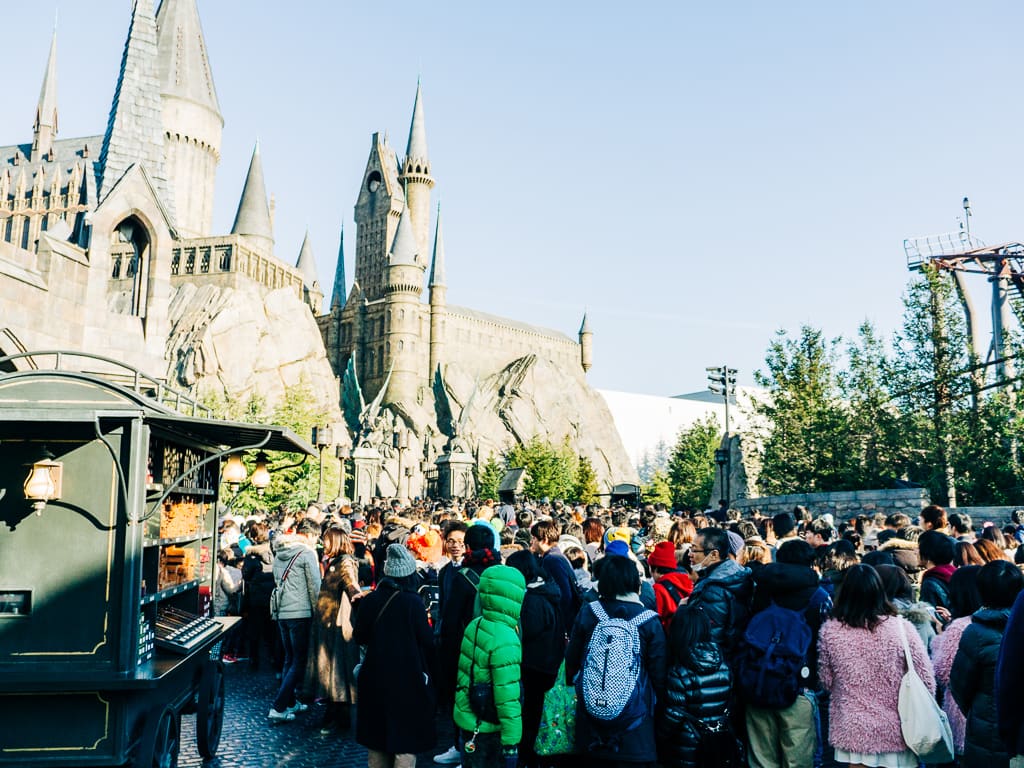
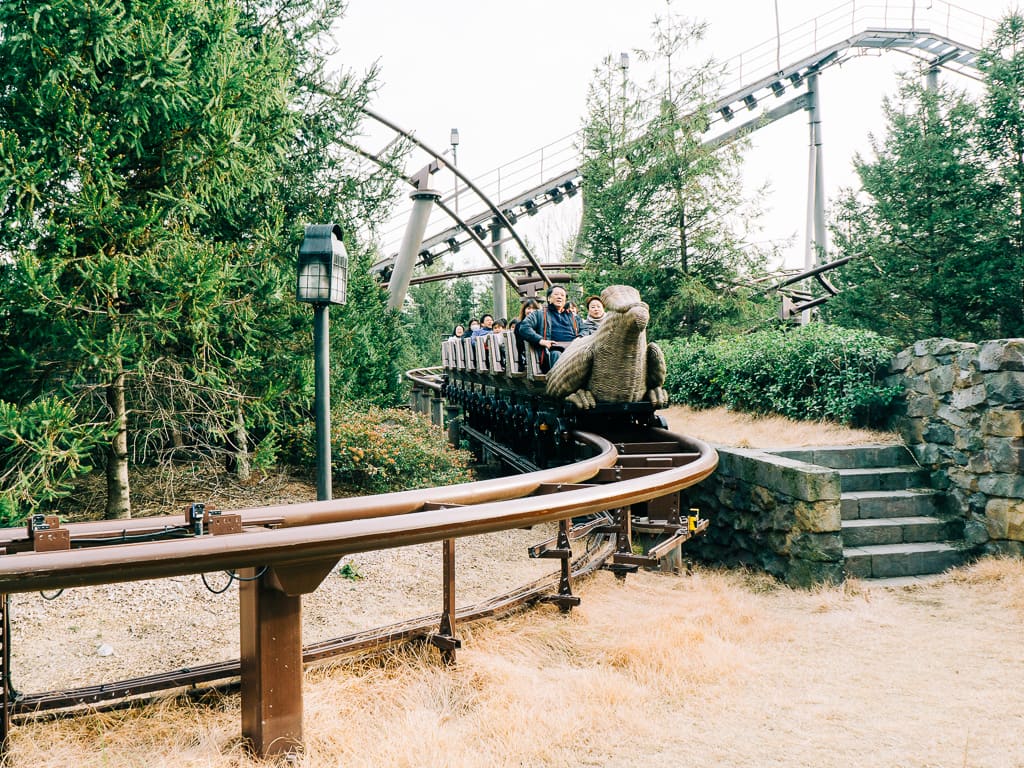
The 2 to 3-hour line to The Forbidden Journey Ride.
Some people prefer not getting an Express Pass because, according to them, they will only visit the Wizarding World of Harry Potter. Or simply don’t have a budget for it.
However, in my experience, you will be missing a whole lot of fun if you don’t have an Express Pass, especially when visiting during peak seasons. That’s just my opinion though, and it’s ultimately up to you.
At any rate, going to the Wizarding World of Harry Potter and riding the blockbuster Forbidden Journey Ride is still possible without an Express Pass. It’s just going to be really challenging.
You should also realize that with this option there’s a high probability you’ll need to prioritize attractions since you’ll likely be encountering lines in excess of 2-3 hours each. So, you’ll probably only get a chance to ride 2 or 3 of them.
Strategy to maximize your day if you don’t have Express Pass:
Buy your Studio Pass in advance online.
Arrive at the park before 7 a.m. and line up at the gate.
As soon as the gates open, sprint quickly to Central Park. Refer to the studio map to avoid getting lost. Find the ticket booth where you can get the Timed Entry ticket for the Wizarding World of Harry Potter.
To use the Timed-Entry ticket machine, simply scan the barcode of your admission ticket and select the time you desire to enter the Wizarding World of Harry Potter. I suggest getting the earliest time slot available.
Should the machine give you a later time slot, consider queuing on attractions with shorter lines or with a “Single Rider” lane whenever available. If you’re in a group, Single Rider shortens your waiting time by taking separate seats on the ride.
Once it’s time to enter The Wizarding World, immediately run to Hogwarts Castle because that is where The Forbidden Journey Ride is. Expect to line up for 2-3 hours.
When you’re done with The Forbidden Journey Ride, that’s the time when you can start exploring the entire Wizarding World and the rest of the park.
Should you decide to leave the Wizarding World, you can go ahead and explore the rest of the USJ parks and attractions on your own.
Do note that Timed-Entry tickets can also run out within the day. And during very crowded days, only one Timed-Entry Ticket is allowed per person for the entire day.
TIP: Consider getting the 1.5-Day Studio Pass if Express Pass is just too expensive for you. With 1.5-Day Studio Pass, enter the park at 3pm, get the Timed-Entry Ticket (hopefully there are timed-entry tickets left), then line up for the Forbidden Journey Ride inside the Wizarding World of Harry Potter.
On your second day, you are free to ride any attractions you feel like. But again, without an Express Pass, you are going to spend so much time waiting and waiting in line.
What are the attractions inside USJ?
Universal Studio Japan has only 9 areas, therefore, it is very easy to get around.
Hollywood
New York
Minion Park
San Francisco
Jurassic Park
Amity Village
Waterworld
The Wizarding World of Harry Potter
Universal Wonderland
What are the best rides at USJ park?
Here are our top rides at USJ in order of our ranking preference:
The Flying Dinosaur
Hollywood Dream
Hollywood Dream – Backdrop
Harry Potter and the Forbidden Journey
The Amazing Adventures of Spider-Man
Despicable Me Minion Mayhem
JAWS
Space Fantasy
Jurassic Park
If you are going to ride those attractions without an Express Pass, over 3/4 of your day would just be spent waiting in lines, and you won’t be able to explore the rest of the park that much. So get an Express Pass!
In the end, it’s really up to you on how you want to prioritize your time within the park and ride your attraction preferences, but hopefully, this helps you to better prioritize your time at the park,
Personally, aside from The Wizarding World of Harry Potter, I hang out pretty much all my time in New York, San Francisco, Hollywood, and Amity Village.
If you have small children, you will pretty much spend most of your time in either The Wizarding World, Minion Park, or Universal Wonderland.
How to get to Universal Studios Japan the easiest way
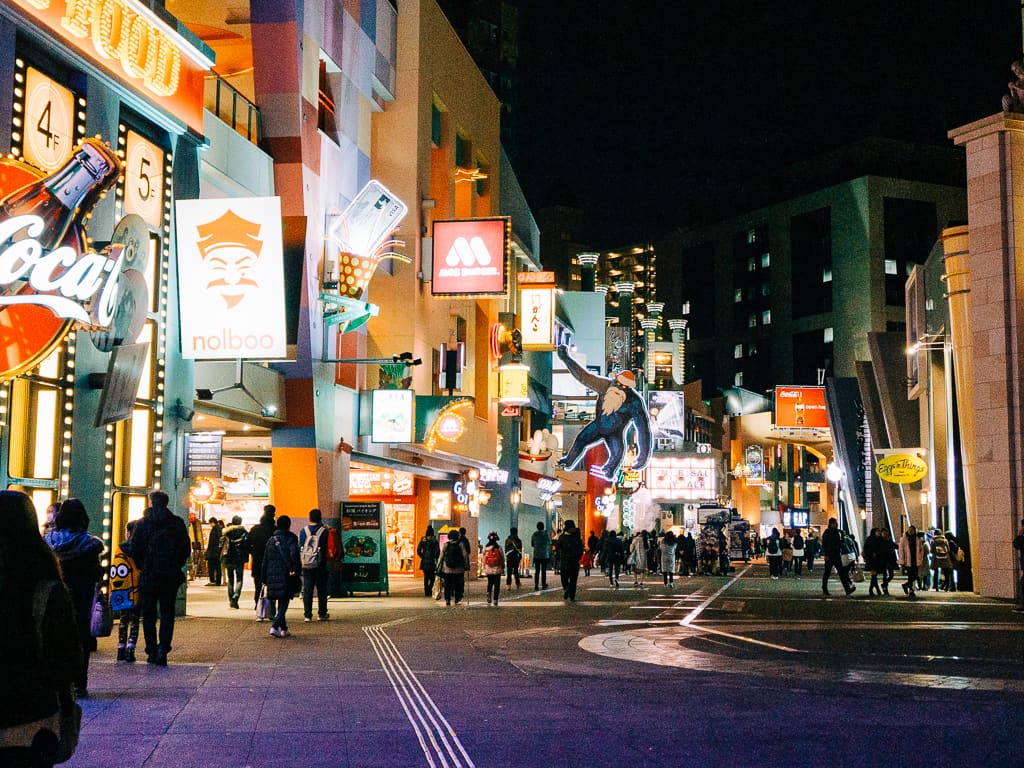
The Universal City Walk at night
Universal Studios Japan is a 5-min walk from Universal City Station. Going to Universal City Station is a bit confusing due to the Osaka Loop Line and JR Sakurajima Line (both covered by JR Pass). The JR Sakurajima Line is still referred to as “JR Yumesaki Line” by some signages and directions. Don’t be confused as they’re the same. So make sure to refer to these “straightforward” directions below.
From Osaka Station: Board the Osaka Loop Line (inner loop/counter-clockwise) towards Sakurajima for 5 stops to Universal City Station. Note that there will be a short stop at Nishikujo Station where this train will switch to the JR Sakurajima Line (also known as JR Yumesaki Line); remain on-board. This option takes about 12 minutes. Alternatively, board Osaka Loop Line (inner loop/counter-clockwise) for Nara or Kamo and stop at Nishikujo Station. From Nishikujo Station, transfer to JR Sakurajima Line towards Sakurajima 2 stops to Universal City Station.
From JR Namba Station: This one has a couple of transfers. First, board the JR Yamatoji Line and ride 1 stop to Shinimamiya Station. Next, take the Osaka Loop Line (outer loop/clockwise) to Nishikujo Station. Finally, take the JR Sakurajima Line towards Sakurajima 2 stops to Universal City Station. This option should take about 28 minutes.
From Kyoto Station: Take the JR Special Rapid Service for Banshuanko or Himeji and ride 3 stops to Osaka Station, then transfer to the Osaka Loop Line (inner loop/counter-clockwise) for to Universal City. Expect the ride to take about 48-minutes.
From Kansai-International: There are a few options for trains here, but the simplest (least amount of transfers) is to take the Kansai Airport Line towards Kyobashi and ride to Nishikujo Station. Then transfer to the JR Sakurajima Line to Universal City (2 stops). This option will have you remain on-board at both Hineno and Tennoji Stations while the train switches lines. The ride should take about 1 hour and 17-minutes.
2. By Bus (from the airport)
From Kansai-International: Take the Kansai-Airport Limousine Bus from Kansai Airport Bus Stop No.1. This bus is a direct trip to Universal Studios Japan with 4 stops and should take about 1.5 hours. Click here to reserve your bus seat.
From Itami Airport Osaka: Take the Airport Limousine, or Hanshin Bus, or Kintetsu Bus from Itami Airport Bus Stop No.1. This bus is also a direct trip to Universal Studios Japan.
Where to stay near Universal Studios Japan
If you are only visiting Osaka for Universal Studios Japan, then it goes without saying that getting a hotel nearer to the park will save you time and hassle. I recommend staying around the park or near Nishikujo Station.
Hotels Around the Park
Universal Studios Japan has partnered with over 20 hotels all over Osaka and Kobe so that guests can fully enjoy the park and its surrounding tourist attractions.
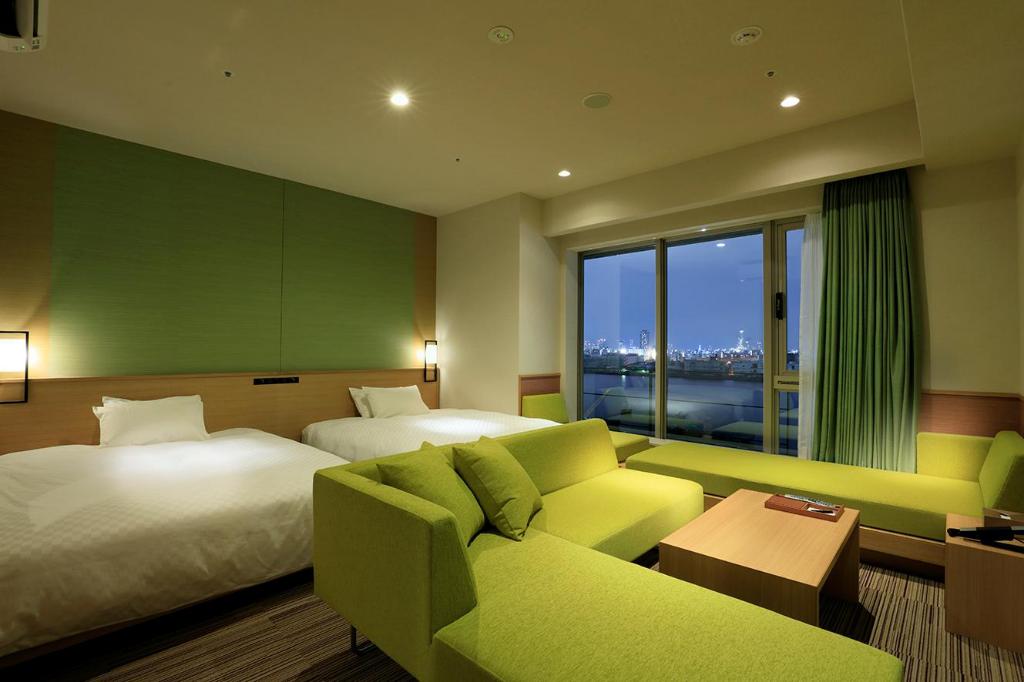
This is another official Universal Studios Japan hotel located at the exit of Universal City Station; about a 5-minute walk to the park entrance.
From the name itself, it boasts an open-air bath for all its guests. Here, you can expect sparkling clean and comfortable rooms because The Singulari Hotel & Sky Spa just opened in August 2017.
From my experience, Nishikujo Station is a great base not just when visiting Universal Studios Japan but when visiting and sightseeing in Osaka.
Aside from budget-friendly hotels situated around the station, it’s only 2 stops to Universal City Station via the JR Sakurajima Line (covered by JR Pass if you have one). So you will get to maximize your time and save your wallet at the same time.
Hostel Jin. This hostel is the top choice among budget travelers. Rated as having very comfortable beds and very clean rooms. If you are a family, consider getting the private room with your own bath and toilet.
Business Hotel Urbanty. Business hotels are always an automatic choice for groups or family travelers on a budget in Japan. Located near Nishikujo Station, this hotel is rated as having very clean rooms and very friendly staff.
Briller Universal Japon. This hotel is in a great location; just a 3-minute walk from Nishikujo Station. All rooms are Western-style, meaning you get your own private bathroom and toilet.
I recommend Booking.com when booking your hotel in Osaka. Simply key-in “Nishikujo Station” on the search bar and choose from the many hotels around it.
Airbnb is also a great option, but make sure to search using the “map” instead of search results.
Get US$53 Airbnb Credit
If you are not registered on Airbnb yet, you should sign-up below to get your bonus Airbnb credit.
1. Should I get an Express Pass or Fast Track Entry, or both?
If you are visiting the park during the weekends or the holidays, then getting an Express Pass is highly suggested. Otherwise, you won’t be able to ride as many attractions due to the hours of wait you will be spending lining up for your turn.
Get the Fast track Entry if you can wake up very early and interested in entering the Wizarding World of Harry Potter without the crowds.
2. Can I bring food inside?
Technically, bringing your own food inside the park is not allowed. However, due to long lines at the entrance gates, the staff may not check on every bag. Just make sure to put your food on the very bottom of your bag just in case the staff checks on you.
3. Is USJ stroller-friendly? Baby-friendly?
Like other amusement parks, Universal Studios Japan is a stroller-friendly and family-friendly place. You can even rent a baby stroller for a day for 1,000 yen.
For families with babies and small children, you are going to enjoy Universal Wonderland. This attraction has Family Service facilities where you can feed or breastfeed your babies privately. There are only two (2) Family Service facilities in USJ. One that is near the entrance gates, and the second one is inside the Universal Wonderland attraction.
Families with babies or small children also benefit from the “Child Switch System.” The Japanese translation is a bit confusing, however, this only means that the system allows parents or guardians with children too small for certain rides to “swap out” (one rides while the other waits, then swaps) without having to wait in line twice.
Most ride attractions utilize the Child Switch System. There is also Pram parking at each attraction so, you are free to park your strollers. Don’t worry, Japan is ridiculously safe. You have a better chance of forgetting your stroller than someone actually stealing anything from it. In fact, if you did forget your stroller, someone would most likely return it to you at some point.
4. How much time did you spend exploring USJ? How big is it?
I did a one roundabout exploration of the entire park and it only took me about 25 minutes. I was actually surprised to find out that USJ is 3x smaller than Tokyo Disneyland since they pack so much into each attraction.
5. Any special type of discounted passes or afternoon passes?
The afternoon pass is called the Twilight Pass and is a great option if you are visiting during the off-season or less congested months. Depending on the day, you can get the Twilight Pass for ¥1,300 – ¥1,500 less than the 1-day Studio Pass.
This is a deal if you just want a glimpse of Universal Studios Japan at night (which is very nice by the way). You can ONLY get the Twilight Pass at the ticket booth of the park by 3 pm. Take note, however, that if you have the Twilight Pass, you cannot use an Express Pass.
So, if you still want to go to the Wizarding World with the Twilight Pass, just hurry to Central Park to get your Timed Entry Tickets (hopefully there are still some left) to ride the Forbidden Journey.
6. It’s my birthday! Can I have a birthday discount?
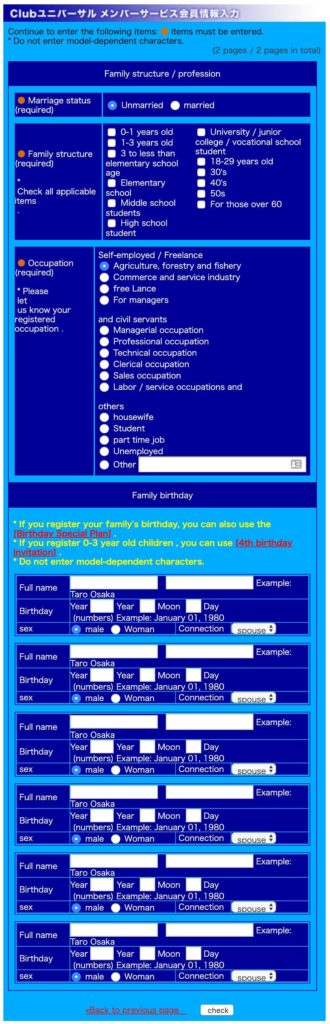
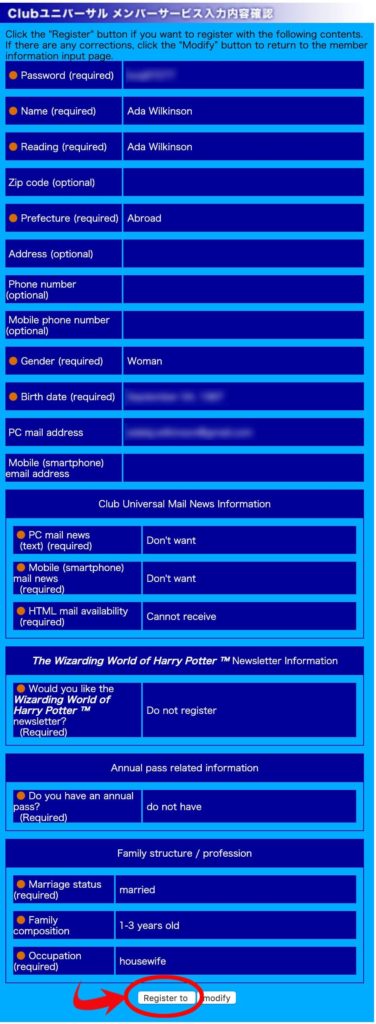
Yes. Just register on the Japanese website of Universal Studios and make sure to register your entire family with their birthdates. The birthday discount is 500 yen less than the regular ticket, which is applicable to the entire family. The downside is that the website is all in the Japanese language.
The ticket is valid from the first day of your birthday month, until the end of next month. For example, if your birthday is September 22, then your USJ ticket is valid from September 1 – October 30, and your whole family will get a discount as well. If you need further help, I suggest asking for help from a Japanese friend or click here for registration instructions.
7. How are restaurants inside?
The usual park food like churros, turkey legs, and caramel popcorn are all very good. Be warned if the food looks cute or “Instagrammable”, it tastes terrible. Trust me. I was fooled by many cute looking foods offered in the park (this rule can often be applied to most food actually). Even the butterbeer from the Wizarding World didn’t taste any special.
If I were to visit USJ again, I would probably bring onigiri or a bento and eat them at the benches scattered around the park, and just save money for a turkey leg and churros. I’ve seen many Japanese visitors do this!
Restaurants outside USJ, located in the Universal CityWalk are worth trying. But remember, unlike most American amusement parks, there’s no going back once you leave the park.
8. What if it’s raining during my visit?
Raincoats are definitely more preferable than umbrellas if you are visiting during rainy days. There are also several attractions that have splash zones, like Jaws, The Jurassic Ride, and the Waterworld Show.
If you plan on taking those rides, buy a raincoat from 100 yen stores the day before your USJ visit. The raincoat from the vending machines inside USJ is 400 yen, which can be expensive for the entire family.
Conclusion
USJ park was a lot of fun during my visit. It’s worth mentioning here that I was all by myself when I first visited, but still had a lot of fun. I managed to experience pretty much all of the attractions I was interested in, and still have time to take in the spectacular views of the park.
This is because I visited during the least crowded season, around the first week of January, and had both 15-Minute Early Special Entry Pass and Express Pass. I also managed to get a second Timed Entry Ticket to The Wizarding World of Harry Potter. But that was because it was less crowded.
I was able to finish all the attraction rides on my Express Pass tickets within just an hour of entering the park. By 5 p.m., I noticed the crowd had thinned down and I was able to go on more rides not included in my Express Pass. The lines had shortened to 15 to 30-minute waits. I left the park at 7 p.m. and hung around the Universal CityWalk before heading to the train station.
Final Tips and Recommendations
Get an Express Pass no matter what day of the year you are visiting, be it off-season or peak-season. Trust me on this.
Book your Studio Pass and Express Pass tickets in advance.
If you don’t have Express Pass and you are in a group, consider lining up for the “Single Rider” lane, so you will ride separately. This lane is shorter than the regular lane.
Arrive at the park with a full stomach or at least have a heavy breakfast. To save time from waiting at the restaurants. And to save your wallet from the high prices of these restaurants.
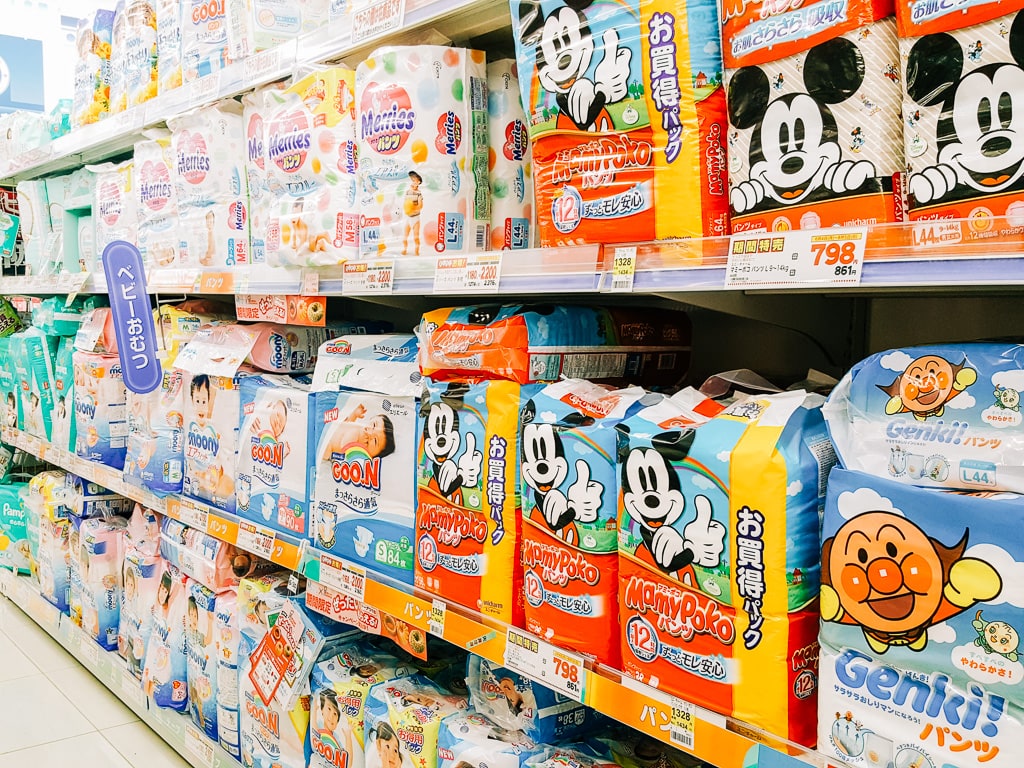
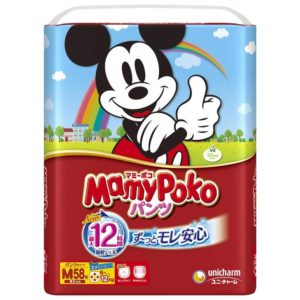
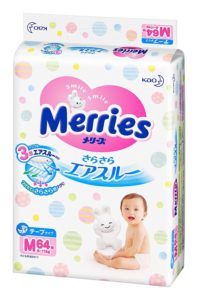
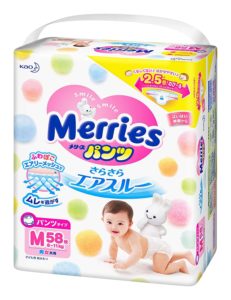
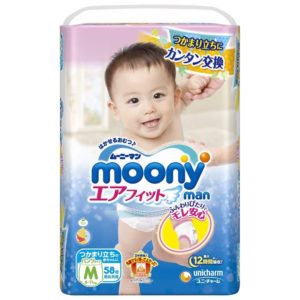
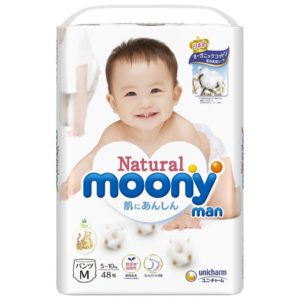
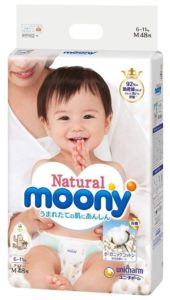
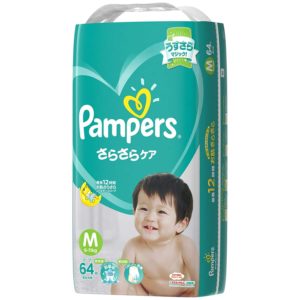
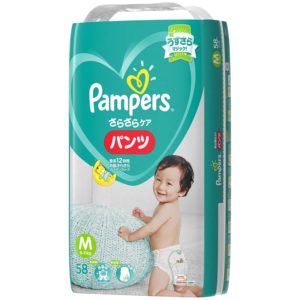
Whether you’re an expat family or are simply visiting Japan with your baby or toddler, it’s easy to get lost in translation. This guide has all you need to know about baby diapers in Japan.
Let’s begin with an indispensable (and messy!) part of child rearing–diapers.
Aside from this guide, check out our resources for traveling in Japan with your baby:
The best place to find diaper is through Create and Welcia Drug Stores. However, these drug stores are only prevalent in residential areas. So if you have to stay in a residential area in Tokyo, Kyoto or Osaka cities, make sure to look for these drugstores first. If you happen to be in a touristy spot, I recommend Matsumoto Kiyoshi drugstore and Mega Don Quijote as they almost always have stocks of baby diapers.
Mega Don Quijote is better than Don Quijote because Mega Don Quijote stores usually have a big selection of baby and toddler goods. Please note that the convenience store is the last place to search. Despite their prevalence across Japan, convenience stores rarely stock diapers. If you do come across diapers in a convenience store, you’ll immediately notice a meager selection of brands. A stock is typically limited to pack of 4 or 5 diapers and are in sizes M or L.
Several months ago, I came across a 2-pack of Goo.N diapers in the baby goods section of the 100 yen store chain Daiso. But, avoid relying on Daiso as the stock may vary by branch.
For expats or long-term residents
If it’s your first time shopping for diapers in Japan, buy in person to get an idea of what’s on the market. Check out your local drugstore (again, I recommend Create and Welcia), and discount retail chains such as Mega Don Quixote and Costco. And of course, shops specializing in baby and toddler goods such as Akachan Honpo, Nishimatsuya, and Babies ‘R’ Us.
Diapers are bulky in nature, so you ideally want to purchase them online. By doing so, you won’t have to worry about juggling both baby and bundles of diapers home. When it comes to shopping online, most expats in Japan prefer Amazon Japan. Amazon Japan Prime members should sign up for Amazon Family, where diapers can be purchased for 15 percent of the retail price with FREE shipping.
Before you shop online, however, do consider taking a trip to a brick and mortar store like Akachan Honpo or Babies ‘R Us to examine diapers in person. Costco, of course, is also another excellent option for those seeking to buy in bulk.
For U.S. military stationed in Japan
Japanese diapers are actually cheaper than Amazon US, Commissaries, and Exchange. Even if combined with coupons, Japanese diapers will still turn out to be cheaper. Aside from that, Japanese diapers have better quality and softer material. Thus, are great for sensitive skin and preventing rash compared to American brands.
Popular Japanese Diaper Brands
These are the six diaper brands you will encounter when shopping for diapers in Japan: Genki, Goo.N, Mamy Poko, Merries, Moony, and Pampers.
1. Genki!
Best Known For: Most ultra-absorbent diaper of all Japanese diapers–effective against a leak.
Genki means happy, energetic and healthy in English. For this reason, Genki diapers frequently make their way into the shopping carts of Japanese parents. It is even popular among Malaysian parents in Japan.
Genki is manufactured by Oji Nepia, a company who manufactures the popular Nepia toilet paper brand. Compared to other Japanese diapers, Genki diapers are slightly thicker, thus it does a great job of preventing leaks.
Genki diapers are mainly for older babies, they are only available as pants or pull-up type.
2. Goo.N
Goo.N Diaper Tape Type
Goo.N Diaper Pants Type
Best Known For: Affordability and very soft which is great for sensitive skin.
Goo. N has an impressive sizing range. Beginning with preemie sizes all the way up to 35 kg (77 lbs). Its diapers feature characters from the hit NHK TV show “Inai Inai Baa! (Peek-a-boo!).”
Goo.N diapers are super absorbent and allow for maximum breathability to keep your child’s skin dry. Lastly, Goo.n’s “Marshmallow” lineup (はじめての肌着 マシュマロ仕立て) has a lining which also contains Vitamin E.
3. Mamy Poko
Best Known For: Mamy Poko is best for potty training diaper and affordability.
Mamy Poko diaper sizes begin at “M” (Medium-sized 6 kg and above), which means that they are geared towards older babies who are potty training. One package of diapers comes with several different baby Mickey Mouse designs on them.
Mamy Poko diapers feature Unicharm’s unique absorption polymer which can hold urination for up to 12 hours without leaking.
4. Merries
Merries Tape Type
Merries Pants Type
Best Known For: The most breathable brand of diaper in Japan.
Merries rank high in breathability, absorption, cost-performance, fit, and durability. If you are interested in Eco-friendly disposable diapers, you may want to try Merries’ Natural lineup made of 100 % organic cotton.
5. Moony
Moony Pants Type
Moony Natural Pants Type
Moony Natural Tape Type
Best Known For: Affordability, character design, and very soft which is great for sensitive skin.
Moony is made by Unicharm, a Japanese company that also produces several brands of sanitary napkins and adult diapers. So, if leakage is your biggest concern, you might want to pick up a package of Moony diapers.
Moony is also popular for newborns as the waistband has a unique indentation to accommodate an infant’s sensitive belly button. Like Merries, Moony also has a “Natural” diapers lineup made of organic cotton and features “Pooh” as its diaper design.
6. Pampers
Pampers Medium Tape
Pampers Medium Pants
Best Known For: Loyalty reward program.
Pampers is perhaps the most popular brand of diapers in Japan mainly because of its great loyalty program. In addition, most hospitals and birth clinics in Japan use Pampers because of the partnership that Pampers established.
Pampers absorb urine with its proprietary absorbent gel which maintains a low acidity level inside the diaper. The elastic waistband creates a snug fit around the waist and legs without hampering a growing baby’s movement.
7. Oyasumi Man
Oyasumi Man for Boys
Oyasumi Man for Girls
Oyasumi Man is a brand of nighttime diapers for toddlers being potty trained. It features the Disney film Cars as well as Disney princesses. They are available in L (9-14 kg) and Extra Large XL (13 – 25 kg).
Types of Japanese Diapers
You will find 3 types of diapers in Japan:
tape (テープ | te-pu)
pants (パンツ | pantsu); or pull-ups
swim diapers (水あそびパンツ | mizu asobi pantsu); or water play pants
Moony Swim Diapers
You might wonder which type of diaper (tape or pull-up) is right for you. A good guideline to make the switch is when your baby can hold up their head, roll over, or crawl.
However, you might want to consider switching to pull-up diapers if your baby’s leg movements during diaper changes are a bit too much to handle.
For older babies and toddlers undergoing potty training, you may want to pick up a package of overnight diapers such as Oyasumi Man.
As for swim diapers, only Moony carries them.
How to Read Diaper Sizing
Diaper sizes in Japan are typically expressed by letter sizes (i.e. S, M, L) and a baby’s weight.
Some Japanese diaper brands may also determine size by a baby’s developmental milestone (i.e. crawling, walking).
Sizes and fit vary from brand to brand so keep this in mind when shopping for diapers.
Please refer to the below table for a guide to Japanese diaper sizes according to letter size, weight, and developmental milestones:
The usual tape diaper sizing
Baby’s Weight
Size
Low Birth Weight or Premature Babies (up to 3.5 kg or 8 lbs)
新生児小さめ (shinseiji chīsame)
Newborn (up to 5 kg or 11 lbs)
新生児 or ねんね (newborn or nen ne)
Up to 4-8 kg (9-18 lbs)
S
Up to 6-11 kg (13-24 lbs)
M
Up to 9-14 kg (20-31 lbs)
L
The usual pants diaper sizing
Baby’s Weight
Size
Up to 4-8 kg (9-18 lbs)
S
Up to 6-10 kg (13-22 lbs)
M
Up to 9-14 kg (20-31 lbs)
L
Up to 12-22 kg (26-49 lbs)
ビッグ (Biggu or XL)
Up to 15-28 kg (33-62 lbs)
ビッグより大きい (Biggu Yori Ooki or XXL)
Other Diaper Descriptions (Japanese-English Translation)
ねんね (nen ne)
Newborn babies
ねがえりor 寝返り (negaeri)
For babies who can roll over
ハイハイ (hai hai)
For babies who can crawl
おすわり (osuwari)
For babies who can sit unassisted
たっち (tatchi)
For babies/toddlers who can stand unassisted
一人歩き (hitori aruki)
For babies/toddlers who can walk unassisted
トレーニング (tore-ningu)
To be used during the potty training stage
卒業 (sotsugyou)
To use in the final stage of potty training
Japanese Diaper Features
1. Wetness Indicator. You’ll notice that both tape and pull-up diapers in Japan have a yellow line or several stripes running down the middle and up the back of the baby’s diaper. This stripe will turn blue when wet, indicating that your baby’s diaper should be changed.
2. Removal and Disposal Convenience. The sides of pull-up diapers can be torn at the seams with little effort, making diaper changing a breeze. The tape tab on the back of pull-up diapers is used when rolling up a soiled diaper. Simply roll the diaper into a burrito, pull down the tape tab, and fasten the diaper shut. While tape-type diapers have the benefit of adjustable sizing thanks to the fasteners on either side.
Diaper Disposal Etiquette in Japan
In Japan, waste is separated into several categories: recyclables, combustible, non-combustible, cloth, plastics, oversized garbage, etc.
Furthermore, specific categories of garbage are collected solely on certain days of the week and must be put out only on those specified days. This is further complicated by the fact that waste disposal rules vary by municipality while waste collection dates differ by neighborhood!
With this said, as a general rule, diapers are combustible or burnable trash (燃えるゴミ or 燃えやすゴミ). However, diapers must be disposed of (bagged) separately, and not with other combustible waste.
Aside from the garbage disposal rules, another surprising fact about throwing away diapers in Japan is that a solid stool is flushed before disposing of diapers!
Lastly, when you are out in public, the general rule is to take soiled diapers home for disposal. You may, however, dispose of your baby’s diapers if the bathroom has a specially designated trash can for diapers.
Cloth Diapering in Japan
I personally have no experience with cloth diapering and don’t know anyone who has done cloth diapering in Japan. However, they are an eco-friendly and cost-effective option.
You will find cloth diapers and cloth diaper covers in Japan, especially online but they are twice the price of cloth diapers available in the U.S.
The largest U.S. Naval Base Yokosuka actually has a group of cloth diapering mothers that you might to join if you’re from the military.
As for me, I prefer to buy time and the convenience of using disposable diapers as I am also a working mom.
What is the Best Baby Diaper Brand in Japan?
Remember that every baby is different. What works for my baby or other mother’s baby might not work for yours.
When my daughter was a baby, I switched between Moony and Goo.N–whichever brand was on sale, I’d get it. Moony and Goo.N worked wonderfully on my daughter’s delicate bottom.
At 6 months, I switched her to the pants-type diaper of Moony or Goo.N, because her leg and body movements were too much to handle.
At 2 years old, I started her on Oyasumi Man diapers for her nighttime and have used them ever since because she sleeps better at night.
Ultimately, the “best” diaper brand will always be the one that’s well-suited for your son/daughter’s skin.
Tips from an ex-pat mom
“When it comes to diapers in Japan, I use Pampers. My birth clinic is one of the 70% of hospitals and birthing centers in Japan which use Pampers; therefore I became familiar with the brand very quickly. I continue to use Pampers solely because they have a point rewards program.
Inside every package of Pampers is a coupon code worth a certain amount of points. You can collect and redeem points for a number of items such as toys and baby memorabilia.
Pampers are not the only brand with a point rewards program. Merries, and GOO.N all offer some sort of point rewards program. Overall, choosing diapers, like anything for you baby, all comes down to preference. There is no uniform rule to selecting the “right” diaper.
But, remember that the best diaper should keep your baby’s skin dry, protected from rashes and irritation and prevent leaks. If in doubt, buy 1 or 2 packages of a brand that interests you, and see how it works before committing to a bulk purchase.
If you are a Rakuten member and fluent in Japanese, sign up for Mama Wari to receive discounts on diapers, point rebates, and various bonus point campaigns.
Personally, I use Rakuten when shopping online for diapers as I enjoy collecting points for use on future purchases and at affiliated shops across Japan. (Living in Japan, you might quickly adopt the custom of earning points with point cards or apps!)”
Tokyo is a great destination for families with babies or toddlers. You will feel absolutely spoiled by the facilities as they’re all family-friendly and designed with convenience in mind.
Public playgrounds have clean family restrooms. Every mall is stroller-friendly and has nursing facilities. Most restaurants have kid’s meal sets and highchairs. The cities themselves are incredibly clean. It’s one of the absolute safest countries in the world. And best of all, Disneyland exists!
Aside from this guide, check out our resources for traveling in Japan with your baby:
1. MORI Building DIGITAL ART MUSEUM by EPSON teamLab Borderless
Your babies will love this digital art museum. It’s designed to flood your senses with lights, sounds, and texture. Note that strollers are not allowed so bring a baby-carrier.
Make sure to get your tickets here in advance as they sell quickly within the day.
A trip to Tokyo with kids is never complete without a visit to the Ghibli Museum, which showcases the work of the famous Japanese animation studio, Studio Ghibli. Its museum is like walking into one of its animated films with facilities such as a Bouncing Totoro 3D zoetrope and a Cat Bus room on the 2nd floor.
There are also baby-friendly facilities and a nursing rdoom available on the 1st floor for those bringing toddlers and infants. This is no exaggeration but Ghibli Museum tickets are easily sold out so you have to make sure to book way ahead of time.
Getting there: 15-min walk from Mitaka Station or Kichijoji Station
3. National Museum of Nature and Science
The National Museum of Nature and Science is one of the biggest science museums in the country with over 10,000 exhibits. Among these are authentic artifacts that include the stuffed body of Hachiko and two famous pandas.
For the little ones, there is a ComPaSS exhibition room on the 3rd floor, designed for kids aged 4 to 6 although kids 0-12 years old can still enter. For parents bringing small kids, a diaper changing table can be found on each floor. A nursing station is also located on the floor B1 of the Japan Gallery.
Three strollers are also available for rent at the Central Information Desk.
4. National Museum of Emerging Science and Innovation (also known as Miraikan)
More popularly known as the Miraikan, this museum is most appealing to families with young children because of the variety of fun yet educational activities that it offers. Its main exhibits can be found on the 1st, 3rd and 5th floors, with the one on the 5th having themed sections: Earth, Lab, Life, and the Universe.
It also has a baby-friendly cafe on the 5th floor and a theater on the 7th. For families bringing infants or toddlers, strollers can be rented but there are only four available inside the museum. There are also 11 diaper changing facilities inside as well as a nursing room behind the cafe on the 5th floor. Free admission for kids on Saturdays. Free admission for preschoolers.
Getting there: 4-min walk from Telecom Center Station
Best Indoor Play Spaces for Babies & Toddlers in Tokyo
5. Sanrio Puroland
This place has everything Hello Kitty including fun rides, parades, restaurants, souvenir shops, and more Sanrio Puroland is pretty much designed to be extremely baby-friendly. All restrooms are equipped with diaper changing table.
You can head to the Baby Center on the 1st floor where there are more changing tables, children’s toilets, tables, baby food, and nursing rooms. Take note though, strollers are not allowed on the 1st and 2nd floors where it is uneven. So it might be best to use baby slings and carriers in Sanrio Puroland.
Roppongi Hills itself is a very family-friendly area. Why not visit the Mori Tower Sky Deck? Kids 3 and under are free of charge!
Getting there: 9-min walk from Roppongi Station
7. Duplo Village in Legoland Discovery Center
Lego toys might be a pain to step on and clean up after but if it’s helping your kids develop their motor skills and imagination, it’s really such a small price to pay. Located inside DECKS Tokyo Beach Mall, The Duplo Village is truly made just for toddlers – adults cannot get in if they aren’t accompanied by kids.
Families will also love this place because it has complete amenities such as a family restroom, diaper changing areas, and stroller accessibility. Be sure to book ahead because they only allow a limited number of visitors each day.
Getting there: Duplo Village is located in DECKS Tokyo Beach Mall, which is a 5-min walk from Tokyo Teleport Station.
8. Aneby Trimpark
If you are a parent who chose the Montessori way, you will love Aneby Trimpark. Aneby Trimpark has every play equipment and activities for infants to 12 years old.
Getting there: 5-min walk from Aomi Station
9. Asobono in Tokyo Dome City
Asobono has a kids toilet and a breastfeeding room. The toilets have 2 sizes for 1-2 years and 3-6 years. The breastfeeding room is equipped with two large sofas and two diaper tables. They also provide water which can be used for milk formula.
Getting there: 10-min walk from Suidobashi Station
10. Tokyo Toy Museum
A few minutes walk from Yotsuya San-Chome station, the Tokyo Toy Museum was originally an elementary school that was converted into a museum to house various toys and games from all over the world. It now has several rooms with different themes, and there’s an attendant who will help you figure out the toys and games.
Among everyone’s favorite room is the baby room which comes with various wooden toys that they can play and interact with. Parents will love the fact that the room also has changing and nursing facilities available.
Getting there: 6-min walk from Yotsuya San-Chome station
11. Amazing World (various branches)
From its name, the Amazing World is an all-weather indoor play facility for families. It can be found in many locations all over the country. The place has several facilities that allow kids to explore and pursue their interests, catering to all senses. They have a baby corner especially for kids 0-2 years old, as well as space for changing diapers and breastfeeding. Diapers can be bought at the reception desk.
12. Hakuhinkan Toy Park
While Ginza is better known for the high-end fashion boutiques that line up its streets, it actually has a huge toy shop that’s open all year round. The place is a haven for the kids and kids-at-heart with more than 200,000 toys – party goods on the 1st, stuffed animals and traditional Japanese toys on the 2nd, infant and young kids’ toys on the 3rd, video and card games on the 4th.
There are also restaurants on the 5th and 6th and a theater on the 8th floor. Parents and babies are free to test some of the toys on display. For those bringing infants and toddlers, the nursing room is located on the 4th floor. Admission is free.
Hakuhinkan Toy Park is about a 5-min walk from Shimbashi Station.
13. Lego Clickbrick, Roppongi
We can’t deny the fact that they’re really great toys, especially for encouraging kids’ imagination and creativity. The Lego Clickbrick in Roppongi Hills is full of all sorts of Lego pieces that they can mix and match.
There is even a Lego School nearby where kids can enroll in Duplo building classes as well as more advanced ones involving programming and robotics. Lego Clickbrick is located on the B2F of Roppongi Hills mall, about a 7-min walk from Roppongi Station.
Getting there: Located on the B2F of Roppongi Hills mall, a 7-min walk from Roppongi Station
14. Kid-O-Kid Bornelund in Kawasaki
The Kid-O-Kid Bornelund has various locations throughout Japan but the closest first-rate Kid-O-Kid Bornelund branch is located in Kawasaki City which is 35 minutes train ride from Tokyo. It features various rooms with different themes, toys, and features.
The little ones can enjoy the jumping castle and ball pit, among many others. If you are tagging along with your baby or toddler, there is also a space where they can crawl or even climb structures.
Getting there: Located inside Le FRONT shopping mall, a 5-min walk from Kawasaki Station
15. Ai Port Station
Located in Aoyama, Ai-Port Play Center is a multi-purpose community facility which is super convenient for busy parents. It comes with both indoor and outdoor play areas, a childcare facility as well as a child-raising advice center.
This community space is basically one huge living area with three components: the Hidamari, filled with wooden toys, books and a play kitchen; Aoba; and the Kids’ Garden located outside. They make the perfect place to have play dates in Tokyo.
Getting there: 2-min walk from Exit 1B of Gaienmae Station
16. Akasaka Kids and Teens Hall Nandemo
Not all facilities in Tokyo require families to spend money every time. In fact, in the heart of Tokyo lies a convenient and free public play space called the Akasaka Kids-Teens Hall Nandemo.
The place has a lot to offer, including different rooms with different types of toys and activities. They even offer monthly activities offered per age group. While the place has no cafe, you can bring along food and beverages and eat in the main room. There is also a small kitchen and a nursing room available on the premises. Admission is free.
Getting there: 3-min walk from Akasaka Station
17. Sky Circus Sunshine60
If you decide to visit the shopping center of Sunshine60, make sure to check out their observatory and other facilities as well. Beyond getting a good view of the city, including the Roppongi Hills and Tokyo Tower, the observation deck also has other kid-friendly features such as the Sky Circus and Aerial VR.
The best part about bringing toddlers and infants here is that it allows strollers within the venue. Rentals are also available in the B1 (General Information Office and Broad Street Information Office) and the 1 (Water Fountain Information Office and Broad Street Information Office) levels of Sunshine City Alpa. Baby rooms are available on the B1, 2 and 3 levels, while one changing mat is provided within the men’s, women’s and wheelchair user priority toilets.
Getting there: Located inside Sunshine City Shopping Center, a 6-min walk from Higashi-Ikebukuro Station
Best Amusement Parks for Babies & Toddlers in Tokyo
18. Yomiuriland
The first amusement park you should consider visiting in Tokyo is Yomiuriland, as it is just near the city center. While this place offers the usual amusement park attractions – roller coasters, free fall rides, and bungee jumps – it also has other features such as swimming pools during the summer and illumination lights in the fall and winter.
Getting there: 5-min bus from Keio-Yomiuriland Station.
19. Tokyo Disneyland
Although technically not in Tokyo, no trip to Tokyo with kids is complete without visiting the Happiest Place on Earth. There is really no need for introductions on this one, we all know what Disneyland is all over the world offer: fun rides, parades, and shows, shops, and restaurants.
Tokyo Disneyland is full of open spaces to accommodate large crowds. However, it is made extremely baby-friendly for families bringing little kids along. There are stroller rentals for ¥1,000, stations for changing diapers, and spaces for nursing or feeding infants. If you left your items behind, you can also purchase formula, baby food, diapers and even stroller rain covers inside.
NOTE: Tokyo Disneyland appeals to babies and toddlers than Tokyo DisneySea.
Best Parks for Babies & Toddlers in Tokyo
20. Imperial Palace East Gardens
Not to be mistaken with the Imperial Palace Gardens, which only opens to the public during New Year and the Emperor’s birthday, the Imperial Palace East Garden’s main attractions are gardens and small museums. And, while some areas here are not stroller-friendly, they still make a good place for families with babies and toddlers to stroll around.
In fact, families can easily spend the whole day in this area alone. After exploring the entire palace, be sure to head to the Honmaru grounds to allow the little kids to crawl around while you relax. Admission is free.
Getting there: 6-min walk from Otemachi Station. NOTE: Closed on Mondays and Fridays.
21. Showa Kinen Park
Around 30 minutes away from Tokyo by train is the Showa Memorial Park, a 160-hectare park full of flowers, natural spaces, and play spaces. Many visitors come here to relax and enjoy a picnic with friends and family. However, the park is best visited during the flower festival which is held yearly every early spring as the park is abundant with beautiful cherry blossoms, tulips, and poppies.
You can also head straight to the Children’s Forest which has vast play areas for younger children such as Dragon Dunes, Bouncing Dome, Forest Birds, Rainbow Hammocks and many more. There is also a playground that can be accessed for free from April to September, then becomes a paid area during the pool period.
A limited number of strollers can be borrowed for free at the entrance. Bicycles with child seats start at ¥410 for three hours but you need to strictly bike on the bike paths. Rooms for breastfeeding and changing diapers are also available all throughout with baby beds installed in main toilet areas.
Getting there: Just outside the Nishi-Tachikawa Station.
22. Hanegi Park
Hanegi is popular during plum blossoms, but here are a few different areas here where your child can play while you sit back on a picnic blanket (or even a small tent or tables and chairs) and relax.
The play area is not a typical playground, but instead, areas dominated by wooden structures, a concrete maze, dirt, and, surprisingly, campfires*, this place is filled with activities to let your child’s imagination run wild. Your kid WILL get dirty here, so you may want to bring a change of clothes, but they’ll also have a great time. Admission is free.
*NOTE: The campfires may have been a part of a specific event going on that day and may not be a normal occurrence.
Getting there: 10-min walk from Umegaoka station
23. Sakurazaka Park (best known as Robot Park)
Robots are always such a big hit, even for the little ones, and they will surely love this robot-themed outdoor playground! This 1,539-square-meter large park was designed by Korean artist Choi Jeong-Hwa and is located in a residential area so you can expect it to fill up with kids easily, especially in the afternoons.
The area is also relatively small and does not have a bathroom so it’s best to use the baby-changing facilities inside Roppongi Hills’ malls. Admission is free.
Getting there: 5-min walk from South Exit of Roppongi Station
24. Niko Niko Park (also known as Meiji jingu Gaien Park)
Toddlers can be especially fond of climbing and doing all the dangerous things that scare moms off. If you happen to stay in Tokyo, be sure to visit this park, which has a wide variety of equipment.
It features a tower and a slide, a sandpit, a trampoline, and many others for climbing and bouncing around. You can also bring food with you and eat lunch in the shaded tables or in one of the restaurants nearby.
Getting there: 3-min walk from Shinanomachi Station
25. Shinjuku Gyoen
Shinjuku Gyoen is one of the largest and the most popular park in Tokyo. It is among the best places in the city for cherry blossom watching in spring. The 144-acre park basically has three types of gardens: the traditional Japanese landscape garden, the French garden, and the English landscape garden.
There is even a huge greenhouse, which is home to several tropical and subtropical plants. Families love visiting this park because it is huge and has plenty of space for running, walking and crawling around. Picnic blankets are allowed inside and you can also bring small tents, tables, and chairs. The park also has baby-friendly restrooms as well as nursing rooms for moms with infants.
Getting there: 5-min walk from Shinjukugyoenmae Station Opening hours: 9:00 – 16:30. Closed Mondays, Dec 29 – Jan 3 Admission fee: 200 JPY adults, 50 JPY students, FREE for infants
26. Hibiya Park
Hibiya Park is the oldest Western-style garden in Japan and is home mainly to tulips and roses. The park has a lot of history: during the Second World War, nearly all its trees were cut and its fences taken down in order to aid the war.
Today, it is a popular place for open-air concerts as well as a place for relaxation. There are numerous benches scattered around the park and picnic blankets are also allowed inside, but only in designated areas. Families with infants and toddlers will love that the park has baby-friendly facilities such as restrooms and a nursing room. Admission is free.
Getting there: 5-min walk from Hibiya Station
Best Zoos
27. Ueno Zoo
Founded in 1882, Ueno Zoological Gardens is the oldest in Japan and is currently home to 3,000 animals across 400 different species. The huge number of animals make it an ideal place for families, especially those with small kids, to stroll around and explore. There is even a Children’s Zoo inside.
It’s easy to get into from anywhere in Tokyo and, while there aren’t any parking lots, there are toll ones available. You can easily bring kids in strollers or rent one at the entrance, and restrooms come with diaper changing tables. There are also three nursing rooms available within the vicinity.
Getting there: 5-min walk from Ueno Station. Opening hours: 9:30 – 17:00. Closed Mondays. Admission: 600 JPY adults; starts at 100 JPY for kids 4 years and older
28. Tama Zoological Park (Tama Zoo)
Tama Zoo is made up of three different zones: Australian, African and Asian, and an Insectarium. Little kids will love the variety of animals that can be found here including deer, elephants, lions, zebras, and various insects and Japanese animals.
The zoo also has several picnic areas for families to rest and enjoy lunch, but restaurants are also available inside. Restrooms are equipped with diaper changing tables and there are three nursing rooms scattered all throughout the park. Free admission every May 4 and 5, and October 1.
Getting there: Just outside the Tama Dobutsu Koen Station. Don’t drive, there are no parking lots.
29. Inokashira Park Zoo
This park zoo is well-known for featuring indigenous creatures in Japan so if you like the little ones to learn more about uniquely Japanese animals, this is the best zoo to visit. The park is split into two areas: the Zoo Area, which is the main park; and the Aquatic Life Park, which is the lakeside park.
Aside from the animals, there is also a mini amusement park within the park, with tickets sold separately. Restrooms within the Inokashira Park Zoo are equipped with changing tables for those bringing infants and toddlers. A nursing room is also available in the Administration Office at the main entrance.
It’s always a wise choice to bring kids to museums because they are packed full of information about interesting things. While these places are usually best suited for older kids, it can still be an enjoyable day to bring infants and toddlers around – it’s great to expose them early on to these kinds of attractions, and it’s a wonderful learning experience for the parents, too.
Getting there: 2-min walk from Inokashira-Koen Station
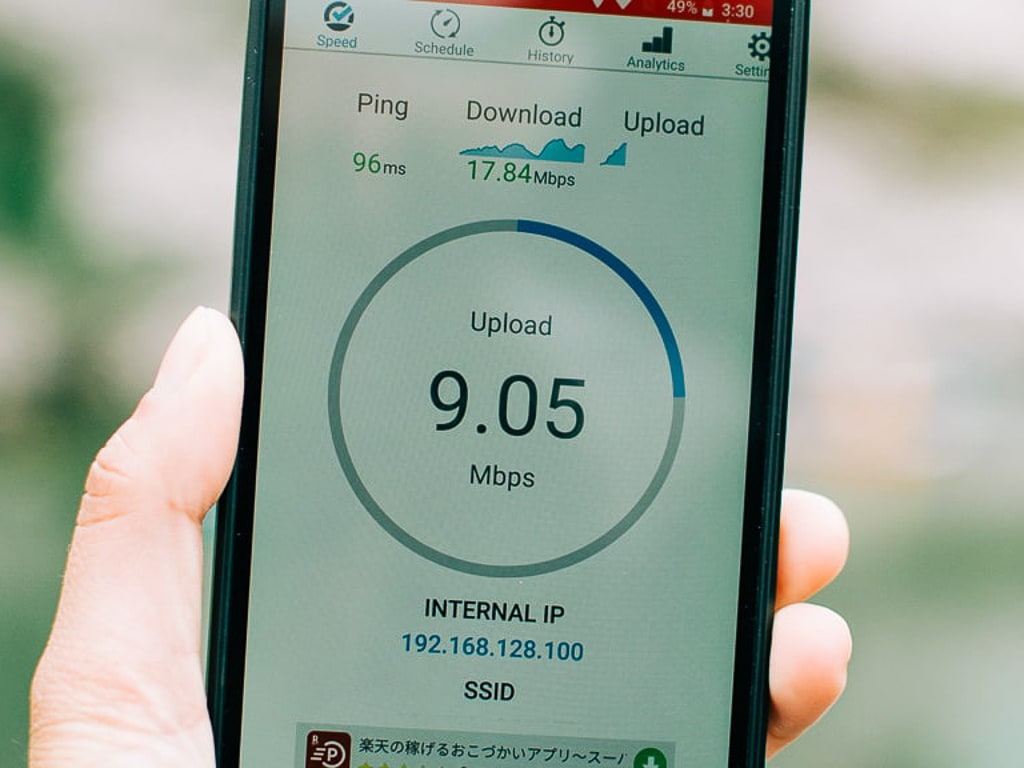
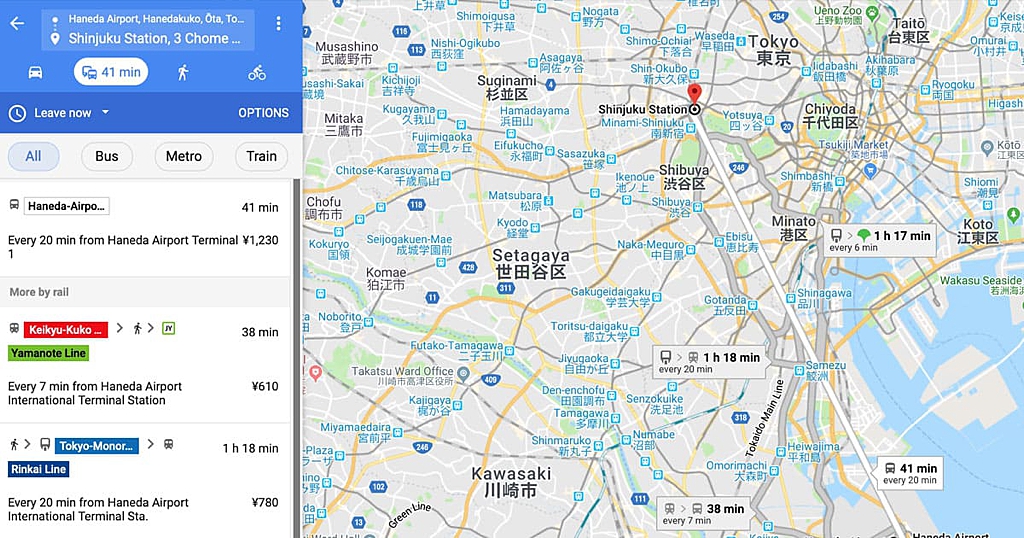
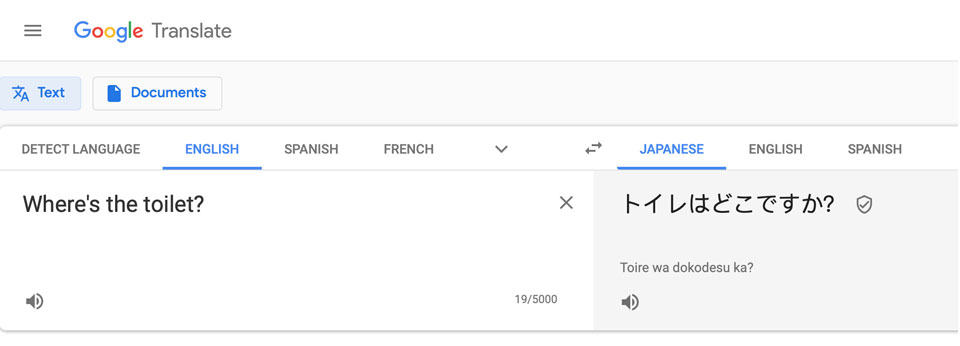
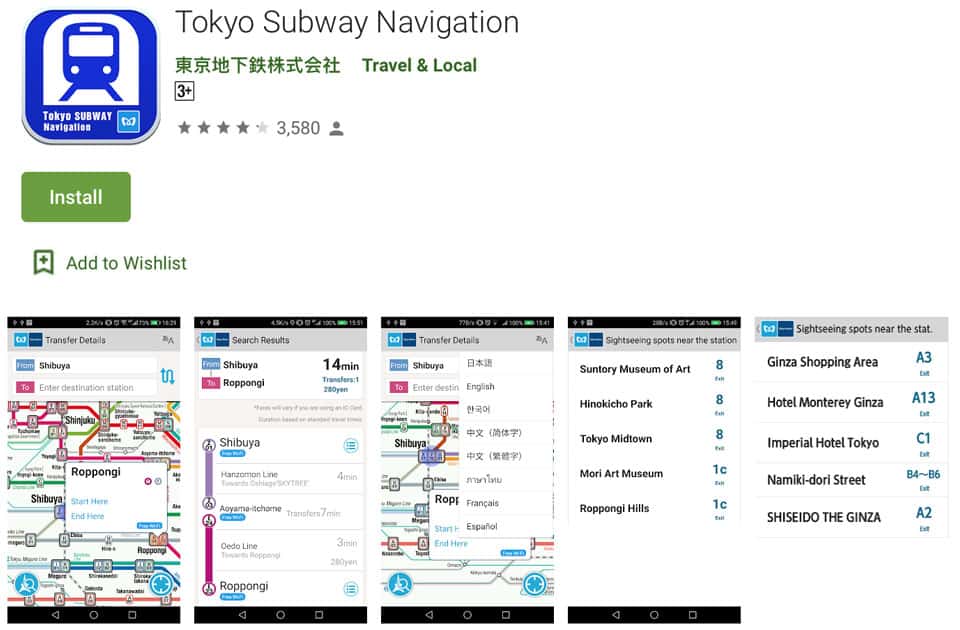
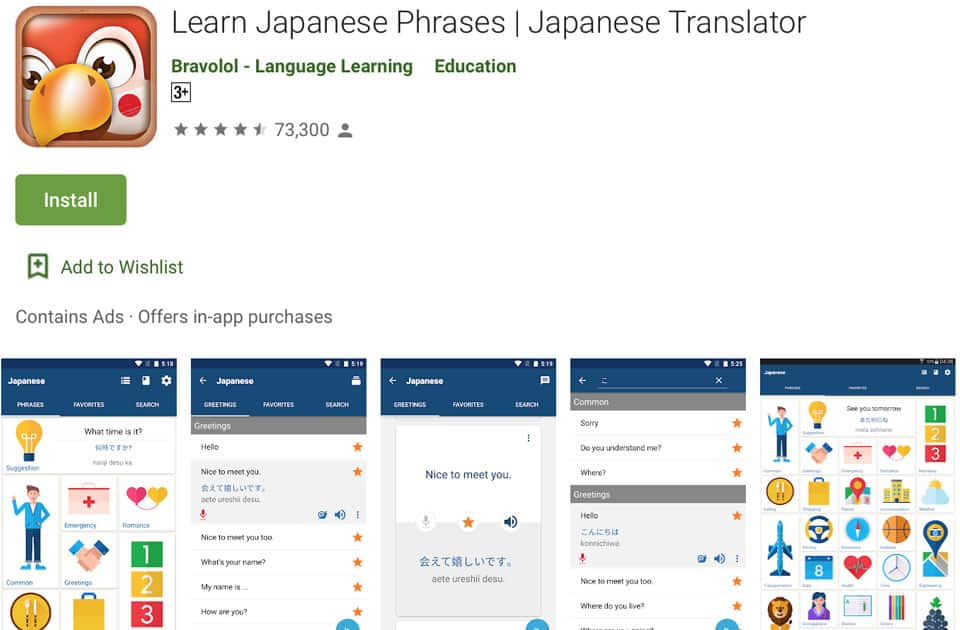
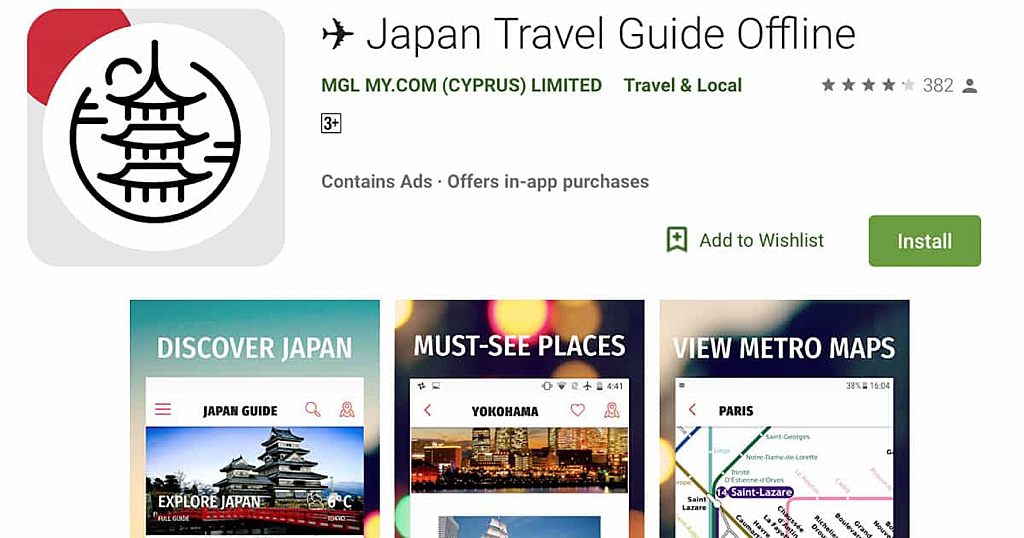
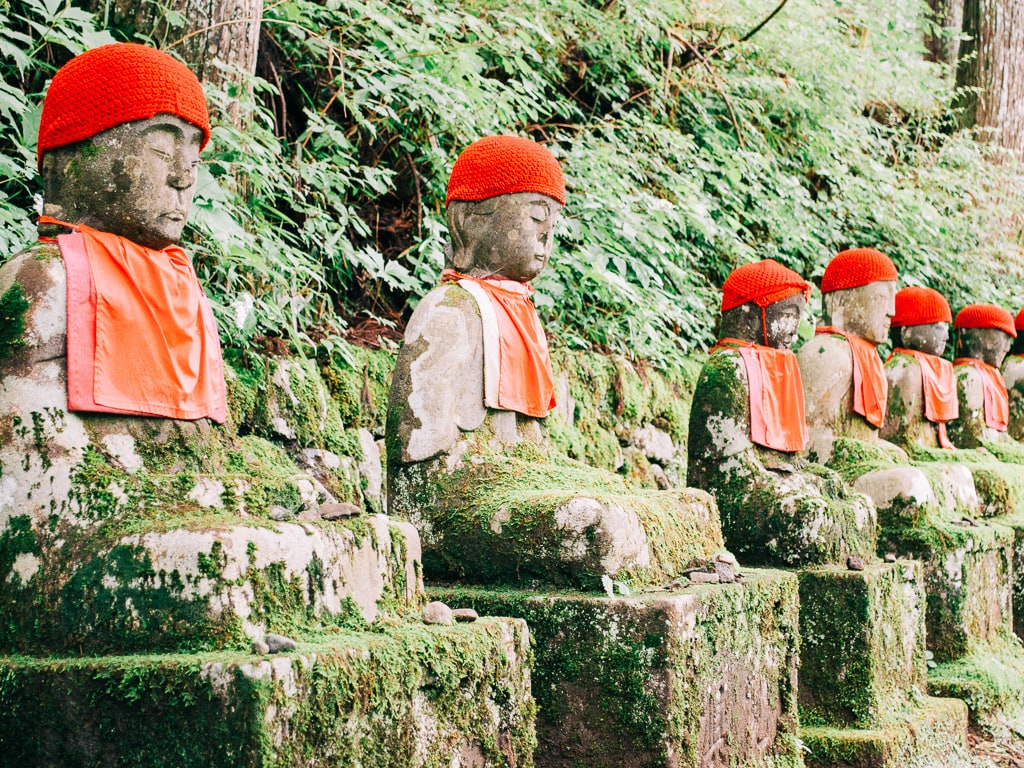
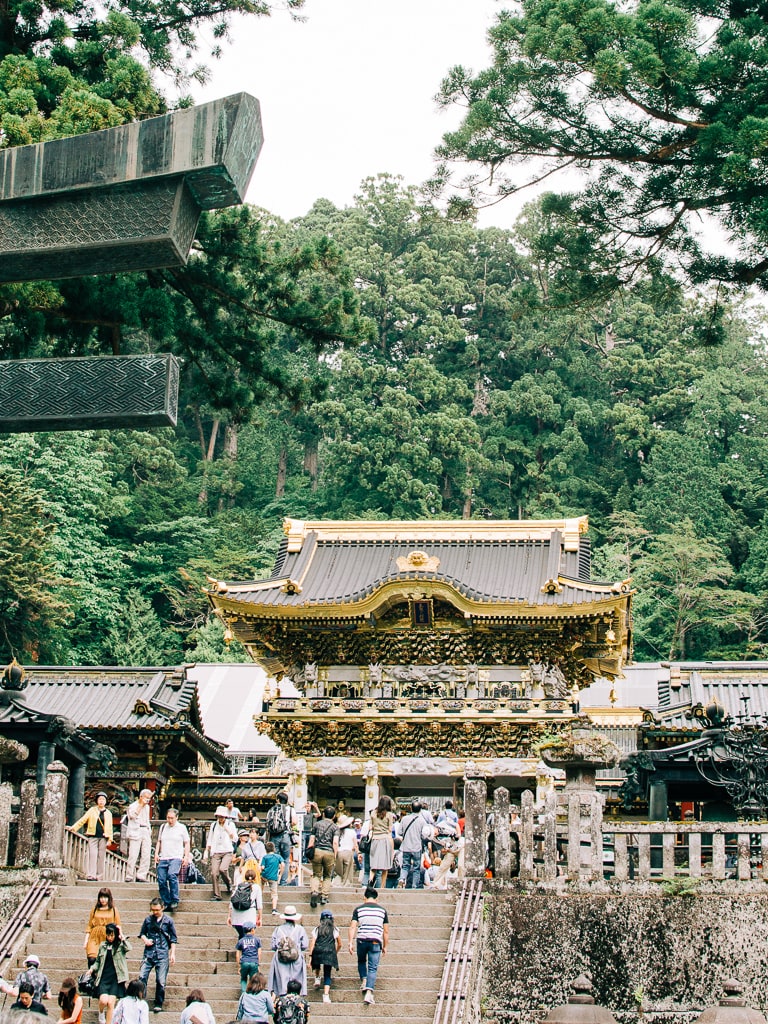
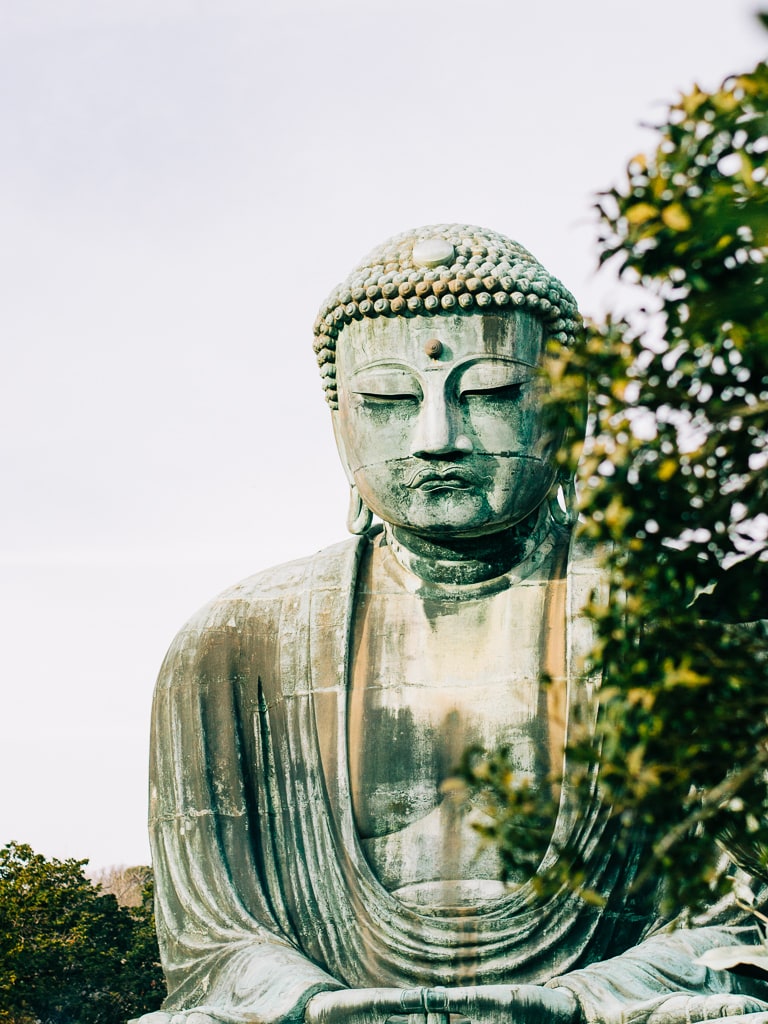
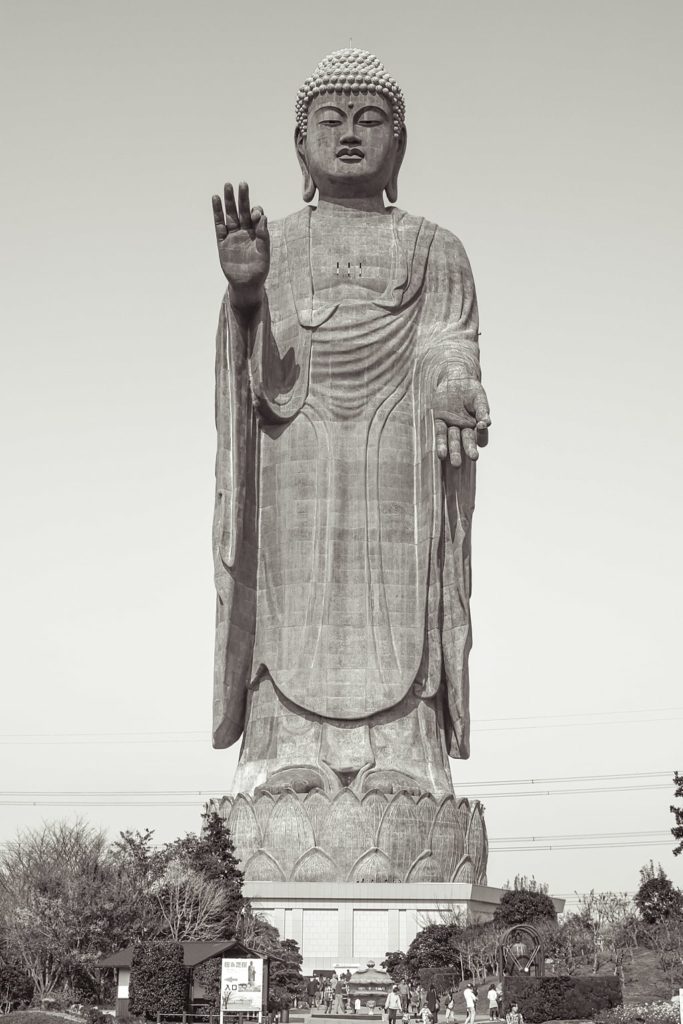

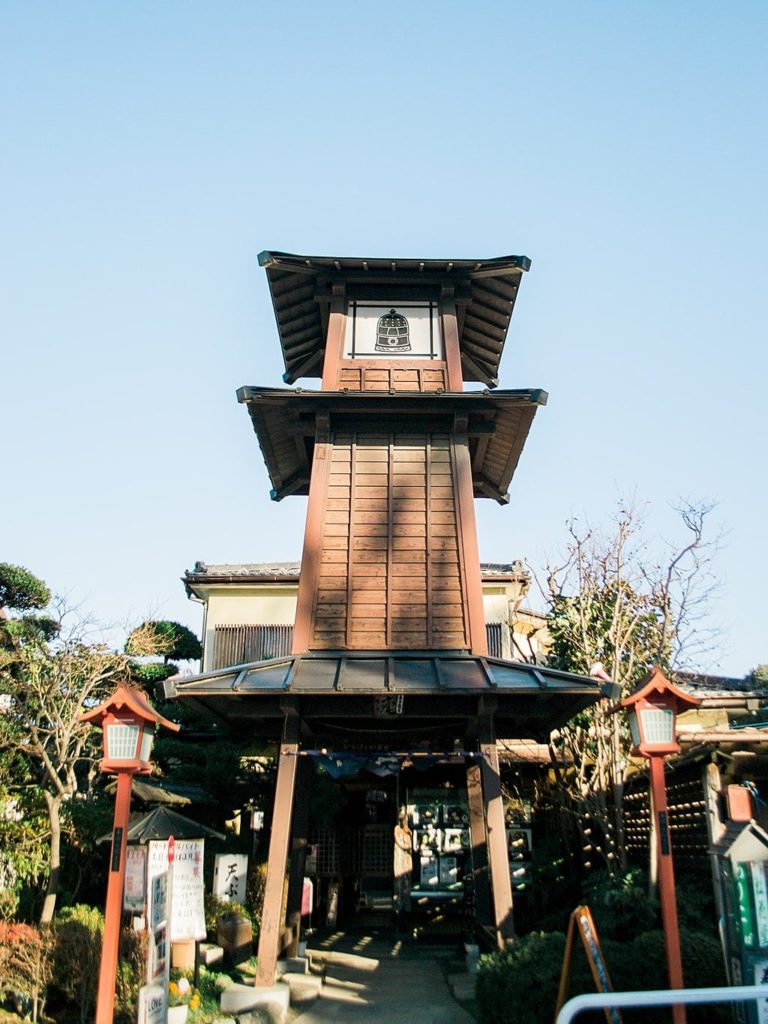
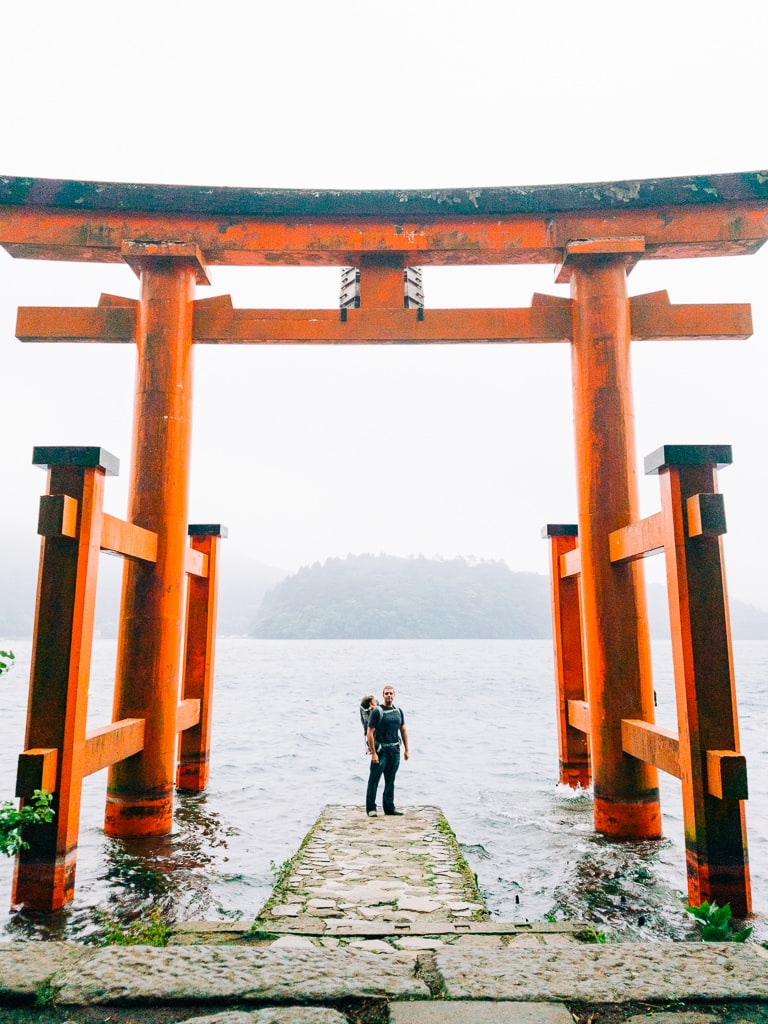
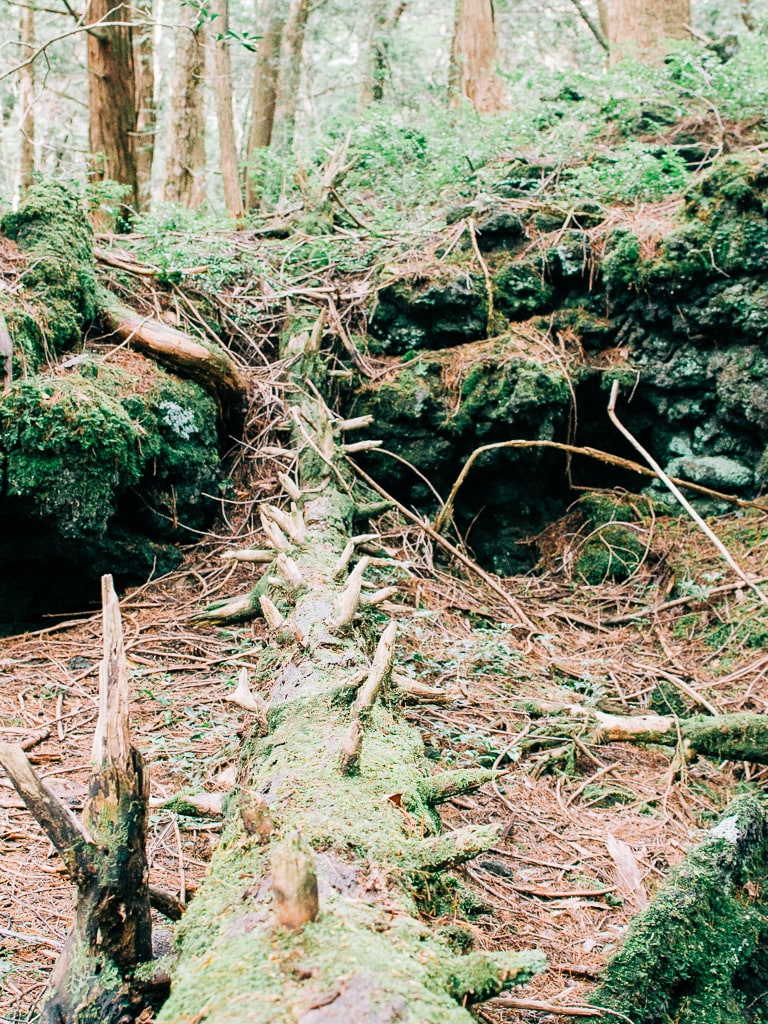
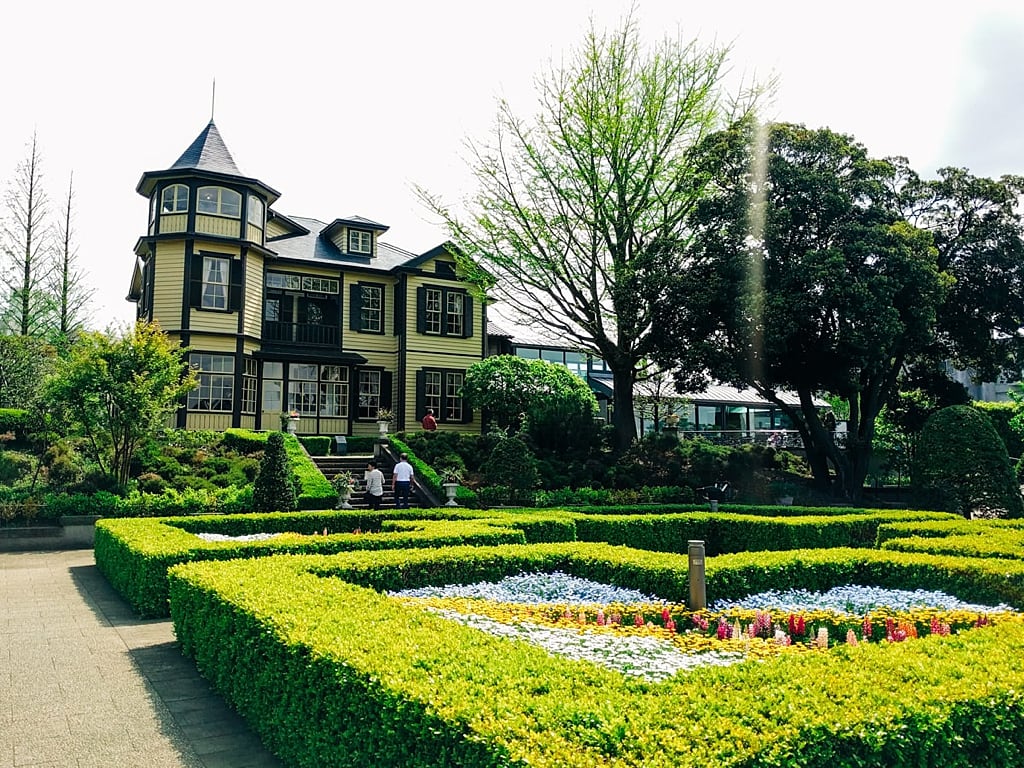
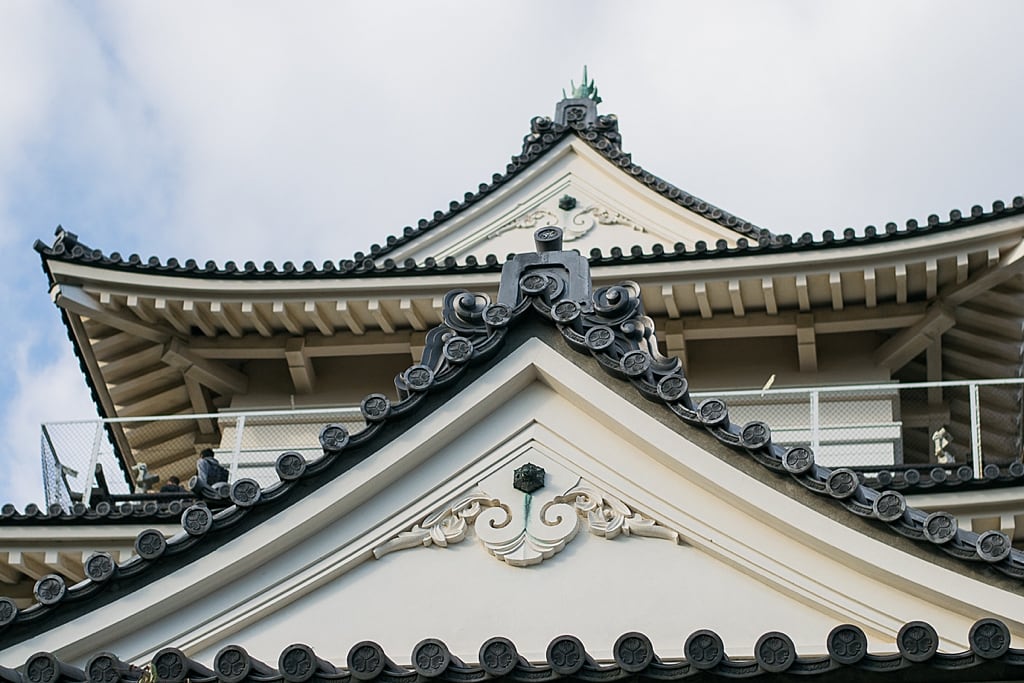
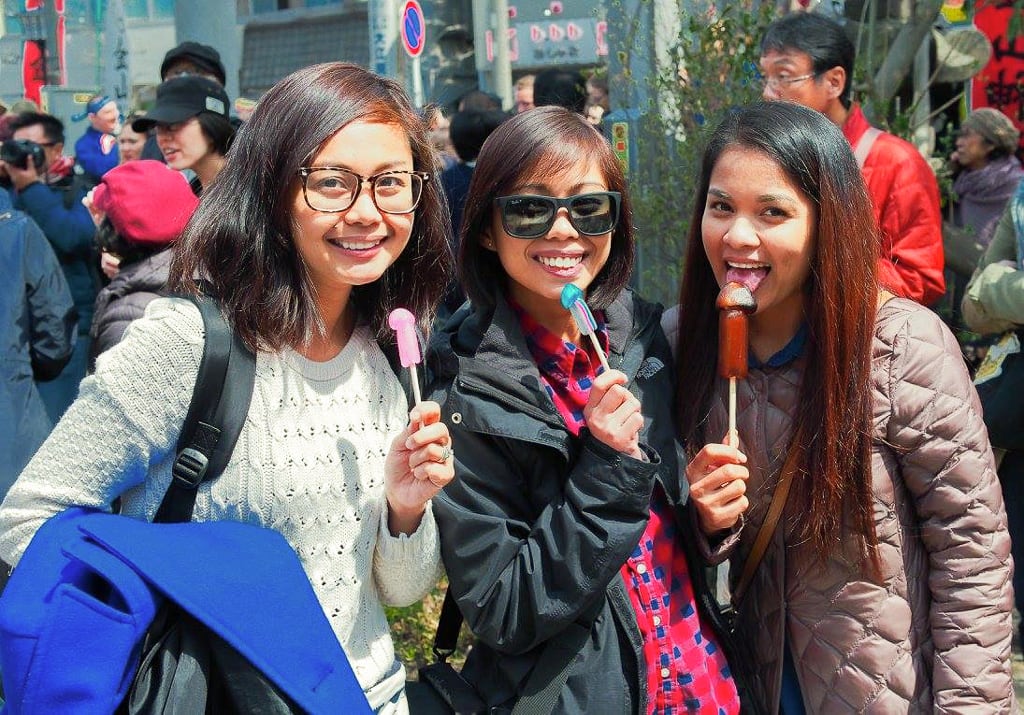
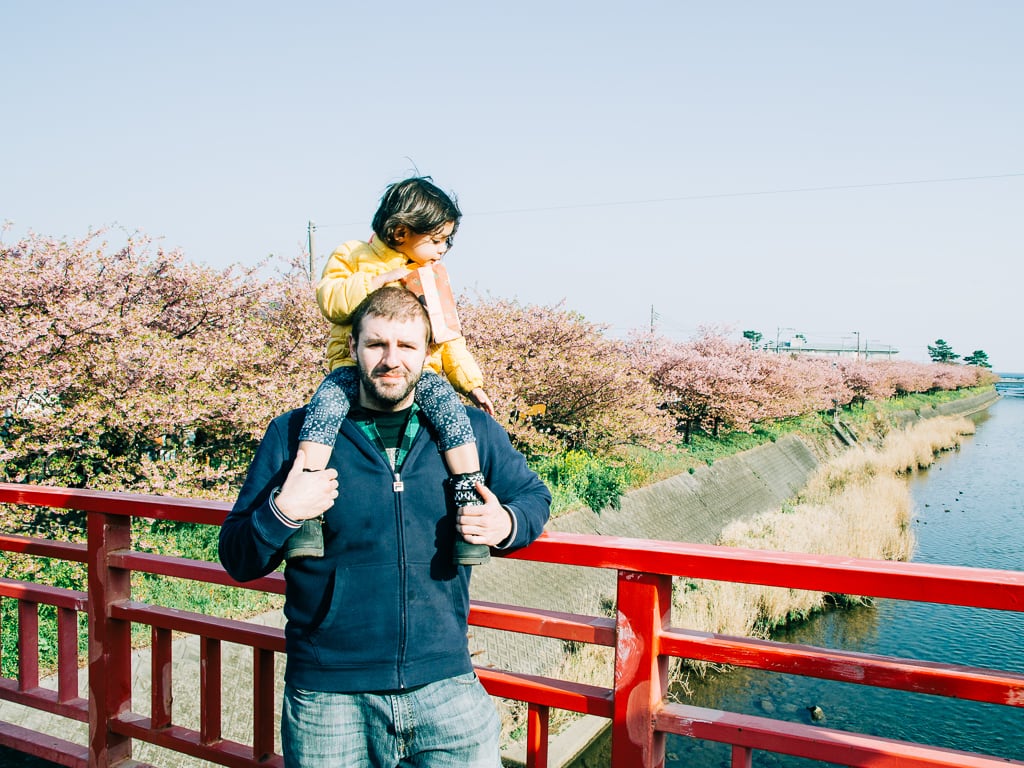
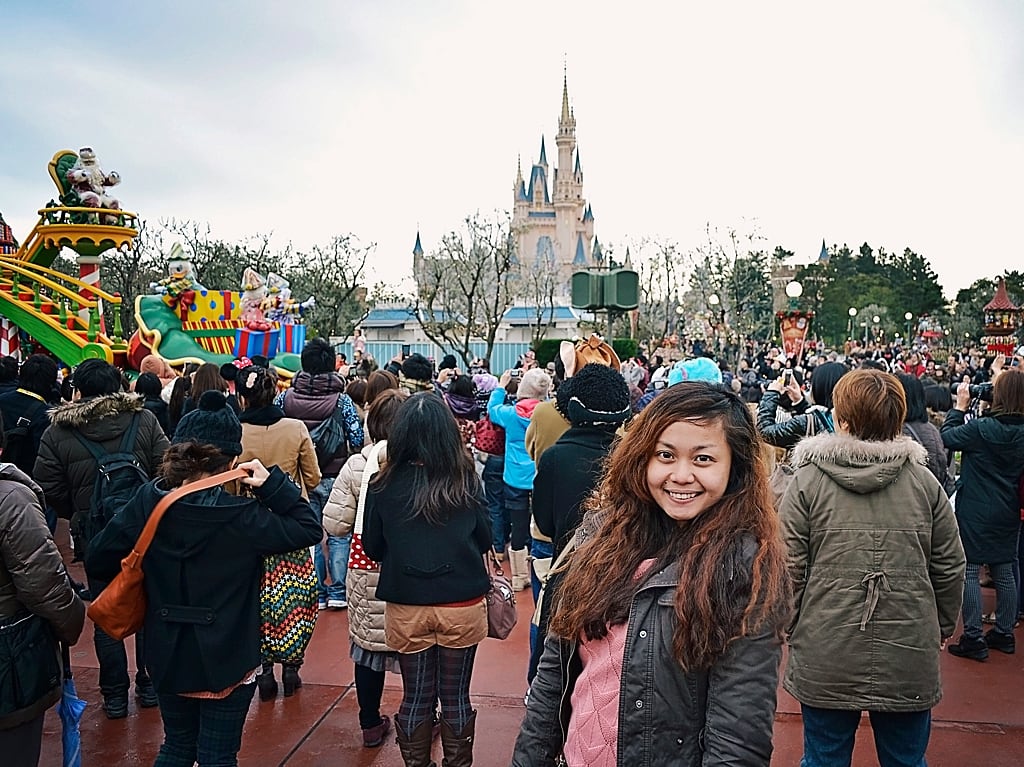
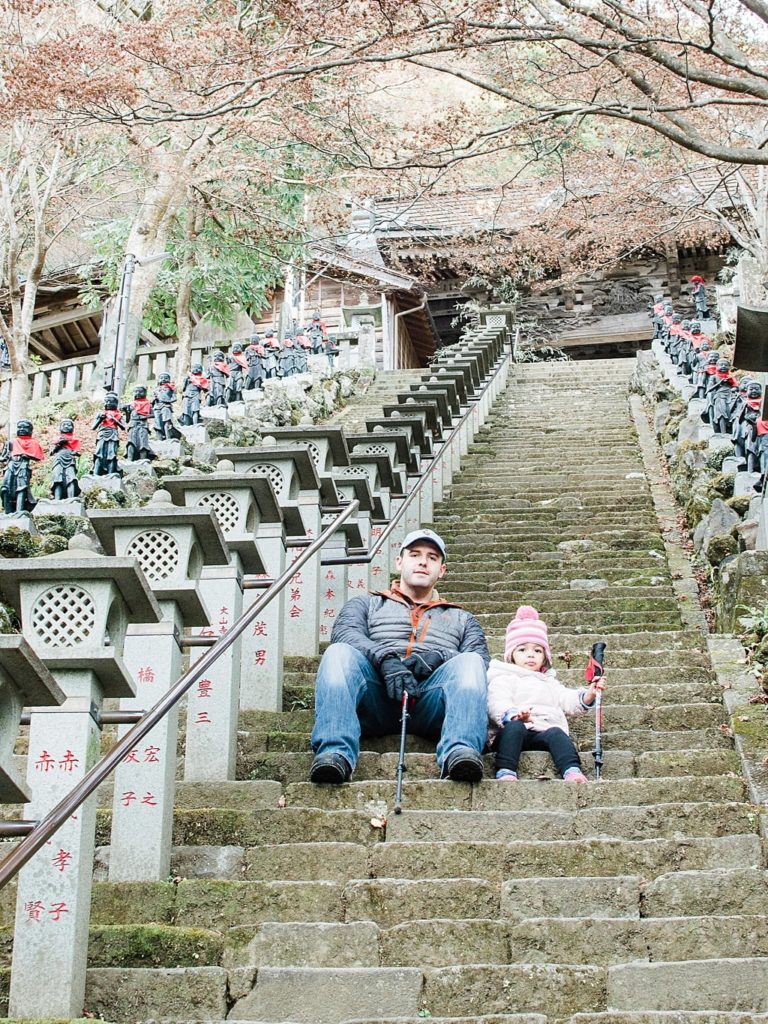
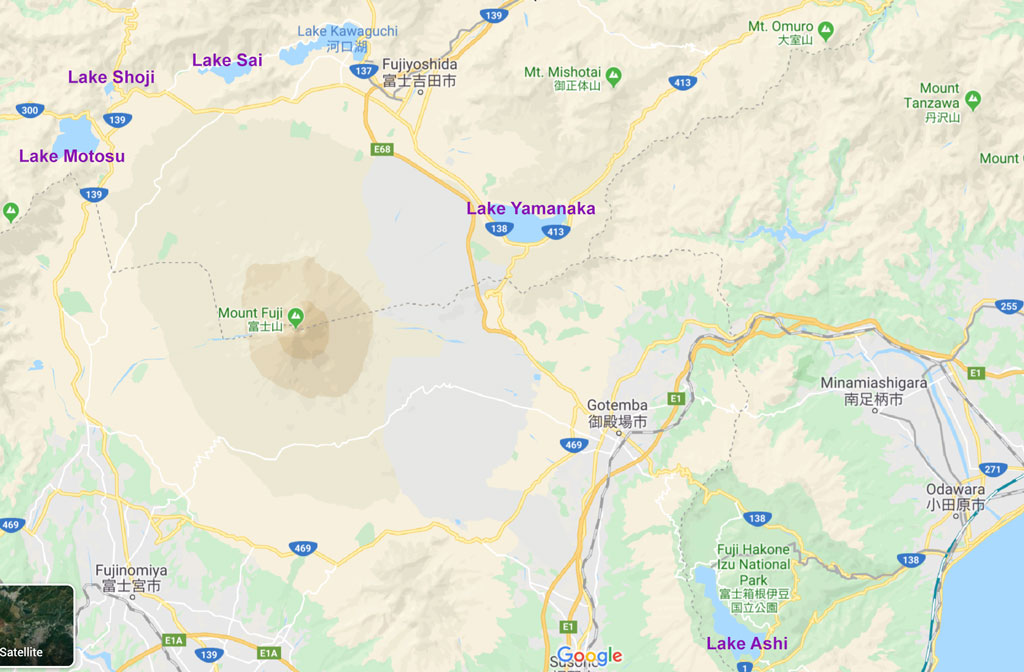
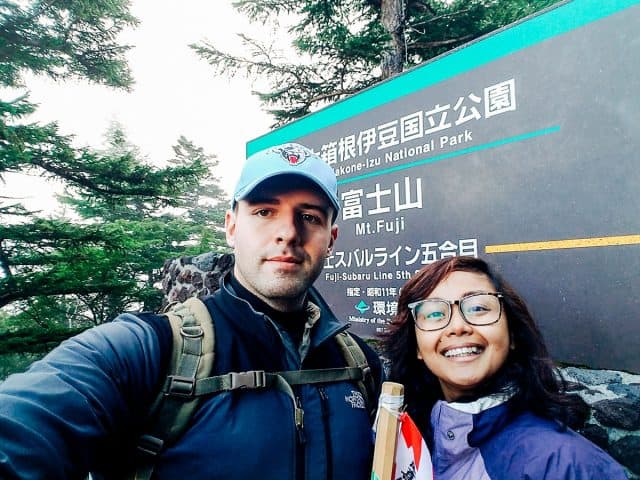
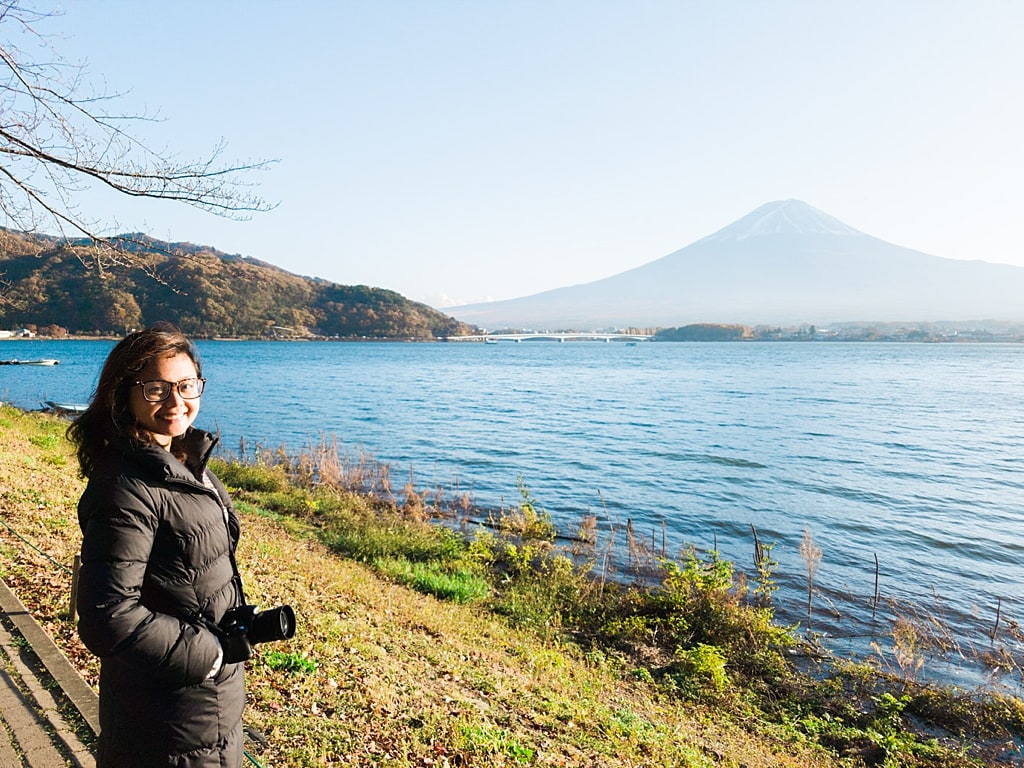
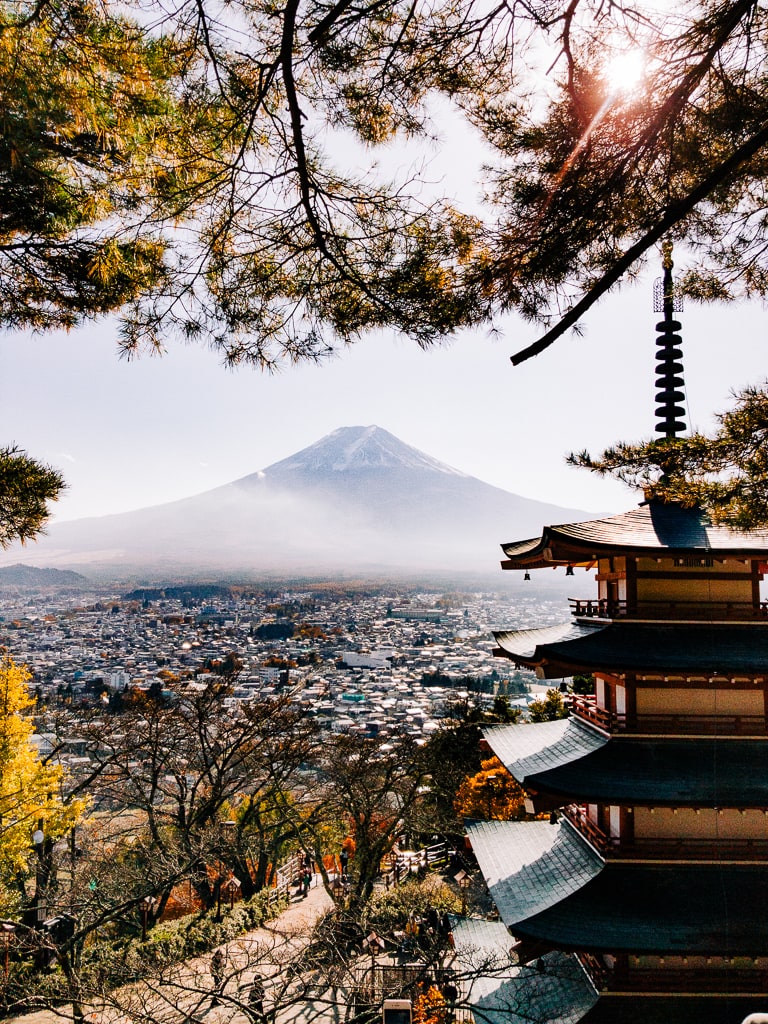
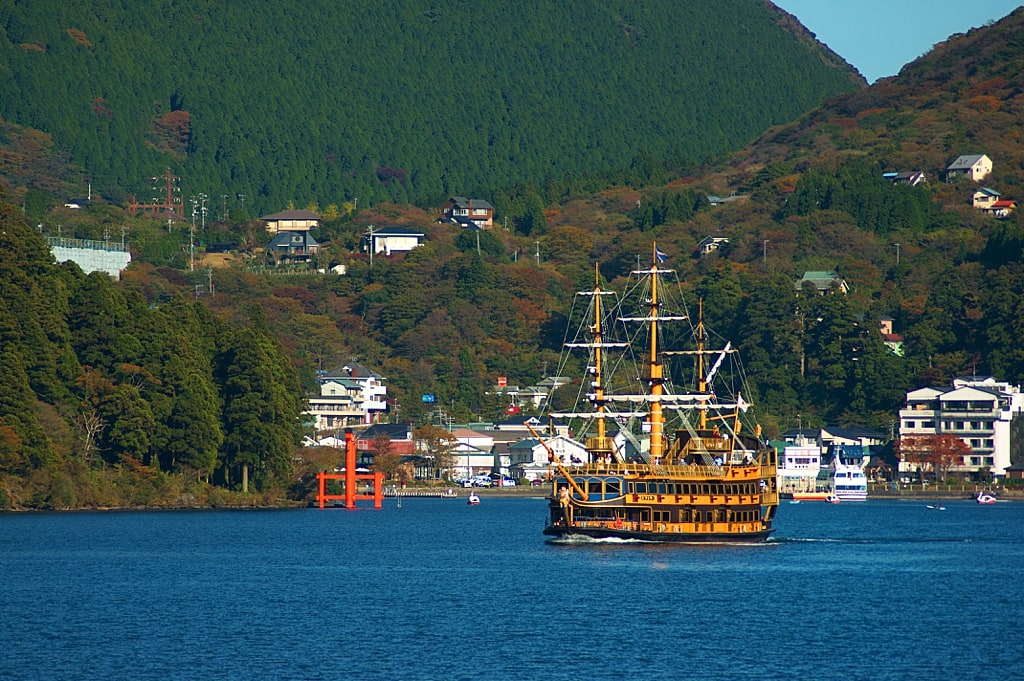
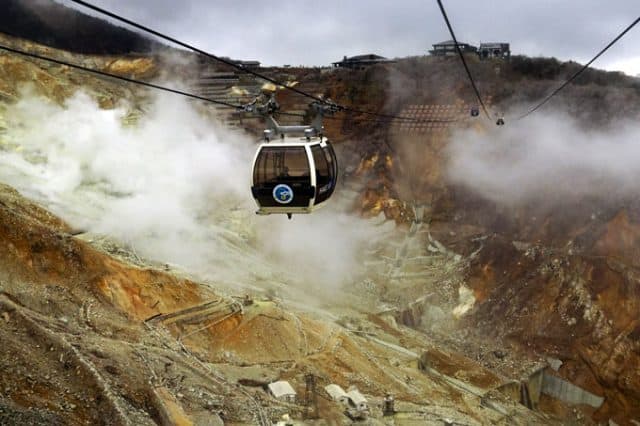
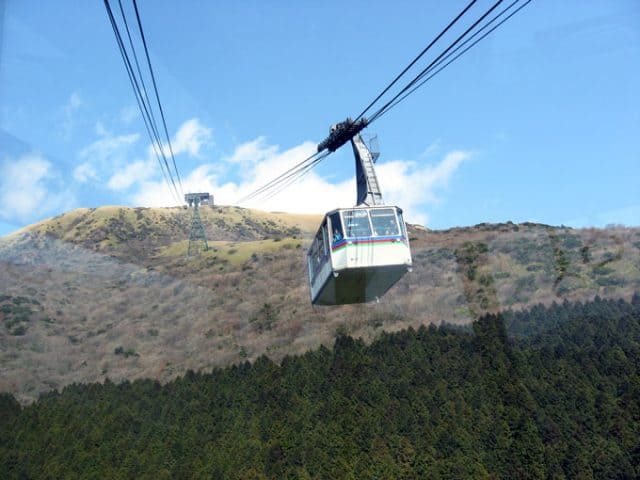
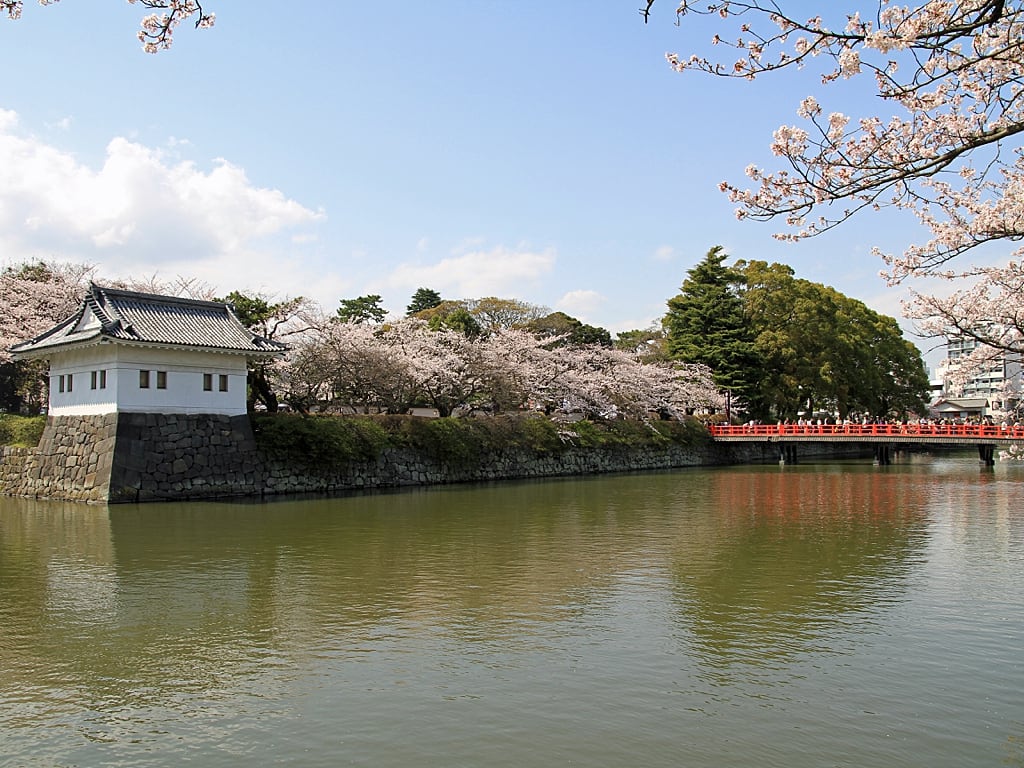
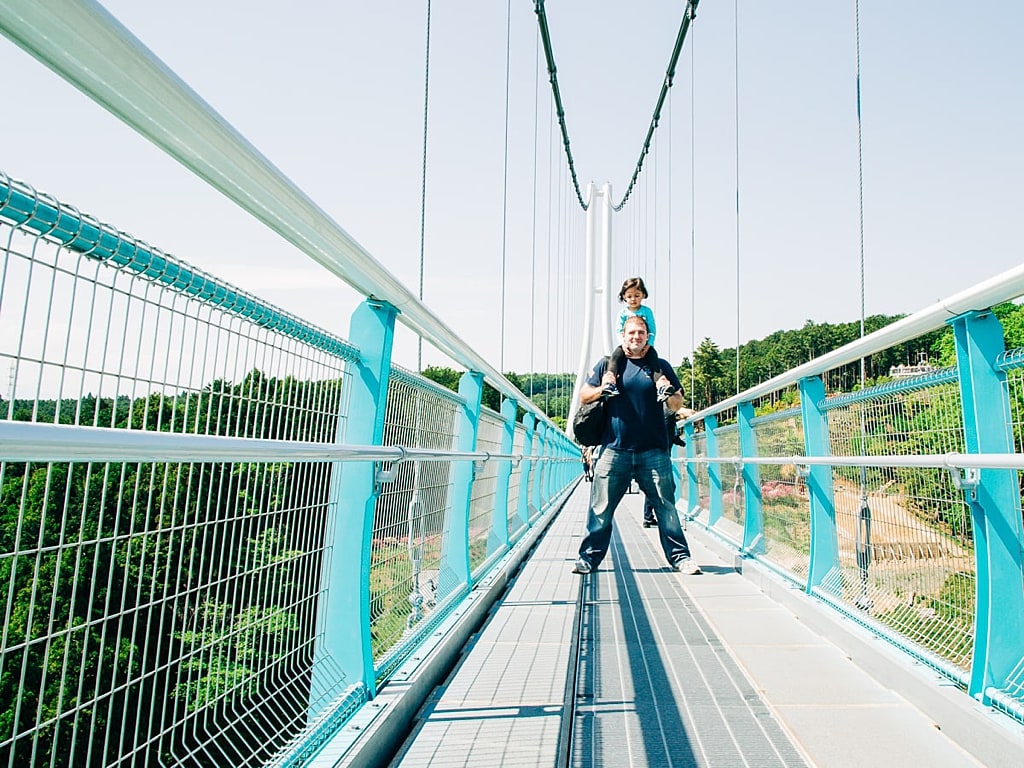
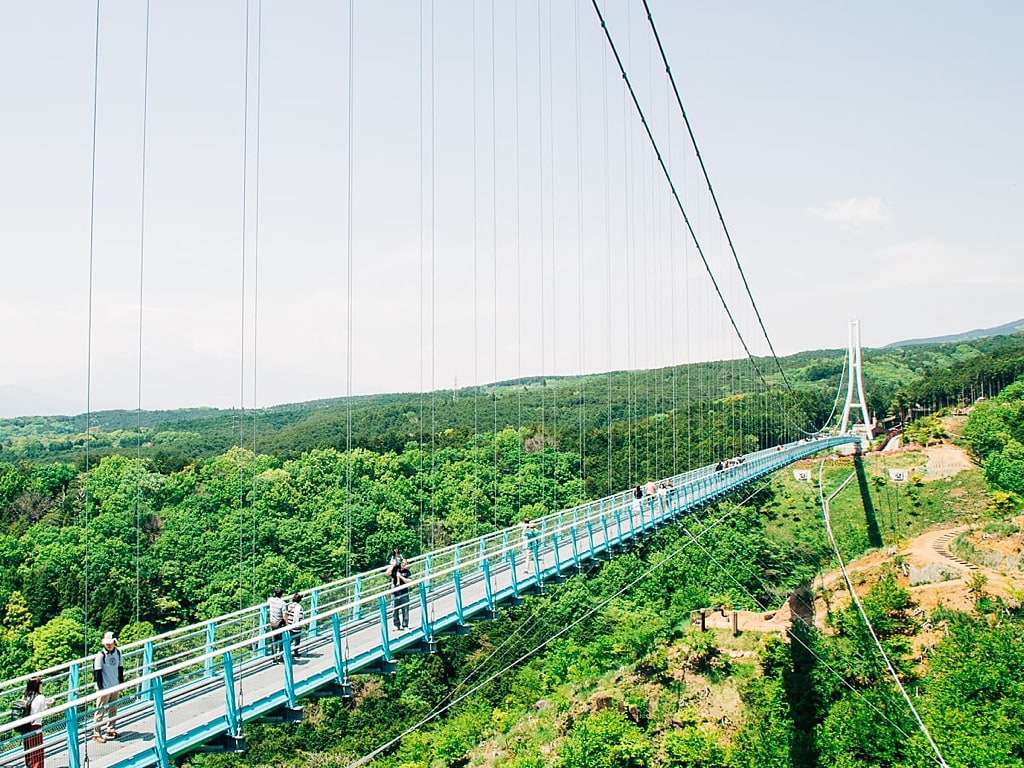
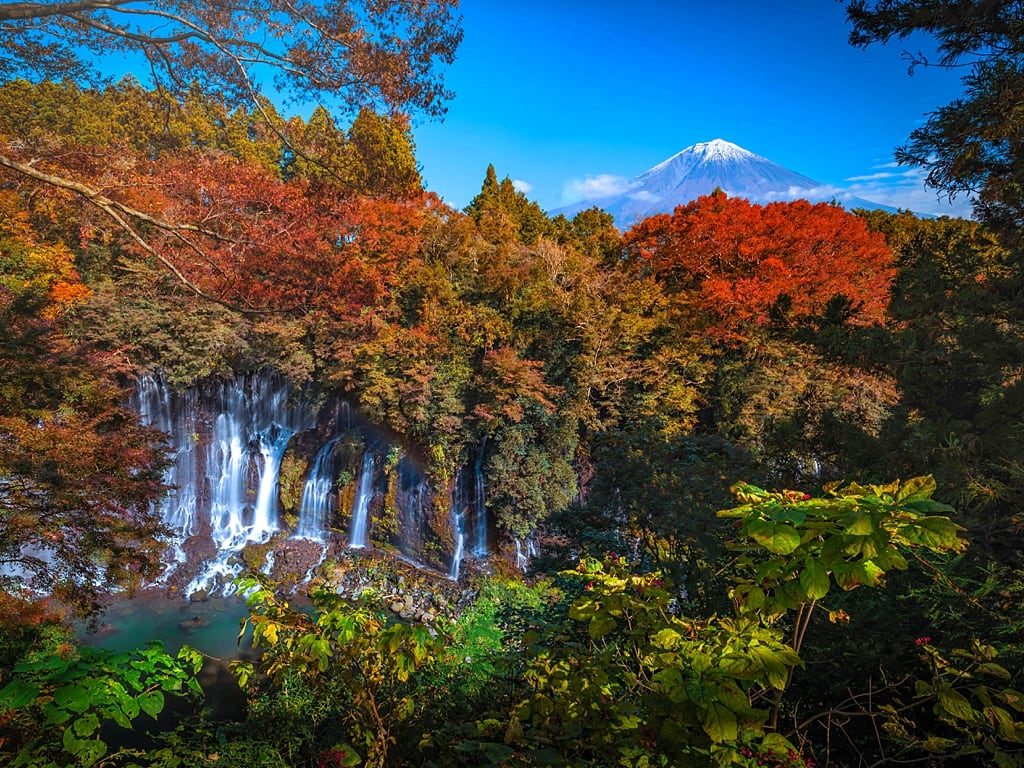
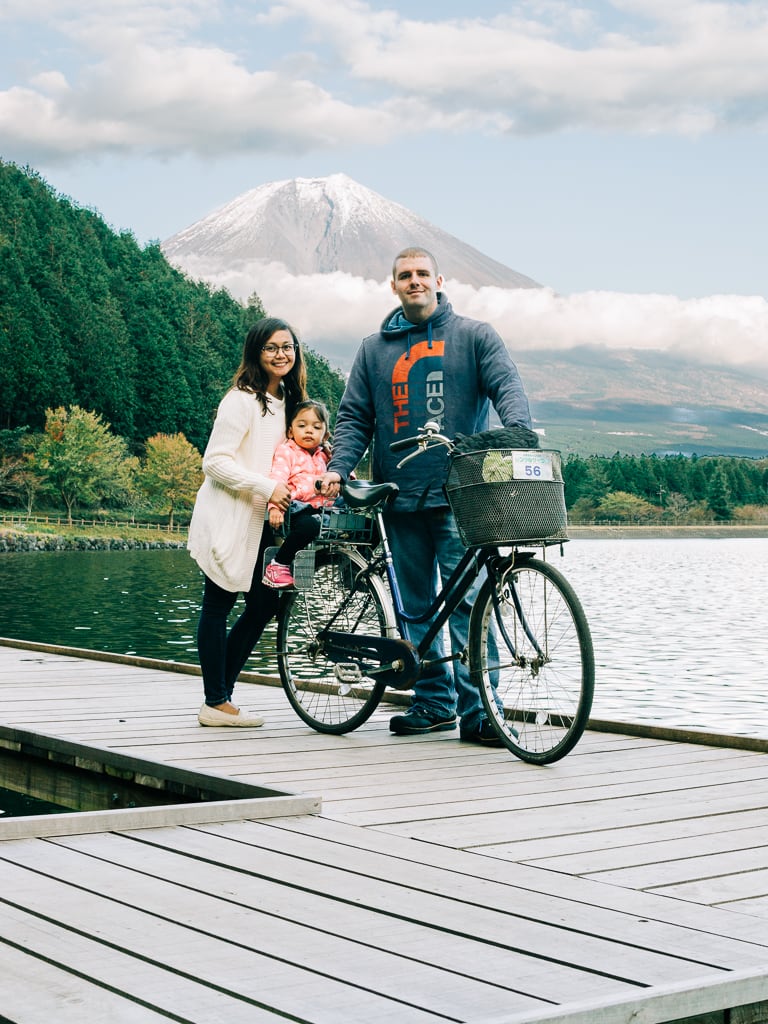
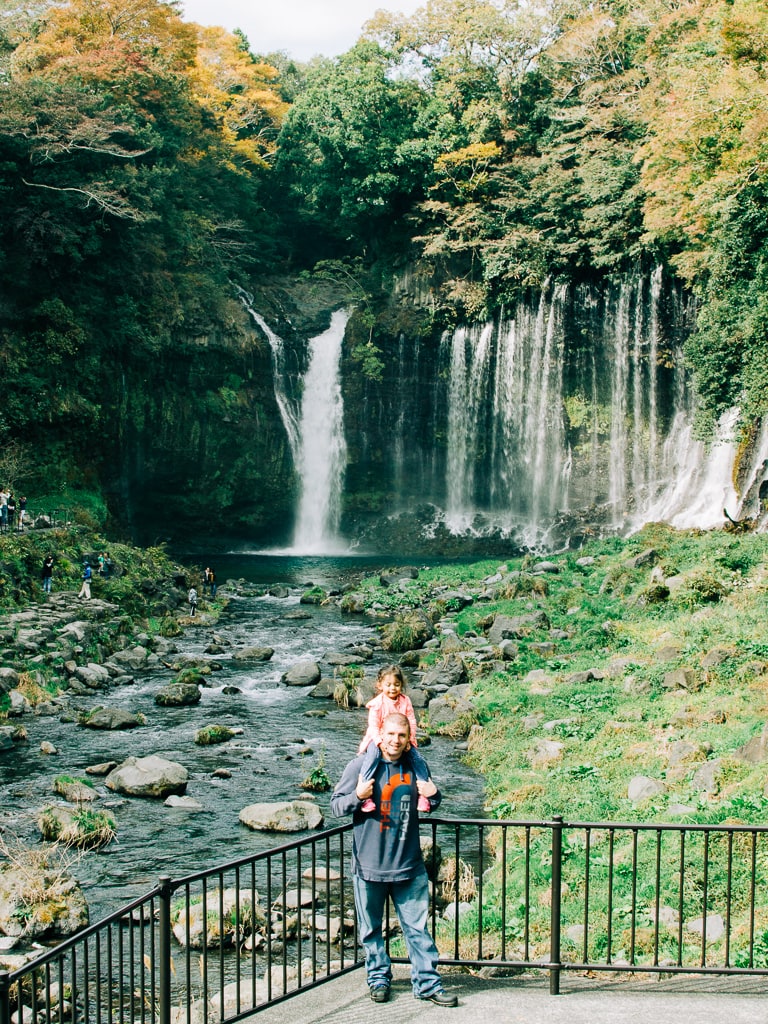
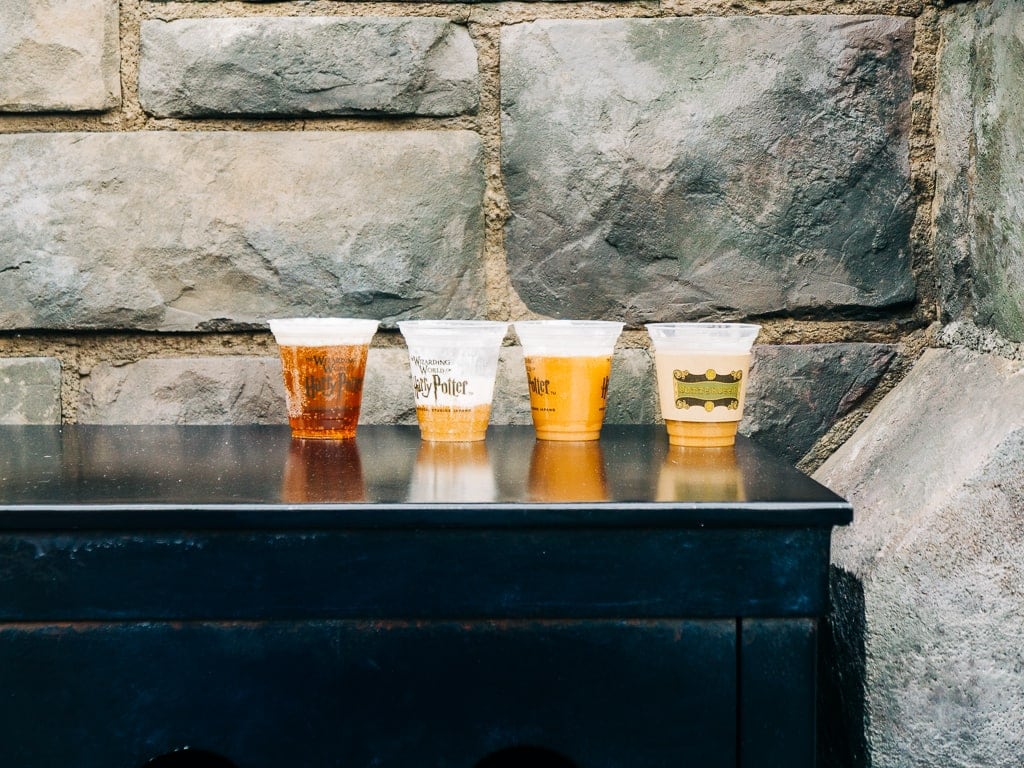

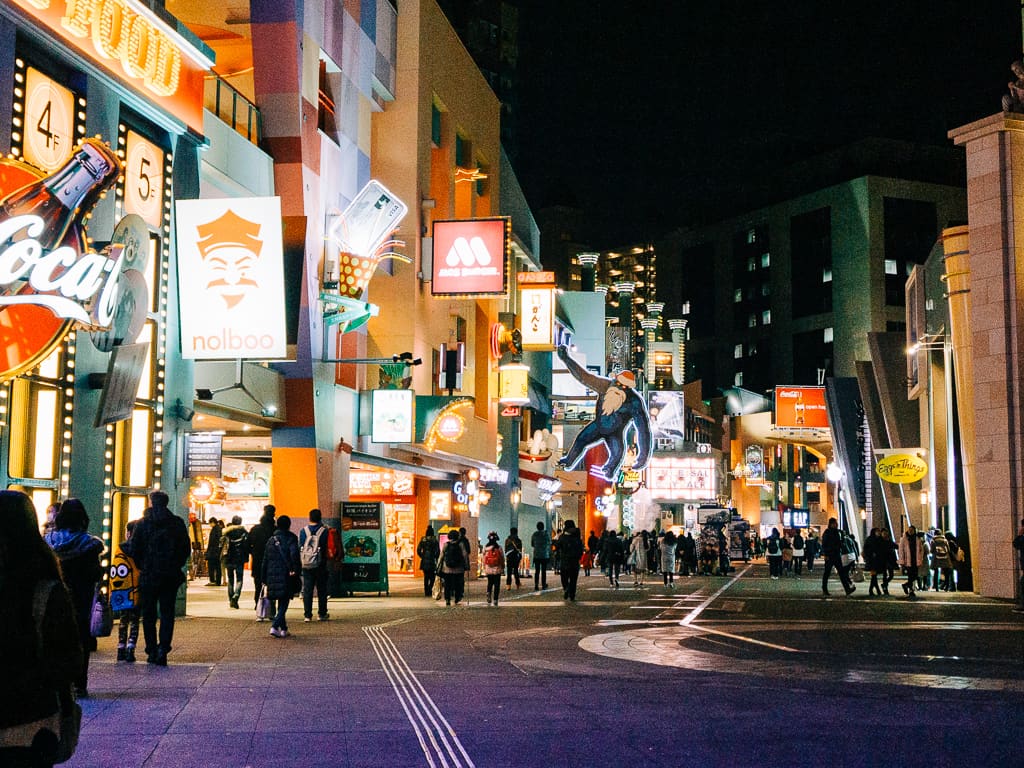
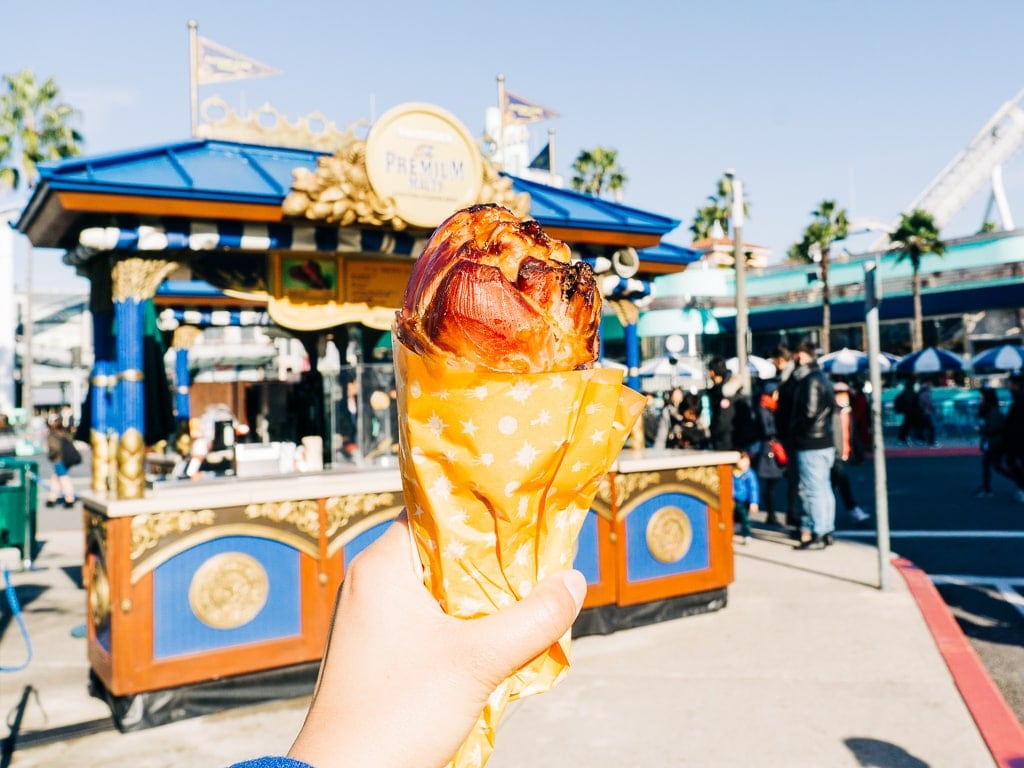
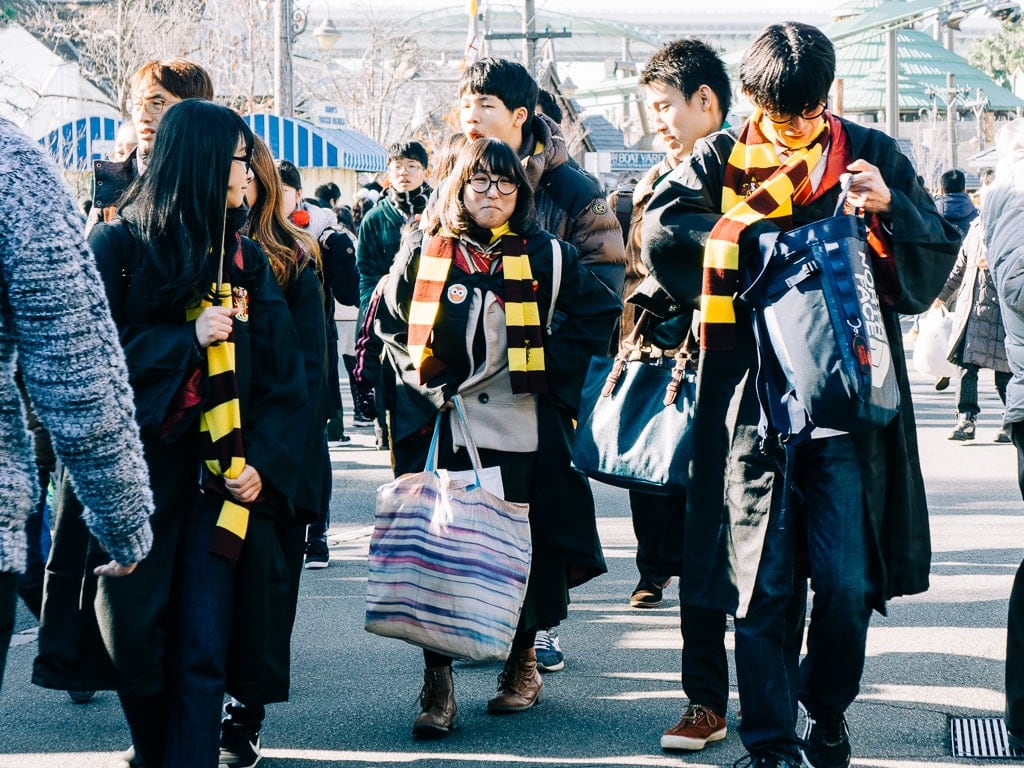
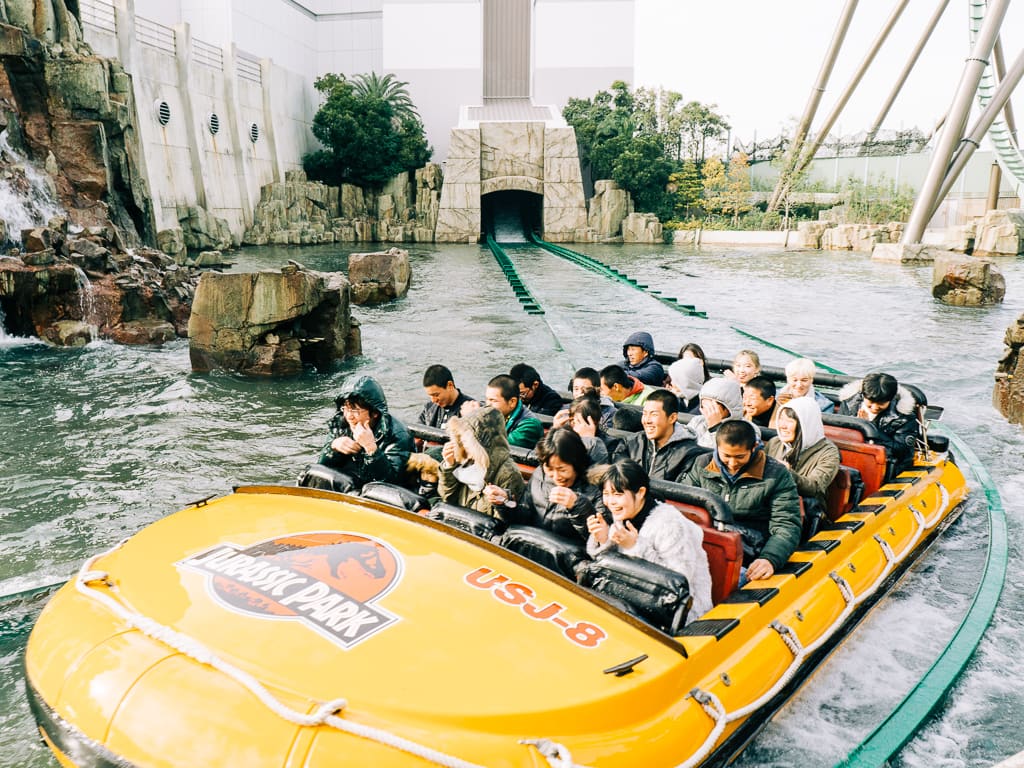
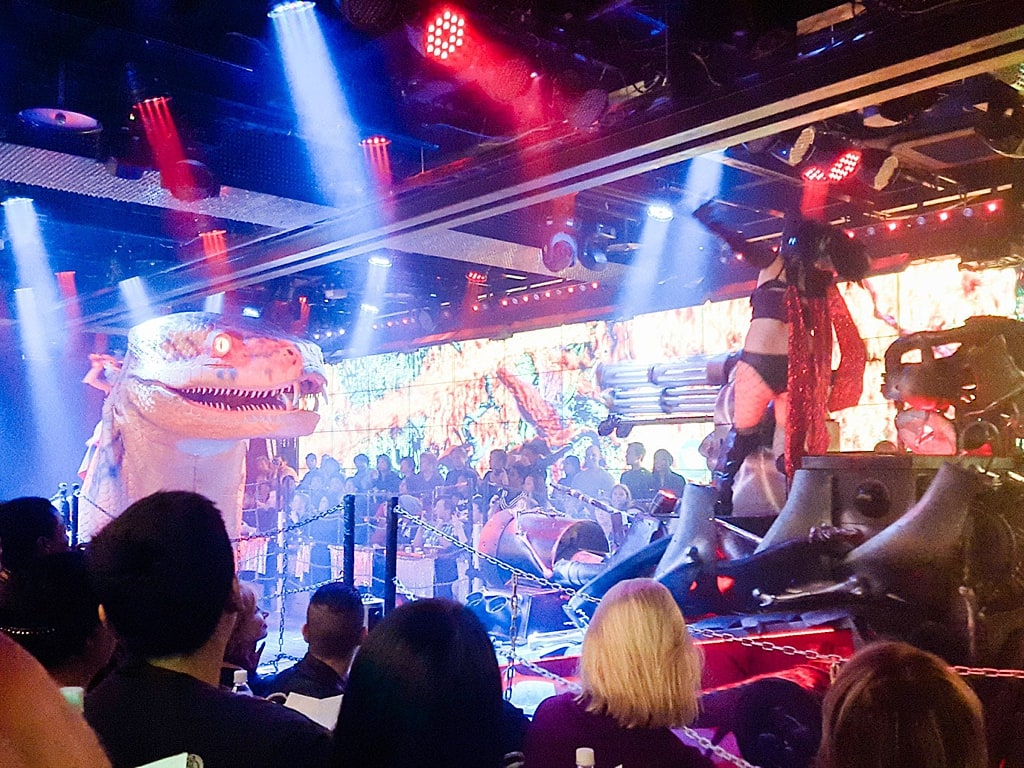
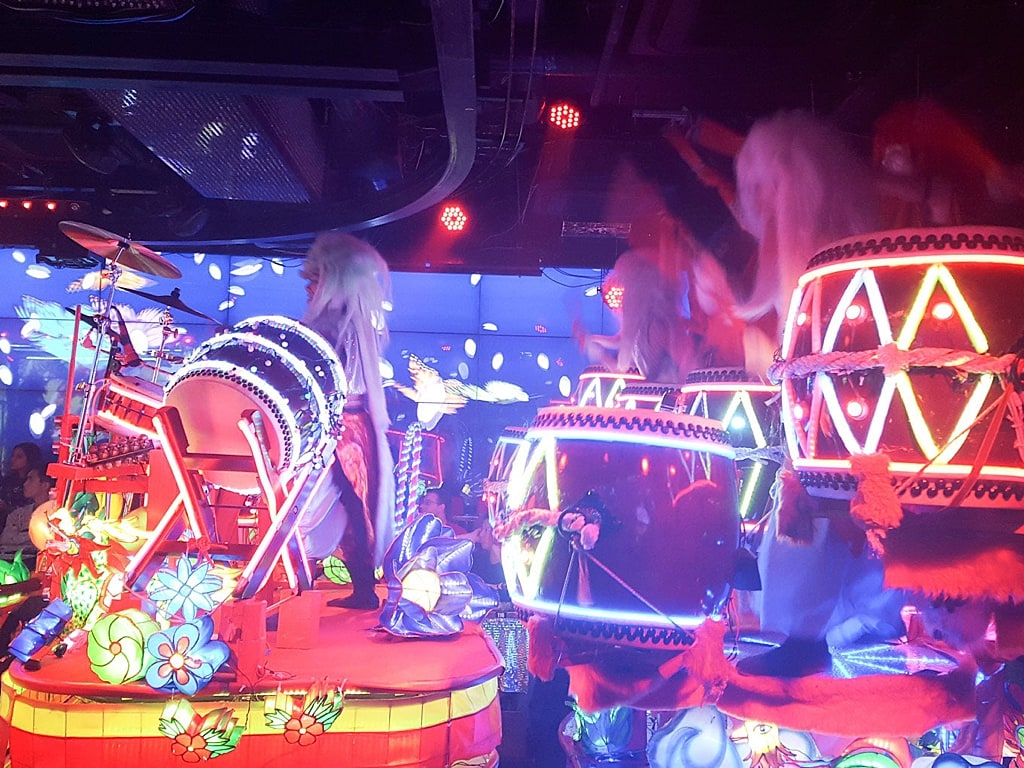
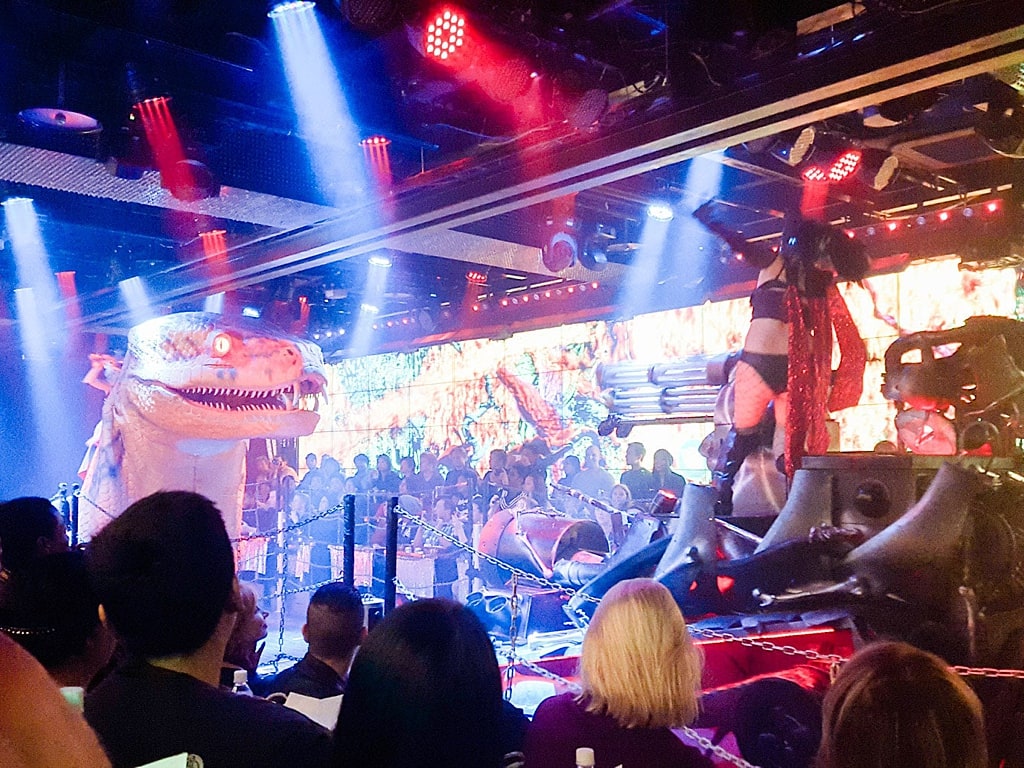
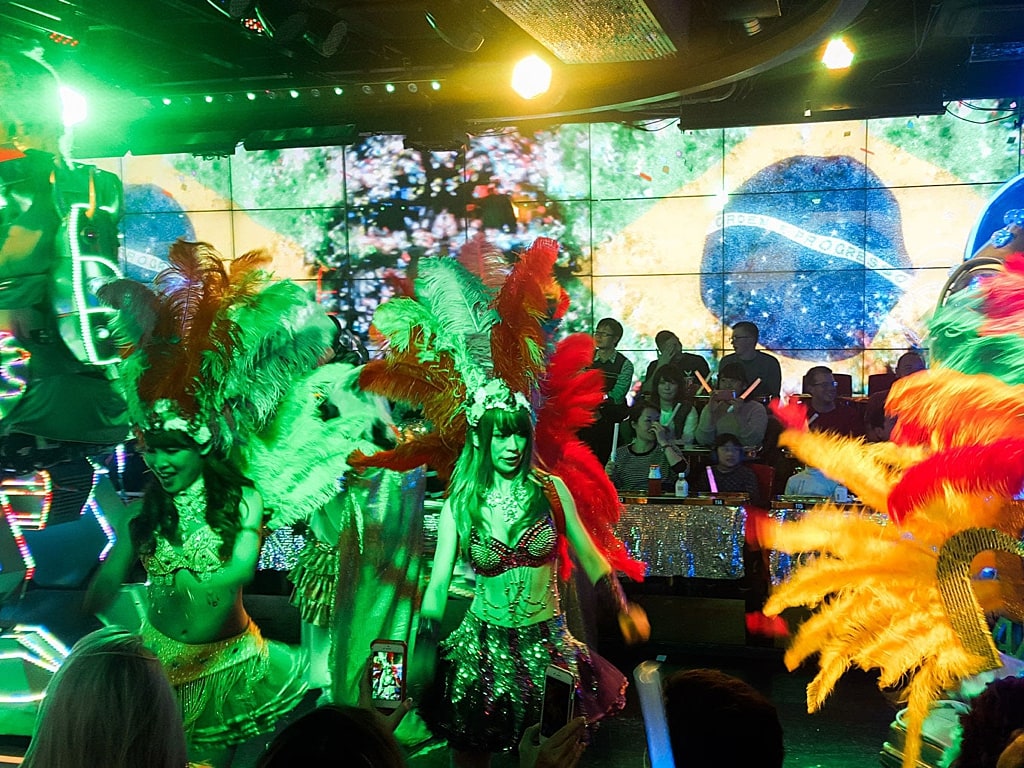

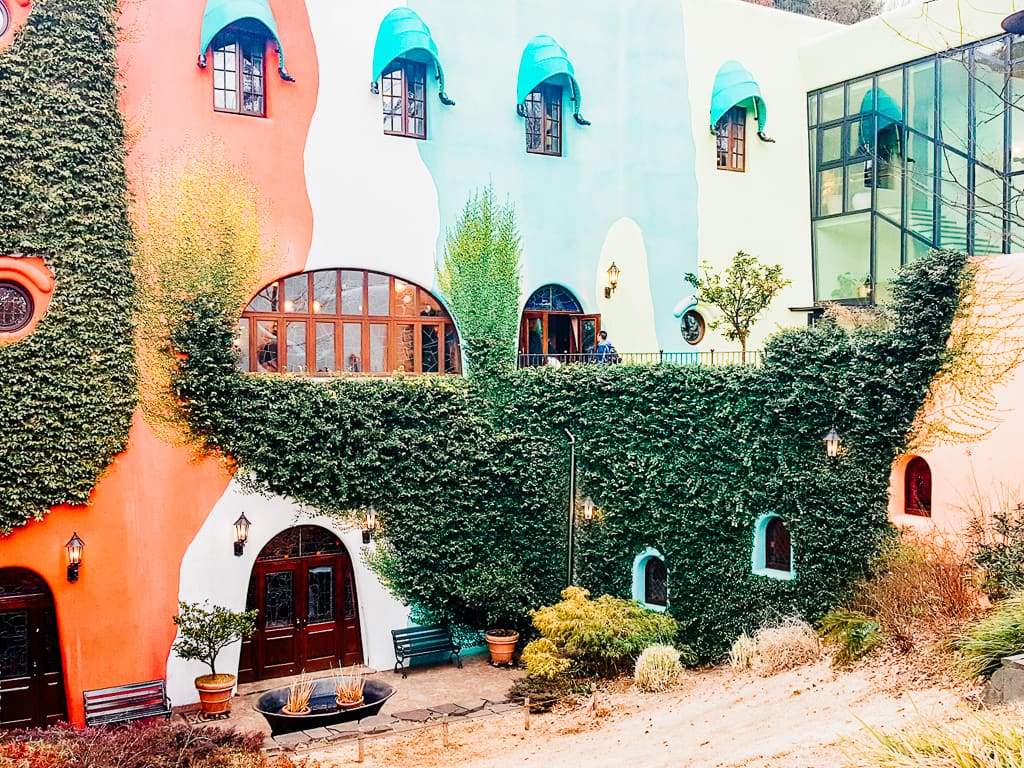
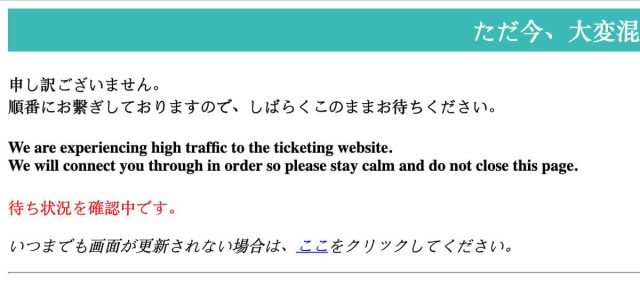
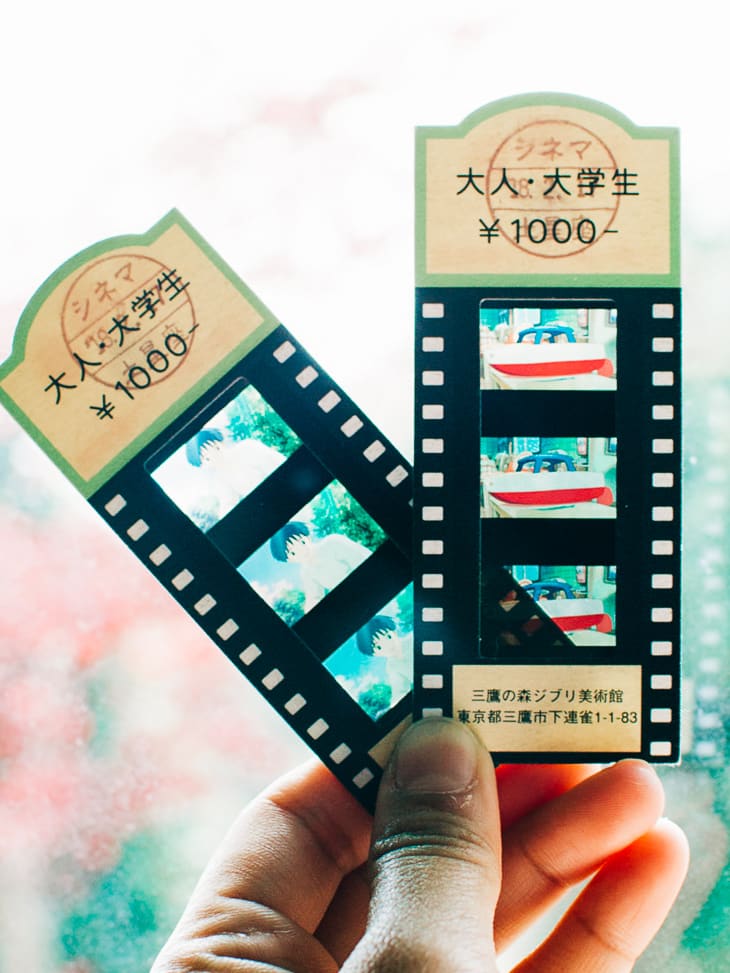
![How to Buy Cheap Universal Studios Japan Tickets [2021]](https://sightseeandsushi.com/wp-content/uploads/2019/01/Here-is-what-Timed-Ticket-Entry-looked-like.jpg)